Deep root establishment
For the first 1–2 growing seasons, water less often but more deeply to train roots to grow downwards, which improves drought tolerance and anchorage in wind-exposed sites.

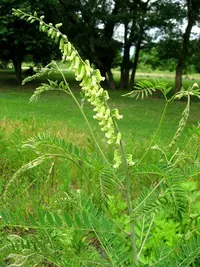
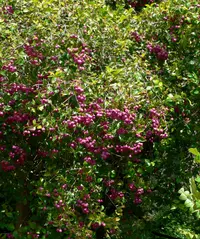
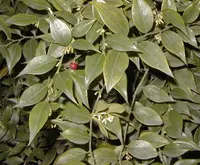
Shrubby sophora (Sophora flavescens) is a hardy, deciduous shrub in the legume family, typically growing with multiple upright stems and fine, compound leaves. It produces small, pea-like flowers followed by narrow seed pods, giving it a somewhat airy, textured look in the landscape.
This species is native to East Asia, especially China, where it grows in open, sunny, often dry habitats. It adapts best to well-drained soil, moderate moisture, and full sun. These traits make it relatively tough once established but less suited to very wet or heavily shaded sites, which is important to know when learning how to care for shrubby sophora.

Care Difficulty
Moderate Care

Light Preference
Full Sun

Water Requirements
Moderate Water

Temperature Preference
Cold Hardy

Hardiness Zone
4–8

Soil Texture
Sandy, Loamy

Soil pH
Acidic (5.5–6.5), Slightly acidic (6.5–7.0)

Soil Drainage
Well-drained

Fertilization
Minimal (feed rarely)
Scan your plant to receive care tips personalized for your specific plant
Available on iOS and Android
This sun-loving perennial develops best flowering and compact growth with steady, direct light exposure.
This deep-rooted legume prefers drier conditions and is sensitive to prolonged soil saturation.
This hardy species tolerates a wide temperature range but grows most vigorously in moderate warmth.
This species tolerates a broad humidity range and rarely needs special humidity management indoors or outdoors.
Sophora flavescens prefers moderately fertile, well-drained, slightly sandy or loamy soil.
This species can be grown in containers if the pot is chosen to support its deep, somewhat woody root system.
This leguminous shrub typically needs modest feeding, as it can fix atmospheric nitrogen in its roots.
Pruning Sophora flavescens focuses on maintaining a healthy, open structure and safe size.
This shrub is most often grown in the ground, so transplanting young plants correctly is more important than frequent repotting.
Propagation of this species is commonly done from seed, with cuttings used less frequently for uniform plants.
This hardy deciduous shrub usually needs minimal winter care once established in suitable climates.

Plant Health Check
Not sure what's wrong with your plant? Check your plant's health inside the app.
This species forms symbiotic nodules on its roots with Rhizobium bacteria, which convert atmospheric nitrogen into forms the plant can use, improving soil fertility around it.
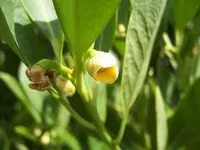
It produces yellow, pea-like flowers with a winged structure characteristic of the legume family, arranged in loose clusters that are visited by bees and other pollinators.
The plant is native across a wide region from China and Korea into parts of eastern Russia and central Asia, growing in steppe, riverbank, and dry slope habitats with cold winters and hot summers.

Extracts from the roots contain well-studied alkaloids such as matrine and oxymatrine, which have been the subject of extensive pharmacological research for activities including anti-inflammatory and antiviral effects in laboratory and clinical studies.
Lack of flowers often comes from plants being too young, heavy pruning at the wrong time, or nutrient imbalance with excess nitrogen. Full establishment, moderate feeding, and pruning only after flowering usually restore normal blooming.
Keep your plants happy and healthy with plant identification, disease detection, and easy care guidance.