Protect Young Trunks
Wrap the lower trunk of young trees with a breathable tree guard or light-colored spiral wrap over winter to reduce sunscald and rodent damage, removing it each spring to prevent moisture buildup.

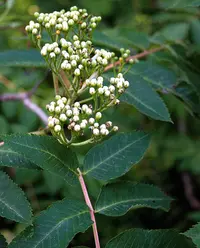
Northern mountain ash (Sorbus decora) is a small deciduous tree known for its clusters of white spring flowers and bright red berries in fall. It usually has an upright, rounded crown and smooth gray bark, giving a clean, tidy appearance in the landscape.
This species is native to colder regions of northeastern North America, where it grows in forests, rocky slopes, and open sites. It is valued for its strong cold tolerance and relatively low maintenance once established, which makes it appealing for gardeners in cool climates.
To care for northern mountain ash, provide full sun, cool conditions, and moderately moist, well-drained soil to support healthy growth and berry production.

Care Difficulty
Moderate Care

Light Preference
Full Sun

Water Requirements
Moderate Water

Temperature Preference
Cold Hardy

Hardiness Zone
2–6

Soil Texture
Sandy, Loamy, Clay

Soil pH
Acidic (5.5–6.5), Slightly acidic (6.5–7.0)

Soil Drainage
Moist but well-drained

Fertilization
Minimal (feed rarely)
Scan your plant to receive care tips personalized for your specific plant
Available on iOS and Android
This cold-hardy tree prefers bright, direct light in open sites to flower and fruit well.
This species prefers evenly moist, well-drained soil rather than extremes of drought or saturation.
This hardy tree is adapted to cold climates but benefits from moderate summer temperatures for best growth.
Humidity is not a major factor for Sorbus decora, which is well adapted to outdoor conditions in temperate climates.
Sorbus decora prefers evenly moist, well-structured mineral soil that drains freely yet retains some moisture.
This species is generally not well suited to long-term container growing due to its eventual size and root system demands.
Sorbus decora is a hardy native tree that needs only light, targeted feeding in average garden soil.
Pruning Sorbus decora focuses on safety, structure, and fruiting rather than heavy shaping.
Northern mountain ash is usually field-grown or planted directly in the landscape, so care focuses on transplanting rather than repotting.
Propagation of Sorbus decora is possible but slower and more technical than many garden shrubs.
This species is naturally cold hardy in northern climates and usually needs minimal winter care in the ground.

Plant Health Check
Not sure what's wrong with your plant? Check your plant's health inside the app.
This species is naturally restricted to cold northern regions of eastern North America, where it grows in moist, rocky sites and lake margins that experience long, harsh winters and late frosts.
It develops dense clusters of bright orange-red berries that are generally larger and more conspicuous than those of the more widespread European mountain ash, making it an important visual food cue for migrating birds.
Northern mountain ash is one of the hardiest North American rowans, tolerating very low winter temperatures and short growing seasons that would damage or kill many related ornamental Sorbus species.

In parts of its native range around the Great Lakes and into eastern Canada, northern mountain ash can form prominent components of shoreline and cliff-top plant communities, where its fruit helps sustain early-winter bird populations when other fleshy fruits are already depleted.
The flowers are rich in nectar and pollen and strongly attract bees, flies, and many small pollinators. Butterflies visit occasionally, but bees are the main visitors. Good pollinator activity also improves berry set and overall seed production.
Keep your plants happy and healthy with plant identification, disease detection, and easy care guidance.