branched bur-reed Care (Sparganium erectum)

Also known as: simplestem bur-reed
branched bur-reed

About branched bur-reed

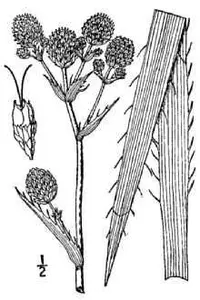
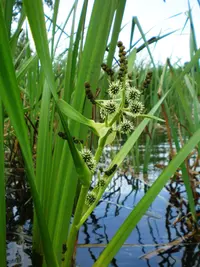
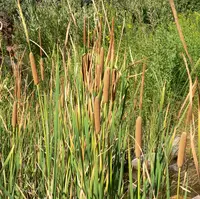
Branched bur-reed (Sparganium erectum) is a hardy aquatic or marginal plant commonly found along ponds, slow streams, and wetlands. It forms upright clumps with stiff, grass-like leaves and distinctive round flower and seed heads held on branched stems.

This species is native to Europe and parts of Asia but is also used in managed water gardens and naturalized ponds. It spreads by rhizomes, so it can form dense stands where conditions suit it.

It is generally easy to grow if it has constant shallow water, full sun to light shade, and nutrient-rich, muddy or clay soil. Anyone planning to care for branched bur-reed should allow adequate space and control its spread in smaller ponds.

Main Plant Requirements

Care Difficulty

Moderate Care

Light Preference

Full Sun

Water Requirements

Aquatic

Temperature Preference

Cold Hardy

Hardiness Zone

4–8

Soil Texture

Loamy, Silty, Organic-rich

Soil pH

Slightly acidic (6.5–7.0), Neutral (7.0)

Soil Drainage

Waterlogged tolerant

Fertilization

Minimal (feed rarely)

Get Personalized Care Plan

Scan your plant to receive care tips personalized for your specific plant

Available on iOS and Android

How to Care for the branched bur-reed

This emergent aquatic prefers strong natural light in open, unshaded water margins.

  • Provide 6–8 hours of direct sun daily; morning and midday sun support sturdy growth and flowering in branched bur-reed.
  • Tolerates light partial shade (around 3–4 hours sun), but stems may elongate and flowering can decrease under consistent shade.
  • In hot summers, avoid sites with intense, reflected afternoon sun that can overheat shallow water; in winter, leaf dieback is normal as light levels and temperatures drop.

This species is adapted to saturated soils and shallow standing water rather than periodically dry conditions.

  • Grow Sparganium erectum with roots constantly submerged or in mud; water level can range from wet soil to 10–30 cm above the crown.
  • Do not allow the substrate to dry; leaf droop, browning tips, and shrinking clumps indicate insufficient water or receding shoreline levels.
  • Yellowing, soft stems or foul odor from the substrate signal stagnant, low-oxygen conditions; improve water movement or depth instead of adding more water.

This hardy aquatic tolerates a wide temperature range typical of temperate ponds and wetlands.

  • Active growth occurs around 60–77°F (16–25°C), with strong shoot production and flowering through late spring and summer.
  • Established plants tolerate winter cold down to about 14–23°F (-10 to -5°C) if rhizomes stay submerged and insulated by water or mud.
  • Heat up to 86°F (30°C) is usually tolerated if water remains deep and well-oxygenated; prolonged shallow, warm water can stress plants and reduce vigor.

This aquatic species does not need elevated air humidity as long as its roots remain in consistently wet substrate or shallow water.

  • Target air humidity around 40–70%, focusing more on saturated root conditions than on atmospheric moisture.
  • Branched bur-reed tolerates relatively dry air if the water level around roots is kept constant and never allowed to dry.
  • Low humidity becomes an issue only when combined with drying mud, leading to browning leaf tips and curling.
  • Increase effective humidity by maintaining a stable water margin, such as a planted basket set in a pond or water-filled container.

Sparganium erectum prefers permanently wet, heavy, organic-rich soil that mimics pond margins or marsh edges.

  • Use a dense mix such as 2 parts clay loam, 1 part garden soil, and 1 part well-rotted compost to hold water and nutrients.
  • Avoid added perlite or coarse bark, which increase drainage and let water escape too quickly for this emergent aquatic plant.
  • A neutral to slightly alkaline pH around 6.5–7.5 is suitable; avoid strongly acidic peat-only substrates that break down and turn sour.
  • In containers, cap the soil surface with 2–3 cm of washed grit or pond gravel to limit erosion and keep soil from floating when submerged.

This species can be grown in containers if they are treated as aquatic baskets or pond pots kept in standing water.

  • Choose a wide, heavy container or mesh pond basket to prevent tipping as tall stems and seed heads develop.
  • Use a low-placed water reservoir or pond zone that keeps the rim just above water while allowing soil to stay fully saturated.
  • Position the container where water movement is gentle so roots anchor firmly without soil washing out or exposing rhizomes.

This wetland species usually needs minimal fertilization when grown in natural or nutrient-rich pond settings.

  • In nutrient-poor container or lined ponds, use a slow-release aquatic fertilizer or balanced NPK, low to moderate strength, once in early spring.
  • For growing season support, 1 light application every 8–10 weeks is enough; avoid high-nitrogen lawn fertilizers nearby.
  • Reduce or stop feeding in late autumn and winter when growth slows or stops.
  • Organic compost can be mixed into marginal planting soil at setup, but avoid thick layers that foul water for branched bur-reed.

Sparganium erectum benefits from simple, seasonal pruning to maintain tidy stands and encourage healthy new growth.

  • Best timing is late winter or early spring, before strong new shoots emerge.
  • Cut back dead, damaged, or collapsing stems with clean hand pruners or shears at or just above water level.
  • Remove crowded or leaning stems to open the clump, improving water flow and light penetration.
  • Deadhead spent flower spikes if seed spread is not desired, leaving firm green foliage intact.

Transplanting this aquatic plant focuses on controlling spread and refreshing crowded clumps rather than frequent container repotting.

  • Plan division or transplanting in early spring or early autumn, when water temperatures are moderate and growth is not at its peak.
  • Look for dense, congested root masses, slow shoot growth, or rhizomes pushing out of baskets as cues to transplant.
  • Lift the clump gently, rinse off mud, then divide rhizomes into sections with healthy shoots and roots using a sharp knife.
  • Replant divisions in aquatic baskets or along pond margins at similar depth, firming media and keeping roots submerged to limit stress.

This species is commonly propagated by division and less often by seed for controlled establishment in ponds and wetlands.

  • Carry out division in early spring or early autumn, when water is cool to mild and growth is steady but not peak.
  • Lift a mature clump, wash off excess mud, and separate rhizomes into pieces with at least 1–2 strong shoots each.
  • Replant divisions into aquatic baskets or pond margins with heavy loam, ensuring crowns sit just at or slightly above soil level.
  • For seed, sow fresh seed in shallow trays of wet loam under cool, bright conditions and keep constantly saturated for slow germination.

This hardy aquatic tolerates typical temperate winters with little intervention once established in ponds or natural wetlands.

  • In-ground plants usually overwinter outdoors; rhizomes survive freezing water in most temperate climates.
  • Allow above-water foliage to die back naturally, then trim decayed stems in late winter to reduce rot and debris.
  • For container-grown plants in very cold regions, sink baskets deeper below ice line or move tubs to a frost-free but cool space.

Care Tips

Secure Rhizome Containment

Plant into a wide, perforated aquatic basket lined with hessian or fine mesh so the rhizomes are contained, easy to lift, and less likely to invade liners or nearby planting zones.

Staggered Depth Placement

Place some baskets slightly shallower and some slightly deeper within the recommended water range so plant clumps establish at different levels, improving stability and resilience to short-term water-level fluctuations.

Seasonal Clump Thinning

Every 2–3 years in late autumn, lift and divide dense clumps, discarding the oldest central sections to maintain strong new growth and prevent the stand from becoming overly tall and prone to lodging.

Bank Erosion Control

Use several small, well-spaced clumps along a pond margin instead of one large mass so the root systems knit the soil gradually and reduce bank erosion without shading out other marginal species.

Targeted Debris Management

In late winter, remove dead stems and accumulated leaf debris caught among the shoots to reduce anaerobic decay, maintain good water flow around the base, and support healthier growth when caring for branched bur-reed.

Common Pests and Diseases

Leaf-mining fly larvae

This pest creates pale, winding tunnels inside submerged or emergent leaves, which can cause sections of the foliage to yellow and die back. Damage is usually cosmetic but can be extensive in nutrient-poor or stressed stands.

Solution

Remove and discard heavily mined leaves to reduce larval numbers and break the life cycle. Encourage predators by avoiding broad-spectrum insecticides in the water body, and in small ornamental ponds, flush or thin infested plants to reduce habitat for the larvae.

Aphids

These insects sometimes colonize emergent stems and young flower spikes, sucking sap and causing distortion, sticky honeydew, and sooty mold growth. Infestations are more common in slow-flowing or nutrient-enriched water bodies.

Solution

Rinse colonies off emergent stems with a strong but controlled stream of clean water, repeating as needed. In pond or wetland plantings, introduce or conserve natural predators such as lady beetles, and use a targeted insecticidal soap only on emerged foliage, keeping it out of the main water column as much as possible.

Rust fungus

This disease appears as small orange to brown pustules on leaves and sometimes stems, leading to yellowing and premature leaf senescence. Symptoms include weakened clumps, especially where air movement is poor and foliage stays wet for long periods.

Solution

Cut and remove affected leaves and any heavily infected stems, disposing of them away from the pond to reduce spore spread. Improve air movement around emergent growth by thinning dense stands, and avoid overhead splashing from pumps or fountains that continuously wets foliage.

Leaf spot

This disease causes dark, water-soaked or tan spots with defined margins on leaves, which may merge into larger patches and lead to partial leaf dieback. Symptoms include reduced vigor where plants are crowded or where decaying organic matter accumulates around the bases.

Solution

Remove and discard leaves showing extensive spotting to lower the level of infectious material. Maintain cleaner water conditions by reducing organic debris, avoid excessive fertilization that promotes soft growth, and, in managed plantings, thin crowded clumps to reduce prolonged leaf wetness and improve Sparganium erectum care.

Interesting Facts

Distinctive spiky fruit

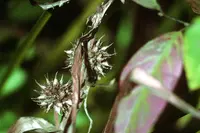
This species forms spherical, spiky seed heads on branched stems, which is why it is called branched bur-reed. These burr-like fruits float and can be transported by water and attached to animals, helping long-distance seed dispersal.

Important habitat engineer

Dense stands of Sparganium erectum slow water flow and trap suspended sediments in ditches, ponds, and slow streams. Over time this stabilizes banks, creates microhabitats for invertebrates, and provides cover for fish and amphibians.

Adapted to water level change

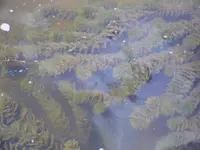
This plant tolerates fluctuating water levels by producing both submerged and emergent leaves depending on depth. Its rhizome system stores resources, allowing rapid regrowth after flooding or partial desiccation.

Botan icon

Did you know?

In parts of Europe, branched bur-reed is used as an indicator species for nutrient-enriched, slow-moving freshwaters, because its presence often reflects a specific combination of water depth, low current, and elevated nutrient levels that many other emergent plants cannot tolerate as well.

FAQs about branched bur-reed

This species spreads by rhizomes and seed and can form dense stands in shallow water. In small ponds or wet ditches it may become dominant. Control spread by physically removing extra clumps or installing root barriers.

Grow Healthy Plants with Botan Care

Keep your plants happy and healthy with plant identification, disease detection, and easy care guidance.

Botan plant care app — identify plants on mobile

Explore More Plants