Russow's sphagnum Care (Sphagnum russowii)

Also known as: Russow's Peatmoss, Russow's Bog-moss
Russow's sphagnum

About Russow's sphagnum

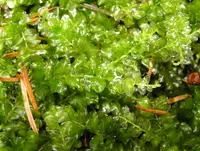
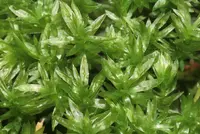
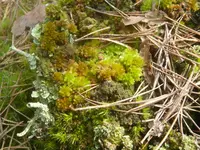
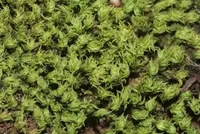
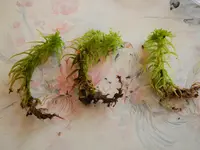
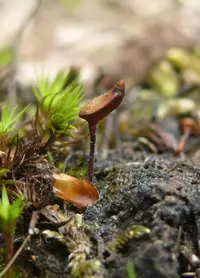
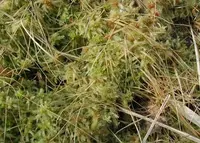
Russow's sphagnum (Sphagnum russowii) is a moss that forms soft, cushion-like mats in cool, wet environments. It lacks true roots and absorbs water across its entire surface. The plant usually appears in shades of pale green to reddish, with dense upright stems packed closely together. It typically grows in bogs, wetlands, and damp forests across northern and temperate regions. High moisture needs and sensitivity to drying make it moderately challenging to maintain in low-humidity homes. Those who want to learn how to care for Russow's sphagnum should focus on constant moisture, soft water, and gentle, indirect light.

Main Plant Requirements

Care Difficulty

Moderate Care

Light Preference

Partial Shade

Water Requirements

Aquatic

Temperature Preference

Cold Hardy

Hardiness Zone

2–6

Soil Texture

Peaty, Organic-rich, Silty

Soil pH

Strongly acidic (4.5–5.5)

Soil Drainage

Waterlogged tolerant

Fertilization

Minimal (feed rarely)

Get Personalized Care Plan

Scan your plant to receive care tips personalized for your specific plant

Available on iOS and Android

How to Care for the Russow's sphagnum

This moss prefers soft, cool light that mimics its native bog and forest-edge habitats.

  • Provide 2–4 hours of weak morning sun with bright, filtered light the rest of the day; dappled shade under shrubs or grasses works well.
  • Avoid strong midday or afternoon sun, which can bleach and dry Russow's sphagnum; leaf tips turning pale or crisp indicate excess light and heat stress.
  • In summer, increase shading or move to a more sheltered spot, while in low-light winter conditions choose the brightest shaded area available.

This species is adapted to saturated, low-nutrient bogs and should never be allowed to dry out.

  • Maintain constantly wet conditions with standing water just at or slightly below moss level; the surface should always feel spongy and cool, never crusted or crunchy.
  • If growing Sphagnum russowii on a mound, rewet whenever the upper 0.5–1 cm feels only damp rather than fully saturated, using rain, distilled, or dechlorinated water.
  • Signs of underwatering include brown, brittle tips and shrinking cushions; sour odor or slimy, collapsing stems usually indicates stagnant, anaerobic water and poor oxygen exchange.

This moss prefers cool, humid conditions and tolerates cold better than heat.

  • Aim for 50–65°F (10–18°C) for steady growth, with brief periods up to 70°F (21°C) if humidity is high and direct sun is limited.
  • It endures down to about 25–28°F (-4 to -2°C) with short light frosts, but repeated freeze–thaw cycles without snow cover can damage exposed cushions.
  • Above 75°F (24°C), provide deep shade, high humidity, and excellent moisture; sustained heat over 80°F (27°C) greatly increases desiccation risk.

This moss requires sustained high humidity to stay actively growing and green.

  • Aim for 70–100% humidity, using closed terrariums, covered trays, or humid greenhouses.
  • Dry air causes browning tips, slowed growth, and crispy, shrinking strands.
  • Increase humidity with water-filled pebble trays under shallow containers, avoiding direct contact with standing water.
  • Light, frequent misting helps, but combine it with an enclosed environment so moisture does not evaporate too quickly when caring for Russow's sphagnum.

Sphagnum russowii grows best in saturated, acidic, organic media rather than traditional potting soil.

  • Use pure long-fiber sphagnum or a mix of 70–90% peat with the remainder fine sand for structure.
  • Keep the medium constantly wet to waterlogged but not under deep water, allowing the top layer to stay spongy.
  • Target an acidic pH around 3.5–5.5; avoid liming agents, composts with added manure, or alkaline tap water where possible.
  • Improve aeration by avoiding heavy mineral soils; a deep, loose organic layer lets lower parts stay moist while upper shoots receive air and light.

This species is suitable for container growing, especially in shallow trays or terrarium-style setups.

  • Choose wide, shallow containers so the moss can spread horizontally and form a dense, even carpet.
  • Use containers with a controlled water reservoir or outer tray, allowing the medium to wick moisture without submerging the growing tips.
  • Clear-walled containers help monitor water level and moss health, and also create a humid microclimate when partially covered.

This moss gains most nutrients from its water source, so Russow's sphagnum usually needs no added fertilizer in typical culture.

Pruning Sphagnum russowii is minimal and focuses on maintaining clean, vigorous growth in culture beds or containers.

  • Trim off brown, decaying, or moldy tips at any time using clean scissors to improve air flow and appearance.
  • Remove crowded or collapsing patches to reduce rot risk and encourage fresh, upright tufts.
  • Avoid cutting too low into the living green layer; leave some intact stems for continued growth.

Transplanting this moss focuses on refreshing substrate and maintaining an evenly moist, acidic environment rather than enlarging containers.

  • Plan transplanting in cool, mild weather or indoors under stable 55–70°F conditions to limit stress.
  • Move mats when growth slows, the substrate compacts, or drainage declines, usually every 1–2 years in culture trays.
  • Lift clumps gently, keeping as much of the fibrous mat intact as possible to maintain capillary water flow.
  • Set onto fresh, saturated, low-nutrient medium and keep evenly moist and shaded for 1–2 weeks while it re-establishes.

New colonies are commonly produced by division and replanting of living stem tips from established Sphagnum russowii patches.

  • Take 2–5 cm green stem tips in spring or early summer when growth is strongest.
  • Lay or lightly press tips onto saturated, acidic, nutrient-poor substrate with high humidity and bright, indirect light.
  • Avoid burying the growing heads; keep them exposed while the lower stems anchor and branch.
  • Maintain constant moisture with soft, low-mineral water and gentle airflow to limit fungal problems.

This moss is naturally cold hardy, so outdoor colonies in the ground usually need no special winter care.

  • In very exposed sites, a light, airy leaf layer can buffer extreme freeze–thaw cycles around the base.
  • For container cultures, keep trays just above freezing and prevent complete desiccation.
  • Indoor culture trays can stay under cool, bright conditions with reduced watering but never fully dry.

Care Tips

Use Rainwater Catchment

Install a small rain barrel or use clean containers outdoors to collect soft, low-mineral rainwater, which reduces long‑term salt buildup and supports stable carpets when growing Russow's sphagnum.

Create Layered Moss Beds

Spread fresh strands over a base layer of older, partially decomposed moss to mimic natural bog structure, improving moisture retention and giving new growth an elevated, well-aerated surface.

Rotate Culture Trays

Turn trays or culture boxes 90° every 1–2 weeks so light and airflow reach all sides evenly, which encourages uniform color and growth rather than tall, weak shoots on one edge.

Use Mesh Supports

Lay a fine plastic mesh or orchid basket liner under the moss so it can root through it, making it easier to lift, divide, or move whole mats without breaking fragile stems.

Cool-Season Rest

Provide a slight seasonal cooldown by keeping outdoor or unheated indoor setups a bit cooler in winter while still frost-free, which can extend longevity and maintain compact, healthy growth over years.

Common Pests and Diseases

Fungus gnat larvae

This pest is attracted to constantly wet, organic substrates and the larvae can graze on living sphagnum tips and fragile stems. Symptoms include thinning, pale patches, and slow regrowth in areas where larvae are concentrated.

Solution

Reduce standing water, avoid stagnant trays, and increase air movement over the moss surface so the top layer can oxygenate between waterings. Use yellow sticky traps for adults and, if needed, apply a biological control such as Bacillus thuringiensis israelensis (Bti) in the water to target larvae without harming the moss, following label rates carefully.

Algal overgrowth

This disease-like condition occurs when free-floating or surface algae cover the moss, usually under high light with nutrient-rich water. Symptoms include a green, slimy film that smothers live sphagnum and slows new shoot formation.

Solution

Lower dissolved nutrients by using low-mineral water (rain, distilled, or reverse osmosis) and avoid fertilizer. Increase water changes, gently rinse or siphon off algal mats, and reduce light intensity or duration slightly while keeping the moss bright to maintain healthy growing Sphagnum russowii.

Cyanobacterial slime

This disease involves blue-green bacterial films that develop on saturated, low-oxygen moss surfaces. Symptoms include dark, sometimes bluish or blackish slimy layers that cause dieback of the top sphagnum layer.

Solution

Improve oxygenation by increasing airflow and reducing water stagnation, for example by using shallow trays with regular water changes. Manually remove slimy patches, thin overly dense moss mats, and avoid any nutrient-enriched water that can fuel cyanobacterial growth.

Gray mold (Botrytis)

This disease appears in cool, humid, poorly ventilated setups where dead organic material is left on the moss. Symptoms include soft, decaying patches with a fuzzy gray mold coating, often starting on dead or shaded areas and then spreading to live tips.

Solution

Promptly trim and remove dead or decaying sphagnum, then increase air circulation while keeping the moss evenly moist but not sealed in stagnant air. If patches recur, remove infected clumps and slightly increase light and spacing between mats so surfaces dry faster between misting events.

Slugs and snails

These pests feed on soft sphagnum shoots, especially in outdoor or greenhouse setups. Symptoms include irregular grazing, missing tips, and shredded, collapsed patches where feeding has been heavy.

Solution

Hand-pick slugs and snails at night, use physical barriers such as copper tape on bench edges, and keep surrounding areas free of hiding spots like pots and debris. In severe cases, employ iron phosphate bait placed away from the main moss bed, following label directions to minimize non-target impact.

Interesting Facts

Boreal forest specialist

This moss occurs mainly in cool, moist boreal and hemi‑boreal forests, where it forms loose carpets on soil, decaying wood, and hummocks rather than the extensive open bog mats typical of many other sphagnum species.

Distinctive stem coloration

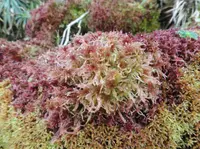
Living shoots often show a characteristic reddish to brownish stem with contrasting green branch leaves, a color pattern used by bryologists to distinguish it from visually similar peat mosses in the field.

Important microhabitat former

By building small, elevated hummocks on forest floors, it creates moisture gradients that support specialized mosses, liverworts, and invertebrates that do not thrive on surrounding bare soil or litter.

Botan icon

Did you know?

In some northern European forests, this species is used as an indicator of relatively undisturbed, cool, and moist microclimates, so its presence can help scientists assess long‑term habitat continuity and subtle changes in forest hydrology.

FAQs about Russow's sphagnum

Growth is moderate under consistently wet, cool, acidic conditions. In cultivation, new tips may extend a few cm per year. Growth slows sharply if moisture drops, temperatures are high, or water is mineral-rich instead of soft and low in nutrients.

Grow Healthy Plants with Botan Care

Keep your plants happy and healthy with plant identification, disease detection, and easy care guidance.

Botan plant care app — identify plants on mobile

Explore More Plants