Renewal coppice timing
Every 3–5 years, cut all stems back to 10–20 cm from the ground in very early spring to rejuvenate the shrub, then apply a 5–7 cm mulch ring to support vigorous regrowth.

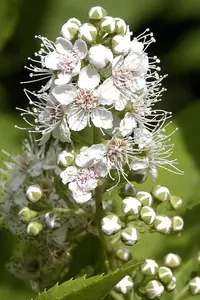
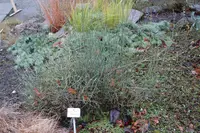
White meadowsweet, Spiraea alba, is a deciduous shrub native to moist meadows, stream edges, and wetlands in eastern and central North America. It typically forms upright, bushy clumps with slender stems and fine-textured green leaves. In summer, it produces dense, tapering clusters of small white flowers that attract pollinators and give the plant a light, airy look. This species tolerates cold climates, periodic flooding, and a range of soils, which makes it relatively easy to establish in suitable sites. It generally prefers full sun to light shade and consistently moist, yet not stagnant, soil. These traits make it straightforward to care for white meadowsweet in naturalistic gardens and restoration plantings.

Care Difficulty
Easy Care

Light Preference
Full Sun

Water Requirements
Regular Water

Temperature Preference
Cold Hardy

Hardiness Zone
3–8

Soil Texture
Loamy, Sandy, Clay

Soil pH
Acidic (5.5–6.5), Slightly acidic (6.5–7.0)

Soil Drainage
Moist but well-drained

Fertilization
Minimal (feed rarely)
Scan your plant to receive care tips personalized for your specific plant
Available on iOS and Android
This shrub prefers consistent sun exposure to flower heavily and maintain dense growth.
This species prefers evenly moist, not soggy, soil once established outdoors.
This hardy shrub tolerates a wide temperature range typical of temperate climates.
Humidity is not a major factor for Spiraea alba, which adapts well to typical outdoor levels.
Spiraea alba grows best in moderately moist, structurally stable soil that does not stay waterlogged.
This species can be grown in containers outdoors if the pot is chosen and managed carefully for root space and stability.
This native shrub needs only light feeding in most garden soils.
Pruning Spiraea alba keeps the shrub dense and flowering well.
This species is usually grown in the ground, so care focuses on transplanting rather than repotting.
Spiraea alba is commonly multiplied by softwood cuttings, division, or seed.
This shrub is cold hardy in much of the US and needs minimal winter care outdoors.

Plant Health Check
Not sure what's wrong with your plant? Check your plant's health inside the app.
This species is naturally adapted to wet prairies, stream banks, and fens across eastern and central North America and tolerates seasonal flooding better than many other spireas.
Its dense clusters of small white flowers open in mid to late summer, providing nectar and pollen for native bees, wasps, and butterflies when many spring-blooming shrubs are no longer in flower.
The shrub spreads slowly by shallow rhizomes, forming clonal colonies that help stabilize moist soils and reduce erosion along waterways.

Spiraea alba was historically an important component of tallgrass prairie wetlands, and in some regions its presence is now used by ecologists as an indicator of relatively undisturbed, high-quality wetland habitat.
This shrub spreads by both seed and shallow rhizomes, forming loose colonies over time. It is not usually aggressive in maintained gardens but can slowly expand in moist, open sites if not periodically thinned or edged.
Keep your plants happy and healthy with plant identification, disease detection, and easy care guidance.