Encourage Basal Shoots
After flowering, remove 1–3 of the oldest stems at ground level each year to stimulate new basal shoots and keep the shrub dense from the base.

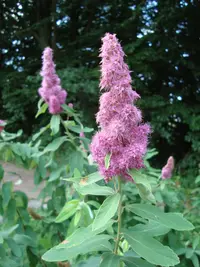
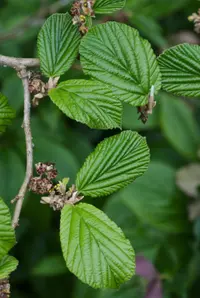
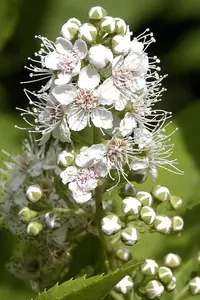
Rose spirea (Spiraea douglasii) is a deciduous flowering shrub valued for its upright habit and dense clusters of pink to rose-colored summer blooms. It typically forms thickets with many slender stems and narrow, toothed leaves, creating a full, informal look.
This species is native to western North America, where it grows in moist meadows, stream edges, and open woodland margins. It is generally easy to grow, as it tolerates cold, periodic wet soils, and a range of garden conditions.
Gardeners who want to know how to care for rose spirea should note that it prefers full sun to light shade, consistent moisture, and reasonably drained soil for best flowering and growth.

Care Difficulty
Easy Care

Light Preference
Full Sun

Water Requirements
Regular Water

Temperature Preference
Cold Hardy

Hardiness Zone
4–8

Soil Texture
Loamy, Silty, Organic-rich

Soil pH
Acidic (5.5–6.5), Slightly acidic (6.5–7.0)

Soil Drainage
Moist but well-drained

Fertilization
Minimal (feed rarely)
Scan your plant to receive care tips personalized for your specific plant
Available on iOS and Android
This shrub prefers bright, open conditions for best flowering and dense growth.
Spiraea douglasii prefers consistently moist but not saturated soil, especially in its first 2–3 years.
This hardy shrub thrives in cool to temperate outdoor climates with cold winters and mild to warm summers.
Humidity is rarely a limiting factor for Spiraea douglasii in typical outdoor conditions.
Spiraea douglasii grows best in moist, well-structured soil that supports steady root moisture without waterlogging.
This species can be grown in large outdoor containers if the pot is chosen and managed for its vigorous, shrubby root system.
Spiraea douglasii grows well in average garden soil but responds to moderate feeding during the active season.
Pruning supports dense growth and consistent flowering in Spiraea douglasii.
This shrub is usually grown in the ground, so focus on careful transplanting rather than frequent repotting.
Spiraea douglasii is commonly propagated to expand plantings or refresh older shrubs.
This species is generally cold hardy in much of the US and usually needs minimal winter care.

Plant Health Check
Not sure what's wrong with your plant? Check your plant's health inside the app.
In its native Pacific Northwest range, this shrub is an important nectar and pollen source for specialist native bees that are adapted to its midsummer bloom period and dense flower spikes.
The species often grows in saturated soils along streams, bogs, and wet meadows, where its shallow, fibrous root system tolerates seasonal flooding and low-oxygen conditions better than many other shrubs.
It spreads readily by root suckers and can form dense, almost monoculture thickets in riparian zones, which is why it is considered invasive in some regions outside its native range, such as parts of northern Europe.

In some restored wetland and streambank projects within its native range, this shrub is deliberately planted to quickly stabilize banks with its dense root system and to provide early structural habitat for birds and invertebrates while slower-growing woody species establish.
Lack of flowering usually comes from too much shade, heavy pruning at the wrong time, or nutrient imbalance. Ensure strong light, avoid cutting new wood in spring, and use a balanced, low‑nitrogen fertilizer to support bud formation.
Keep your plants happy and healthy with plant identification, disease detection, and easy care guidance.