Renewal by coppicing
Every 8–10 years, cut all stems back to 10–20 cm from the ground in late winter to fully reset an overgrown, woody shrub and restore dense flowering growth over the next 2–3 seasons.

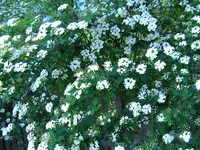
Bridalwreath spirea (Spiraea prunifolia) is a deciduous flowering shrub known for its arching branches and dense clusters of small white spring blossoms. It forms a rounded, fountain-like shape that works well as a hedge, accent shrub, or part of a mixed border.
This species originates from East Asia but is widely used in ornamental landscapes in temperate regions. It is generally easy to grow, adapting to a range of garden soils and handling urban conditions fairly well.
Full sun, moderate moisture, and well-drained soil support the best flowering, and understanding how to care for bridalwreath spirea helps maintain a tidy, long-lived shrub in the landscape.

Care Difficulty
Easy Care

Light Preference
Full Sun

Water Requirements
Moderate Water

Temperature Preference
Cold Hardy

Hardiness Zone
5–8

Soil Texture
Sandy, Loamy, Clay

Soil pH
Acidic (5.5–6.5), Slightly acidic (6.5–7.0)

Soil Drainage
Well-drained

Fertilization
Minimal (feed rarely)
Scan your plant to receive care tips personalized for your specific plant
Available on iOS and Android
This shrub flowers best with strong light and direct sun for much of the day.
This shrub prefers evenly moist but never waterlogged soil, especially during establishment and flowering.
This hardy, outdoor shrub tolerates a wide temperature range but performs best in moderate conditions.
Humidity is rarely a concern for Spiraea prunifolia, which adapts well to outdoor air in most climates.
Spiraea prunifolia prefers moderately fertile, well-structured soil that drains freely yet holds some moisture.
This species can grow successfully in containers outdoors when the pot is sized and weighted for a woody shrub.
This shrub needs only light feeding in most garden soils to support steady growth and flowering.
Thoughtful pruning keeps Spiraea prunifolia compact and flowering well.
This shrub is usually grown in the ground and only occasionally maintained long term in containers.
Gardeners commonly renew or expand plantings of this species through vegetative propagation methods.
Mature plants are generally cold hardy in typical temperate climates and need limited winter attention.

Plant Health Check
Not sure what's wrong with your plant? Check your plant's health inside the app.
This species typically flowers in early to mid-spring before or just as the leaves fully develop, creating dense cascades of white double blossoms on bare or sparsely leafed stems.
The blooms are technically double flowers, formed by transformed stamens that create multiple petal-like structures, giving each small flower a full, rosette-like appearance.
Introduced from East Asia to Western horticulture in the 19th century, this shrub quickly became a staple in traditional cottage and estate gardens for hedging and foundation plantings due to its reliable spring display.

In traditional Korean landscaping, this shrub has long been valued along boundaries and embankments, where its dense, arching habit helps stabilize soil while providing a striking white floral display in spring.
Lack of flowering usually comes from pruning at the wrong time, heavy shade, or nutrient imbalance. It blooms on old wood, so pruning after midsummer removes next year’s buds. Excess nitrogen fertilizer can also favor leaves over flowers.
Keep your plants happy and healthy with plant identification, disease detection, and easy care guidance.