Maintain Cool Roots
Place containers inside a larger outer pot and fill the gap with damp sphagnum moss to keep roots cool and evenly moist during hot spells, which supports stable flowering when growing Marsh lady's tresses.

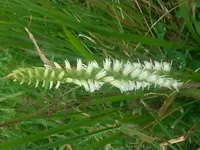
Marsh lady's tresses (Spiranthes odorata) is a small, terrestrial orchid known for its spiraling spikes of white, sweetly fragrant flowers. Plants usually form low rosettes of narrow leaves at the base.
This species occurs naturally in wet meadows, marshes, and boggy areas of the southeastern United States. It is adapted to consistently moist, lowland habitats.
Compared with many orchids, it is moderately easier to maintain if its need for steady moisture and cool to mild conditions is respected. Understanding how to care for Marsh lady's tresses starts with providing damp, humus-rich soil and gentle light.
Its compact habit makes it interesting for specialized bog gardens and containers, but it does not tolerate drying out or prolonged heat stress well.

Care Difficulty
Moderate Care

Light Preference
Partial Sun

Water Requirements
Keep Soil Moist

Temperature Preference
Cold Hardy

Hardiness Zone
5–9

Soil Texture
Loamy, Silty, Organic-rich

Soil pH
Acidic (5.5–6.5)

Soil Drainage
Waterlogged tolerant

Fertilization
Minimal (feed rarely)
Scan your plant to receive care tips personalized for your specific plant
Available on iOS and Android
This wetland orchid prefers bright, gentle light that mimics open marsh edges.
This species thrives in consistently moist to wet conditions, similar to its natural marsh habitat.
This orchid prefers mild to warm conditions with cool winters for dormancy.
This species prefers consistently moist air but adapts to typical home humidity if watering is well managed.
This terrestrial orchid needs constantly moist, airy substrate that never becomes stagnant.
This orchid is suitable for container growing if moisture and stability are carefully managed.
Spiranthes odorata is a modest feeder that benefits from light, consistent nutrition in the growing season.
Spiranthes odorata needs only light pruning to stay tidy and support healthy flowering.
This orchid prefers to stay somewhat root-bound, so repotting or transplanting should be infrequent and gentle.
Propagation of Spiranthes odorata is usually done by careful division rather than from seed at home.
This species is moderately cold hardy and often needs only simple winter care in most mild to cool climates.

Plant Health Check
Not sure what's wrong with your plant? Check your plant's health inside the app.
This species is known for its sweet, vanilla-like scent, especially noticeable in the evening, which helps attract nocturnal pollinators.
It typically flowers in late summer to fall, providing nectar and pollen resources for bees and other insects when many other native wetland plants have already finished blooming.
In the wild, it is native to freshwater swamps, marsh edges, and wet ditches of the southeastern United States, where it often grows in saturated, low-oxygen soils that many other orchids cannot tolerate.

The flowers of this species are arranged in a distinct spiral around the flowering stem, a feature that inspired both its common name marsh lady's tresses and the genus name Spiranthes, which comes from Greek words meaning spiral and flower.
This species performs best outdoors in consistently moist, humus-rich ground, such as pond margins or boggy beds. Indoor conditions are usually too dry and stagnant for long-term health, so Marsh lady's tresses indoor care is rarely successful.
Keep your plants happy and healthy with plant identification, disease detection, and easy care guidance.