Staggered Planting
Plant clumps at slightly different depths and spacings within a shaded border to extend the display period and reduce the chance that a single pest or disease outbreak ruins all blooms at once.

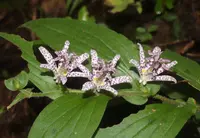
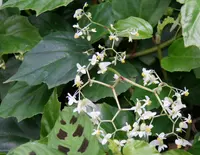
Toadlily (Tricyrtis hirta) is a shade-loving perennial grown mainly for its small, orchid-like flowers that appear in late summer to fall. It forms clumps of arching stems with spotted blooms and green, lance-shaped leaves.
This species is native to moist woodlands in Japan, so it thrives in cool, sheltered garden spots. Once established, it is fairly long-lived but can be slow to settle after planting.
To successfully care for toadlily, provide consistently moist but not waterlogged soil, protection from hot afternoon sun, and soil rich in organic matter. It suits woodland borders, shaded beds, and calm, protected corners where its flowers can be viewed up close.

Care Difficulty
Moderate Care

Light Preference
Partial Shade

Water Requirements
Keep Soil Moist

Temperature Preference
Cold Hardy

Hardiness Zone
4–8

Soil Texture
Loamy, Silty, Organic-rich

Soil pH
Acidic (5.5–6.5), Slightly acidic (6.5–7.0)

Soil Drainage
Moist but well-drained

Fertilization
Light (every 4–6 weeks)
Scan your plant to receive care tips personalized for your specific plant
Available on iOS and Android
Tricyrtis hirta prefers cool, dappled woodland-style light rather than strong direct sun.
This species prefers consistently moist but not waterlogged soil throughout the growing season.
This woodland perennial grows best in cool to mild conditions with protection from extremes.
This species benefits from moderate to high humidity to keep foliage and flowers in good condition.
Tricyrtis hirta prefers consistently moist, humus-rich, well-structured soil that drains freely.
This species grows well in containers if moisture and drainage are carefully balanced.
This woodland perennial benefits from modest feeding to support flowering but does not need heavy fertilization.
Pruning Tricyrtis hirta is light and mostly focused on tidying and maintaining healthy clumps.
This species is more often transplanted in the garden than repotted, as it prefers a stable, shaded site.
Tricyrtis hirta is commonly propagated by division or seed to expand plantings.
This plant is generally cold hardy in much of the US and needs only modest winter attention in the ground.

Plant Health Check
Not sure what's wrong with your plant? Check your plant's health inside the app.
This species flowers late in the season, often from late summer into fall, when many woodland plants have finished flowering, helping it attract pollinators with less competition in its native Japanese forest habitats.
Although not related to orchids, its flowers have a speckled perianth with a narrowed base and spreading lobes that visually mimic orchid blooms, which can help draw in insect pollinators in dim, understory light.
The stems and leaves are covered in fine hairs that can help reduce water loss and provide slight protection against small herbivores and excess surface moisture in the humid woodland environments where it grows.

In traditional Japanese horticulture, this species has long been used as an autumn garden accent in shaded temple and courtyard plantings, valued for its late-season, intricate flowers that appear when many other ornamentals have already declined.
Sparse or absent flowers usually result from too much shade, excessive heat, or nutrient-poor soil. Division that is too frequent, drought stress, or heavy pruning in early summer can also reduce bud formation and delay or prevent blooming.
Keep your plants happy and healthy with plant identification, disease detection, and easy care guidance.