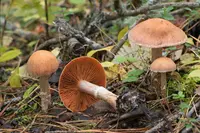
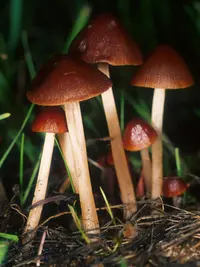
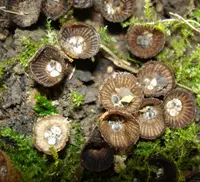
crowded parchment Care (Stereum complicatum)

crowded parchment

About crowded parchment

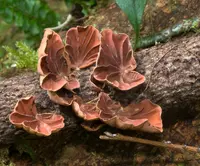
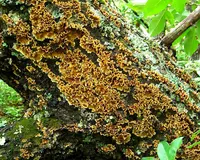
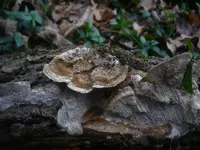
Crowded parchment, Stereum complicatum, is a thin, crust-like wood-decay fungus rather than a traditional leafy plant. It forms overlapping, fan-shaped brackets tightly pressed against logs and branches. Colors range from orange to brown, often with zoned bands and a slightly velvety surface. It commonly appears on dead hardwood in forests of eastern North America. This species plays an important ecological role by breaking down dead wood. Because it is a fungus with very specific substrate needs, it is not easy to cultivate in typical home conditions. Those who want to care for crowded parchment must provide consistently woody material and a humid, shaded environment.

Main Plant Requirements

Care Difficulty

Moderate Care

Light Preference

Partial Shade

Water Requirements

Regular Water

Temperature Preference

Cool Climate

Hardiness Zone

5–9

Soil Texture

Loamy, Silty, Organic-rich

Soil pH

Acidic (5.5–6.5), Slightly acidic (6.5–7.0)

Soil Drainage

Moist but well-drained

Fertilization

Minimal (feed rarely)

Get Personalized Care Plan

Scan your plant to receive care tips personalized for your specific plant

Available on iOS and Android

How to Care for the crowded parchment

This wood-decaying fungus thrives in shaded forest conditions with limited direct sun exposure.

  • Provide dappled or filtered light under tree canopies, mimicking woodland shade with less than 1–2 hours of weak direct sun per day.
  • Allow mainly indirect light; strong afternoon sun can dry host wood rapidly and reduce crowded parchment fruiting and longevity.
  • In summer, prioritize deeper shade and higher humidity, while in autumn and winter more open, leafless canopy still offers suitable low-intensity light.

This fungus depends on consistently moist, but not waterlogged, wood rather than direct watering.

  • Maintain host logs or fallen branches in a site where surrounding soil stays evenly moist, avoiding standing water that encourages competing molds.
  • If managing in a garden setting, irrigate nearby soil when the top 2–5 cm are dry, so humidity and wood moisture stay stable for Stereum complicatum.
  • Watch for cracking, very light-colored, brittle wood as a sign of dryness, and for sour smells or slimy growth as signs of excessive saturation.

This species prefers mild, temperate conditions and shows seasonal activity peaks in cooler, moist periods.

  • Optimal fruiting typically occurs around 50–70°F (10–21°C), especially when paired with high humidity and shaded woodland exposure.
  • The mycelium can tolerate down to about 20–25°F (-6 to -4°C) in dormant periods, but repeated hard freezes may reduce visible fruiting bodies.
  • Heat above 80–85°F (27–29°C), combined with dry air, can desiccate host wood, so choose cooler, shaded microclimates during hot summers.

This wood-decay fungus does not need managed air humidity and thrives in typical outdoor conditions.

This fungus colonizes dead hardwood rather than growing in conventional soil.

  • Stereum complicatum develops best on well-decayed hardwood logs or branches with a fibrous, sponge-like structure instead of any mineral soil mix.
  • Select hardwood pieces (oak, beech, maple) that are already partially decomposed, as dense, freshly cut wood slows colonization and fruiting.
  • Keep host wood moist but not waterlogged by allowing free drainage around it, avoiding standing water that can favor competing molds.
  • Avoid burying the wood in compacted ground; instead, raise it slightly on stones or slats to maintain aeration around the substrate.

This species is not well suited to conventional container growing, as it naturally colonizes dead hardwood rather than potting media.

Stereum complicatum growing on hardwood in nature usually needs no fertilizer when established in suitable substrate.

  • If cultivated on logs or sterilized wood blocks, use nutrient-enriched sawdust or a balanced 10-10-10 supplement mixed into the substrate before inoculation.
  • Avoid liquid feeds; excess soluble nutrients can alter wood moisture balance and favor contaminant fungi over crowded parchment.
  • During active growth, maintain steady but low nutrient availability rather than frequent top-dressing or concentrated feeding.
  • Do not add fertilizer in winter or after fruiting declines; instead, replace or refresh the woody substrate if productivity drops.

Pruning Stereum complicatum is rarely needed and is mostly a hygiene practice rather than a shaping tool.

  • Remove only dead, decayed, or contaminated host wood during late winter or early spring to limit competing fungi.
  • Trim away heavily damaged or mold-covered brackets with a clean, sharp knife to reduce disease spread on the log surface.
  • Avoid cutting healthy fruiting bodies; excessive removal can reduce future spore production and visual interest.
  • Disinfect blades with alcohol between cuts when working on multiple logs or branches to prevent cross-contamination.

Stereum complicatum is typically managed on outdoor hardwood rather than in pots, so focus on careful transplanting of inoculated wood.

  • Transplant when mycelium has fully colonized logs but before fruiting peaks, usually in cool, moist seasons like spring or fall.
  • Move colonized wood only if fruiting declines, the log is rotting through, or airflow and light are clearly inadequate.
  • Shift logs gently to a new site with similar shade, humidity, and tree cover to reduce mycelial stress and drying.
  • Position wood firmly on soil or slightly embedded leaf litter so moisture is retained but drainage remains good.

Propagation of Stereum complicatum is specialized and usually handled through fungal cultivation techniques rather than casual home methods.

  • Use plug spawn or sawdust spawn introduced into fresh hardwood logs via drilled holes in early spring or fall.
  • Select sound, untreated hardwood pieces; avoid bark that is peeling or wood that is already heavily colonized by other fungi.
  • After inoculation, seal holes with wax and keep logs shaded, humid, and off bare ground to encourage even mycelial spread.
  • Maintain steady moisture and good airflow; prolonged saturation or extreme drying greatly reduces colonization success.

Outdoor populations of Stereum complicatum on native hardwoods are naturally cold hardy and need no special winter care in most climates.

Care Tips

Substrate refresh cycles

Replace the wood pieces or bark where the fungus grows every 6–12 months to prevent nutrient exhaustion and keep a stable, fresh substrate for growing crowded parchment.

Mimic forest layering

Arrange several thin branches or bark slabs in loose layers rather than a single thick log so the fungus has more exposed surface area and air flow, which encourages denser and healthier fruiting patches.

Moisture gradient setup

Position some wood pieces closer to the moisture source and others slightly drier so the fungus can colonize the zone that best matches its current needs, reducing stress during short dry or wet spells.

Shaded airflow management

Provide light but constant air movement, such as a small fan on a low setting that does not blow directly on the substrate, to limit mold competitors without drying the woody material completely.

Periodic competitor checks

Inspect the colonized wood every few weeks and carefully remove any fast-growing molds or other fungi with a clean tool before they spread, then lightly mist the area to help the Stereum recover its territory.

Common Pests and Diseases

Bark beetles

These insects tunnel into dead or dying hardwood where the fungus grows, disrupting wood structure and altering the moisture conditions the fruiting bodies rely on.

Solution

Remove and properly dispose of heavily infested logs or branches, and avoid storing freshly cut hardwood in large piles to reduce beetle buildup; if wood must be stored, keep it dry, off the ground, and with good airflow so that both beetle pressure and fungal stress stay low.

Wood-boring larvae

These insects include various moth and beetle larvae that feed within decaying logs, causing tunnels and cavities that can desiccate the substrate supporting the bracket-like fruiting layers.

Solution

Cut out and discard the most heavily tunneled wood, then keep the remaining substrate shaded and evenly moist but not waterlogged, as stable moisture and limited mechanical disturbance help the fungus continue growing despite internal damage.

Competing saprobic fungi

This disease pressure comes from other decay fungi colonizing the same dead hardwood, sometimes outcompeting or overgrowing the thin, layered fruiting surface.

Solution

Select and retain wood with intact bark and moderate, not advanced, decay so Stereum complicatum can establish before strong competitors; if used in culture or display, remove pieces that show dense, fuzzy overgrowth and replace with fresher hardwood to favor the characteristic parchment-like layers.

Wood desiccation

This physiological disorder appears when logs or branches dry too quickly, leading to brittle, faded, and poorly formed fruiting layers that detach from the substrate.

Solution

Maintain the wood in a shaded, wind-sheltered spot with intermittent but not constant moisture, such as light, regular wetting during dry spells, and avoid full sun exposure or indoor heating that accelerates drying if attempting crowded parchment indoor care on decorative wood pieces.

Interesting Facts

Thin, leathery brackets

This species forms very thin, leathery, fan-shaped brackets that overlap in dense tiers along dead hardwood branches, creating a layered crust rather than thick shelves.

Bright zoned coloring

The fruiting bodies show distinct orange, reddish, and yellow concentric zones when fresh, then fade toward duller brown tones as they age and dry.

Host and decay role

It occurs mainly on oak and other hardwoods in eastern North America, where it acts as a saprobe, decomposing dead wood and contributing to nutrient recycling in forest ecosystems.

Botan icon

Did you know?

Microscopic examination of Stereum complicatum reveals smooth, pale spores and a lack of clamp connections in its hyphae, features that help separate it from visually similar crust fungi during taxonomic identification.

FAQs about crowded parchment

This bracket fungus develops relatively quickly on dead hardwood, often appearing within a single season after wood is colonized. It expands in thin layers rather than gaining height, forming overlapping shelves that can spread several cm each year.

Grow Healthy Plants with Botan Care

Keep your plants happy and healthy with plant identification, disease detection, and easy care guidance.

Botan plant care app — identify plants on mobile

Explore More Plants