Sticherus flagellaris Care

Sticherus flagellaris

About Sticherus flagellaris

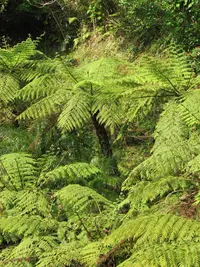
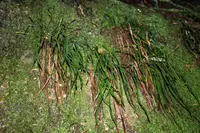
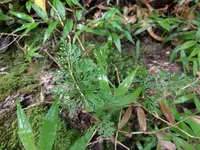
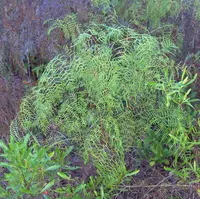
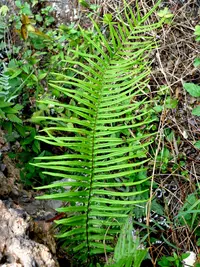
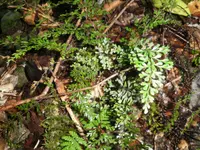
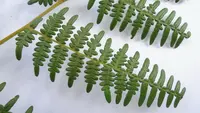
Sticherus flagellaris is a terrestrial fern known for its delicate, fan-like fronds that branch in a ladder pattern along slender, arching stems. It forms loose, airy clumps that can slowly spread over time.

This species occurs naturally in moist, shaded habitats, often in montane or forested areas with high humidity and consistently damp soil. Its need for stable moisture, shade, and good air circulation makes it more demanding than many common houseplants.

Gardeners who want to care for Sticherus flagellaris should be prepared to provide soft, filtered light, evenly moist but not waterlogged soil, and protection from drying winds or strong sun.

Main Plant Requirements

Care Difficulty

Hard Care

Light Preference

Partial Shade

Water Requirements

Keep Soil Moist

Temperature Preference

Tropical / Frost Sensitive

Hardiness Zone

10–12

Soil Texture

Loamy, Peaty, Organic-rich

Soil pH

Strongly acidic (4.5–5.5), Acidic (5.5–6.5)

Soil Drainage

Moist but well-drained

Fertilization

Minimal (feed rarely)

Get Personalized Care Plan

Scan your plant to receive care tips personalized for your specific plant

Available on iOS and Android

How to Care for the Sticherus flagellaris

This fern prefers bright, shaded conditions that mimic a humid forest understory.

  • Provide dappled or filtered light under trees or shade cloth, with 1–3 hours of soft morning sun and no direct midday or afternoon sun on fronds.
  • Tolerates deep shade for part of the day, but growth of Sticherus flagellaris becomes sparse if light stays very low; choose a site with bright indirect light most of the time.
  • In summer, increase shade as the sun intensifies to prevent leaf scorch; in cooler seasons, allow more open, filtered light to maintain dense foliage.

This species thrives in consistently moist, never stagnant or bone-dry soil.

  • Aim for evenly moist soil, allowing only the top 1–2 cm to just begin to feel less wet before watering again in the root zone.
  • Use rich, humus-heavy soil that drains slowly but does not puddle; prolonged standing water or a sour smell indicates poor drainage and potential root rot.
  • In warmer months, monitor more often as the upper layer dries faster; dull, crisping fronds suggest underwatering, while blackened, mushy roots indicate chronic excess moisture.

This fern prefers mild, frost-free conditions with stable, cool to warm temperatures.

  • Optimal growth occurs around 60–77°F (16–25°C), with sheltered, humid sites helping buffer short fluctuations.
  • Avoid temperatures below 40°F (4°C); repeated exposure near this level can damage fronds, and hard frost can kill above-ground growth.
  • In hotter periods above 86°F (30°C), increase shade and humidity and avoid hot, reflective surfaces, as combined heat and low moisture stress the plant and slow growth.

This fern needs consistently high humidity to maintain healthy, finely divided fronds.

  • Aim for 60–80% humidity; prolonged levels below 50% cause frond tips to brown and curl.
  • It tolerates only brief dry indoor air; use a humidifier or pebble tray during heated or air-conditioned periods.
  • Cluster plants together and avoid strong airflow from vents, which accelerates evaporation and leads to crisping and stalled new growth.

Sticherus flagellaris prefers a loose, moist, organic-rich substrate that mimics a forest floor.

  • Use a mix of roughly 50% fine pine bark, 30% peat or coco coir, and 20% perlite for a springy, airy structure.
  • Ensure rapid drainage so water moves through within seconds, but the mix still feels slightly moist when pinched.
  • Keep pH mildly acidic, around 5.5–6.5, by using peat-based components rather than alkaline composts or lime-amended mixes.
  • Avoid heavy clay, compacted garden soil, or pure sand, which either suffocate roots or dry out faster than the fine roots can tolerate.

This species adapts reasonably well to container growing when moisture and stability are carefully managed.

  • Choose a broad, shallow pot that lets the creeping rhizomes spread horizontally rather than forcing deep root penetration.
  • Select a heavier material such as ceramic to counterbalance arching fronds and prevent the container from tipping in wind.
  • Raise the pot slightly on feet or grids so drainage holes stay clear and runoff does not reabsorb into the lower root zone.

This fern grows in low-nutrient habitats and only needs light, careful feeding in cultivation.

  • Use a dilute balanced liquid fertilizer (such as 10-10-10) at 1/4–1/2 strength during active growth in spring–summer.
  • Apply every 4–6 weeks, only on moist soil, to avoid root burn and salt buildup.
  • Skip fertilizer in fall–winter when growth slows and rely on plain water.
  • Sticherus flagellaris also responds well to a thin topdressing of fine compost once in spring.

Pruning needs for Sticherus flagellaris are minimal and focus on cleanliness rather than shaping.

  • Best time for light pruning is late winter to early spring before new fronds extend.
  • Remove dead, diseased, or badly damaged fronds at the base using clean, sharp scissors or pruners.
  • Thin only severely crowded fronds to improve air flow without exposing the crown to direct sun.
  • Avoid heavy cutting, which can weaken the plant and reduce overall frond density.

This fern dislikes disturbance, so transplant or repot only when clearly necessary.

  • Look for roots circling the pot, pushing through drainage holes, or persistent slow growth despite good care.
  • Plan repotting or transplanting in early spring, about every 3–4 years, to match the natural growth cycle.
  • Move into a pot or site only 2–3 cm wider, using a moisture-retentive, well-drained mix to limit shock.
  • Handle the root ball gently, keep it intact, and water thoroughly afterward, then shade the plant for several days.

Propagation of Sticherus flagellaris is specialised and not usually attempted by casual growers.

  • Spore propagation is the standard method but requires sterile conditions and is slow to reach plantable size.
  • Collect mature brown spores from the underside of fronds and sow on a sterile, consistently moist medium.
  • Maintain high humidity, gentle bottom warmth, and low to medium light for germination and early growth.
  • Division is rarely suitable, as the root system is sensitive and often responds poorly to disturbance.

This fern has limited frost tolerance and benefits from extra attention in colder climates.

  • In regions with frost, grow in containers so plants can be shifted to a bright, cool, frost-free space for winter.
  • Outdoors in mild climates, apply a 5–8 cm mulch layer around the root zone, keeping it off the crown.
  • Avoid cold, drying winds by situating plants near windbreaks or among other evergreen foliage.

Care Tips

Stolon management

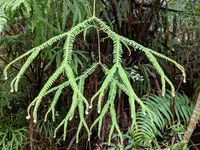
Inspect and gently guide the long flagellate stolons along a mossy stake or horizontal mesh so new plantlets root where you want them, preventing a tangled mass that is hard to divide or maintain.

Layering for propagation

Pin down vigorous stolon tips onto small pots filled with fine, moist fern mix so they root in place, allowing clean separation of new plants without disturbing the main clump.

Cool-season adjustment

In winter, slightly reduce air movement and protect the plant from direct drafts from heaters or cold windows, since rapid temperature and humidity shifts can scorch the delicate fronds.

Water quality control

Use rainwater, distilled, or reverse-osmosis water if tap water is hard, because mineral buildup on the fine pinnae can cause browning and reduce vigor over time when growing Sticherus flagellaris.

Gentle cleaning routine

Periodically rinse fronds with a gentle, lukewarm shower to remove dust and spores, which improves light capture and reduces spider mite pressure on this finely divided fern.

Common Pests and Diseases

Fern scale

This pest attaches to frond stalks and undersides, sucking sap and causing yellowing, weak growth, and eventual frond dieback. Symptoms include small, oval or dome-shaped brown or gray bumps that do not move when touched.

Solution

Prune and discard heavily infested fronds, then wipe remaining fronds and rachises with a soft cloth dipped in a mild insecticidal soap or horticultural oil solution, focusing on the undersides. Improve air movement around the plant and repeat treatments every 7–10 days until no new scale appears, since this approach is gentle enough for sensitive Sticherus flagellaris care.

Fern aphids

These insects cluster on young croziers (unfurling fronds) and tender stems, causing distortion, sticky honeydew, and sooty mold growth. This pest often appears when plants are soft and lush due to high humidity and low air movement.

Solution

Rinse colonies off gently with a steady stream of lukewarm water, then treat remaining insects with a diluted insecticidal soap spray, avoiding runoff into the soil crown. Increase ventilation, avoid excess nitrogen fertilizer, and inspect new growth weekly so small populations can be removed early by hand or by washing.

Rhizoctonia blight

This disease starts at the soil line, where fronds collapse and brown from the base while the crown remains damp and matted. Symptoms include patchy dieback, tan lesions on lower rachises, and a tendency for affected areas to spread through crowded plantings under warm, saturated conditions.

Solution

Remove and discard all affected fronds and any soggy organic debris at the base, then allow the surface to dry slightly between waterings while maintaining humidity around the foliage. Improve drainage and airflow, avoid overhead watering, and if decline continues, a targeted fungicide labeled for Rhizoctonia on ferns can be used according to label directions.

Pythium crown rot

This disease affects the underground rhizome and crown, leading to sudden wilting, stunted new fronds, and a foul smell from soft, dark tissue at the plant base. Symptoms include fronds that yellow rapidly even though the soil feels constantly wet or waterlogged.

Solution

Discard severely affected plants, since recovery is rare once the crown is extensively rotted, and avoid reusing contaminated potting mix. For early cases, remove mushy tissue with sterile tools, repot into fresh, well-draining but moisture-retentive substrate, reduce watering, and keep pots raised so excess water drains freely to prevent reinfection.

Bacterial leaf spot

This disease produces small, water-soaked translucent spots on pinnae that enlarge into irregular brown lesions, often with yellow halos, especially in crowded, constantly wet foliage. Symptoms include coalescing spots that give fronds a ragged, scorched appearance from the tips inward.

Solution

Cut off and discard spotted fronds, sanitize cutting tools, and avoid misting or wetting foliage late in the day so leaves dry quickly. Improve spacing and airflow, water at the soil level instead of overhead, and if needed apply a copper-based bactericide labeled for ornamental ferns, following instructions carefully to avoid phytotoxicity on delicate fronds.

Interesting Facts

Flagellate creeping habit

This fern spreads using long, whip-like stolons that creep over the soil or moss surface, rooting at intervals and forming loose colonies rather than dense clumps.

Specialized wetland niche

It naturally occurs in very wet, often peaty or sphagnum-rich habitats in southern South America, where it grows among low vegetation instead of in deep shade like many other ferns.

Dimorphic frond structure

Its fronds often show a clear distinction between sterile and fertile segments, with the fertile parts bearing clustered sporangia (spore sacs) along the margins, giving them a finer, more delicate appearance.

FAQs about Sticherus flagellaris

This is a slow-growing fern. In suitable, consistently moist conditions it usually extends fronds and creeping stems by only a few centimeters per year. Growth is faster in humid, mild climates and slows markedly in dry or cold conditions.

Grow Healthy Plants with Botan Care

Keep your plants happy and healthy with plant identification, disease detection, and easy care guidance.

Botan plant care app — identify plants on mobile

Explore More Plants