tansy bristle fern Care (Trichomanes pinnatum)

tansy bristle fern

About tansy bristle fern

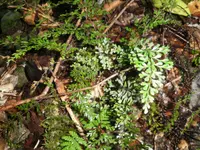
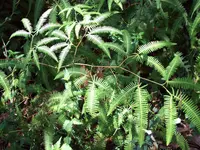
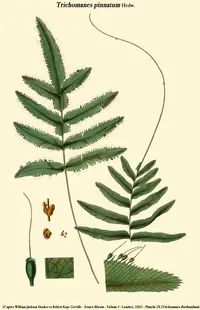
Tansy bristle fern, Trichomanes pinnatum, is a delicate tropical fern from humid forests, often growing on rocks, tree trunks, or in shaded ravines. It forms fine, lacy fronds that can look almost translucent in the right light.

This species prefers constant moisture, high humidity, and low to moderate light, which makes it more demanding than many common houseplants. Its thin tissues dry out quickly, so stable conditions are important.

For those ready to provide a humid, sheltered environment, it can be an interesting choice and a good way to learn how to care for tansy bristle fern.

Main Plant Requirements

Care Difficulty

Hard Care

Light Preference

Shade

Water Requirements

Keep Soil Moist

Temperature Preference

Tropical / Frost Sensitive

Hardiness Zone

11–13

Soil Texture

Peaty, Organic-rich, Loamy

Soil pH

Acidic (5.5–6.5)

Soil Drainage

Waterlogged tolerant

Fertilization

Light (every 4–6 weeks)

Get Personalized Care Plan

Scan your plant to receive care tips personalized for your specific plant

Available on iOS and Android

How to Care for the tansy bristle fern

This fern thrives in consistently shaded, humid forest conditions that mimic its native understory habitat.

  • Provide bright but fully filtered light, such as under dense canopy, shade cloth, or on the north or east side of structures with no direct sun reaching the fronds.
  • Limit direct sun to at most 0.5–1 hour of very soft early-morning light; harsh midday or afternoon sun scorches the thin fronds and dries exposed substrates quickly.
  • In deep shade with less than 2–3 hours of ambient daylight, growth becomes sparse and fronds elongate; increase reflected light or move slightly closer to a brighter, but still shaded, position for better tansy bristle fern vigor.

This species prefers constantly moist conditions that imitate a dripping rock face or saturated forest log.

  • Maintain the substrate evenly moist at all times; the surface should feel cool and damp, never crusted or powder-dry, especially around fine roots and rhizomes.
  • If the top 1–2 cm begin to lose moisture or fronds feel slightly limp, increase watering or misting frequency, but avoid standing water that causes sour, anaerobic smells or blackened roots.
  • During cooler months, reduce intensity rather than stopping moisture; lightly irrigate more often with smaller volumes to suit Trichomanes pinnatum and prevent sudden drying between events.

This fern is a true warmth-loving rainforest species that reacts quickly to temperature extremes.

  • Aim for stable growth temperatures of 65–80°F (18–27°C), which support active frond expansion and healthy, delicate tissues.
  • Protect from cold; growth slows below about 60°F (16°C) and tissue damage may occur near 50°F (10°C), with death likely if briefly exposed to 40°F (4°C) or frost.
  • In hot spells above 85°F (29°C), increase humidity and airflow while keeping it shaded; prolonged exposure over 90°F (32°C) combined with dry air leads to crisping and collapse of new fronds.

This fern demands very high, stable humidity to thrive indoors.

  • Aim for 70–90% humidity; use a room humidifier or enclosed terrarium-style setup for reliable levels.
  • Dry air below ~60% causes crisping edges, transparent patches, and stalled fronds in tansy bristle fern.
  • Increase local humidity with covered glass cases, water-filled pebble trays beneath the pot, and grouping plants closely.

Trichomanes pinnatum prefers an airy, constantly moist, humus-rich substrate rather than standard potting soil.

  • Use a fine-textured mix of 50% sphagnum moss, 30% leaf mold or compost, and 20% fine bark or perlite for structure.
  • Ensure the mix drains freely but never dries out completely; it should feel springy and moist, not dense or sticky.
  • Keep pH slightly acidic to neutral (pH 5.5–7.0), avoiding lime-added or strongly alkaline mixes that can restrict nutrient uptake.
  • Avoid heavy garden soil, coarse sand-dominated mixes, or any blend that compacts, as this suffocates delicate roots and rhizoids.

This species is well suited to container growing, especially in terrariums or covered cases.

  • Choose a shallow but wide container to match its creeping habit and allow even moisture distribution across the surface.
  • Select plastic or glazed ceramic pots to slow evaporation and keep the fine root system consistently moist.
  • Place the container inside a stable outer cachepot or terrarium base to reduce temperature swings around the root zone.

This delicate fern benefits from very light feeding in cultivation, while wild plants often grow acceptably without added nutrients.

  • Use a balanced liquid fertilizer (for example 10-10-10) at 1/4 strength for tansy bristle fern during active growth.
  • Apply every 4–6 weeks in spring and summer on already-moist substrate to avoid root burn.
  • Avoid slow-release granules that may concentrate salts in the fine, shallow roots.
  • Stop feeding in fall and winter, or reduce to 1 very weak application if growth continues indoors.

Trichomanes pinnatum needs only minimal pruning focused on hygiene rather than shaping.

  • Carry out light tidying any time, with main checks in late winter or early spring before new fronds expand.
  • Remove dead, yellowed, or damaged fronds at the base to limit fungal issues and improve air flow.
  • Thin badly crowded fronds to reduce humidity pockets that encourage disease and to keep the clump graceful.
  • Use small, sharp scissors or snips disinfected with alcohol to avoid transmitting pathogens.

This fern prefers stable, humid conditions, so repotting or transplanting should be infrequent and gentle.

  • Plan to move plants only every 2–3 years, when roots circle the pot or growth slows despite good care.
  • Choose early spring, just before vigorous growth, so disturbed roots can recover quickly.
  • Slide the root ball out carefully, keeping as much of the moist, fibrous medium around the fine roots as possible.
  • Shift into a slightly wider, shallow container with fresh airy mix, then maintain high humidity and shaded light until growth resumes.

Propagation of Trichomanes pinnatum is possible but considered advanced due to its moisture and humidity demands.

  • Division of small clumps in early spring is the most practical method for home growers.
  • Separate only well-rooted sections, keeping attached rhizome and several healthy fronds per division.
  • Plant divisions in a very fine, consistently moist mix and enclose in high humidity, such as a covered terrarium setup.
  • Spore propagation requires sterile technique, constant warmth, and very high humidity, so it is usually left to specialist growers.

This tropical fern is frost-sensitive and needs warm, humid conditions through winter in most climates.

  • Keep indoor temperatures around 65–75°F and avoid cold drafts from windows or doors.
  • For container plants outdoors, bring them inside well before night temperatures drop near 50°F.
  • Maintain high humidity with trays, grouping, or terrarium culture, while keeping the substrate just evenly moist.
  • In mild climates, sheltered greenhouse or shadehouse conditions with frost-free protection are suitable.

Care Tips

Use mesh lining

Line pots or terrarium pockets with fine plastic or fiberglass mesh before adding substrate to keep the extremely fine roots stable and prevent growing medium from washing out during frequent misting or flushing.

Provide stable anchoring

Attach rhizomes to rough bark, tree-fern fiber, or lava rock with soft ties or cotton thread so the plant can root into the surface, which better mimics its natural epiphytic habit and reduces crown rot risk in deep substrates.

Diffuse water flow

When rinsing or rehydrating the plant, pour water over a hand, mesh screen, or spray head above the foliage so the flow is very gentle and does not shred the delicate fronds or dislodge the moss-like root zone.

Create humidity buffer

Surround the plant with moisture-retentive companions such as moss pads or other high-humidity ferns inside a case or terrarium to create a more stable microclimate and reduce rapid humidity drops that stress filmy fronds.

Monitor frond translucency

Use changes in frond translucency as an early diagnostic tool: dull, opaque fronds usually indicate low humidity or desiccation, while yellowing edges under good humidity often suggest light or nutrient stress when caring for tansy bristle fern.

Common Pests and Diseases

Scale insects

This pest feeds on the fern’s delicate fronds and rhizomes, causing yellowing, stunting, and a sticky residue on surrounding surfaces. Symptoms include small, dome-shaped bumps along veins and rachises that are difficult to dislodge with gentle rubbing.

Solution

Remove heavily infested fronds and rinse remaining foliage gently with lukewarm water to reduce populations. Then dab visible scales with cotton swabs dipped in 70% isopropyl alcohol and maintain higher humidity with good air circulation, repeating the spot treatment weekly until no new insects appear.

Mealybugs

These insects hide in the crevices of frond bases and rhizomes, sucking sap and stressing the plant in warm, humid indoor setups. Symptoms include white cotton-like clusters, deformed new fronds, and general decline despite adequate moisture.

Solution

Isolate the plant, then carefully wash the fronds and rhizomes under a gentle stream of water to dislodge visible mealybugs. Follow up by treating remaining clusters with a cotton swab dipped in 70% isopropyl alcohol and, if needed, apply a light, repeated spray of insecticidal soap targeted at crevices while avoiding prolonged wetting of the frond surfaces.

Botrytis blight

This disease appears in persistently still, humid air and low light, causing water-soaked lesions on fronds that turn brown and develop gray fuzzy growth. Symptoms include collapsing segments of the thin fronds, often starting where water sits on the tissue for long periods.

Solution

Promptly remove and discard all affected fronds, cutting back to healthy tissue and improving air movement without lowering humidity excessively. Water at the base or from below so fronds dry quickly, and if conditions stay favorable for infection, apply a labeled fungicide suitable for ferns as a light, directed spray, avoiding runoff into the substrate.

Rhizoctonia stem rot

This disease attacks the creeping rhizomes in warm, saturated mixes, leading to dark, sunken lesions and sudden collapse of attached fronds. Symptoms include thinning foliage, weak new growth, and brown, brittle rhizome sections when the substrate is inspected.

Solution

Unpot the plant, trim away all discolored and soft rhizome sections, and repot only firm, healthy pieces into a fresh, very airy, sterile substrate kept evenly moist but never waterlogged. Disinfect tools and containers, reduce watering frequency, and ensure good drainage and filtered air movement around the rhizomes to prevent reinfection.

Fungal leaf spot

This disease develops on the ultra-thin fronds under constant surface moisture, producing small dark spots that may merge into irregular necrotic patches. Symptoms include scattered lesions on older fronds first, while new fronds emerge distorted or with pre-formed spots in severe cases.

Solution

Remove and discard affected fronds to reduce spore load, then adjust watering so the substrate stays moist while frond surfaces dry within a few hours. Increase gentle airflow, avoid overhead misting directly onto the fronds, and if spotting continues, use a low-impact fungicide labeled for ferns applied sparingly to prevent buildup on the delicate tissue.

Interesting Facts

Filmy leaf structure

This species has lamina only one cell layer thick, which makes the fronds almost transparent and highly dependent on constant atmospheric moisture rather than soil water alone.

Strict rock-face specialist

It typically grows on shaded, perpetually damp rock faces and cliff walls in tropical forests, often rooted in thin film-like mats of mosses and liverworts instead of regular soil.

Spore-bearing border band

The reproductive sori are borne along the margins of the lamina, protected by a narrow, rolled-under edge that functions as a tubular indusium, an adaptation common to filmy ferns.

Botan icon

Did you know?

The fronds of this species can continue photosynthesis at very low light levels typical of deep ravines and rock overhangs, allowing it to persist where many other vascular plants cannot survive.

FAQs about tansy bristle fern

Brown fronds usually result from low humidity, exposure to moving air, or irregular moisture around the roots. Old fronds also brown naturally with age and can be trimmed off once fully dry to keep the plant tidy.

Grow Healthy Plants with Botan Care

Keep your plants happy and healthy with plant identification, disease detection, and easy care guidance.

Botan plant care app — identify plants on mobile

Explore More Plants