Enclosed Microclimate
Grow the plant in a tall glass terrarium, wardian case, or covered orchid tank to maintain very stable humidity and airflow, opening the enclosure slightly if condensation constantly drips from the glass.

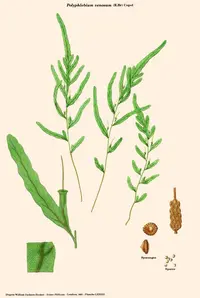
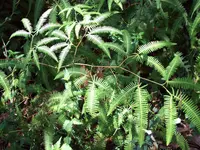
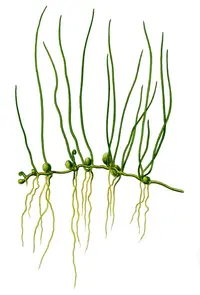
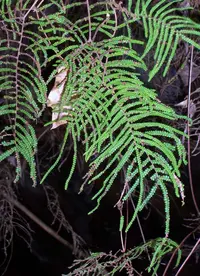
Veined bristle-fern, Trichomanes venosum, is a delicate, shade-loving fern from humid tropical forests, often found on moist rocks, tree bases, and near waterfalls. It forms fine, lace-like fronds with visible veins, giving the plant a soft, almost translucent look.
This species grows as a small, clustered fern that prefers constant moisture and high humidity, making it more challenging than typical house ferns. It is sensitive to drying out, low humidity, and direct sun, so it suits experienced growers or carefully controlled indoor setups. Those learning how to care for veined bristle-fern should focus on stable moisture, gentle airflow, and low, filtered light.

Care Difficulty
Hard Care

Light Preference
Shade

Water Requirements
Keep Soil Moist

Temperature Preference
Tropical / Frost Sensitive

Hardiness Zone
Unknown

Soil Texture
Peaty, Organic-rich, Loamy

Soil pH
Strongly acidic (4.5–5.5), Acidic (5.5–6.5)

Soil Drainage
Moist but well-drained

Fertilization
Minimal (feed rarely)
Scan your plant to receive care tips personalized for your specific plant
Available on iOS and Android
This fern prefers low to medium light that mimics a shaded forest floor.
This fern needs consistently moist conditions without waterlogging.
This species thrives in stable, mild, humid conditions.
This fern demands extremely high humidity to thrive long term indoors.
Provide a consistently moist, airy, humus-rich substrate that mimics wet forest rock crevices.
This species is suitable for container growing when moisture and humidity are tightly controlled.
This delicate fern is sensitive to salts, so use light, infrequent feeding when grown in containers.
Pruning Trichomanes venosum is minimal and focuses on health rather than shaping.
This fern dislikes disturbance, so repot or transplant only when clearly necessary.
Propagation of this species is possible but more advanced due to its fine structure and moisture demands.
This fern is not frost hardy and needs controlled conditions during winter in most climates.

Plant Health Check
Not sure what's wrong with your plant? Check your plant's health inside the app.
This species is a filmy fern with leaf blades only 1 cell thick, which allows rapid gas and water exchange but makes the fronds highly dependent on constant humidity.
In the wild it typically grows on perpetually damp rock faces or near waterfall spray zones, relying on continuous moisture films on its tissues rather than thick cuticles or waxy surfaces.
The fronds are adapted to very low light, using thin, translucent tissue and a high chloroplast density to efficiently capture diffuse light deep in rainforest understories.

This fern often maintains a long-lived, creeping rhizome tucked safely in rock crevices or moist substrate, allowing the plant to resprout new fronds after above-ground tissue is damaged or desiccated.
This species usually performs best in controlled indoor or greenhouse conditions where humidity, temperature, and light can stay stable. Outdoor growth is possible only in very mild, constantly moist, frost-free microclimates that mimic cloud forest or rainforest understory conditions.
Keep your plants happy and healthy with plant identification, disease detection, and easy care guidance.