Moisture-retentive mounting
Attach the plant to a piece of soaked, long-fiber sphagnum over cork or hardwood and wrap lightly with biodegradable twine to keep the rhizomes in constant, even contact with moisture without compressing them.

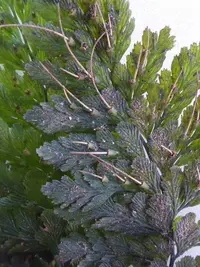
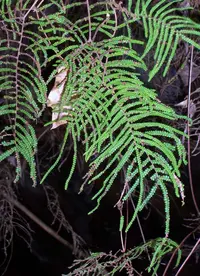
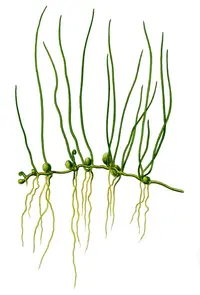
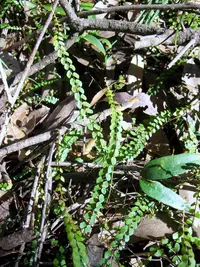
Bristle fern, Trichomanes elongatum, is a delicate tropical fern known for its very fine, hair-like fronds and graceful, airy growth habit. It often forms soft, cascading mats on rocks, tree trunks, or moist forest walls.
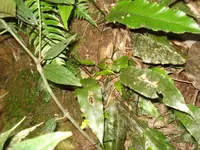
In nature, it typically grows in humid, shaded rainforests, often close to waterfalls or constantly damp ravines. These habitats shape its preference for stable moisture, high humidity, and gentle, filtered light.
Due to its thin fronds and sensitivity to drying out, it is more suited to experienced growers or controlled environments like terrariums. Anyone wanting to care for Bristle Fern should focus on consistent moisture, soft water, and sheltered, low-airflow conditions.

Care Difficulty
Hard Care

Light Preference
Shade

Water Requirements
Keep Soil Moist

Temperature Preference
Tropical / Frost Sensitive

Hardiness Zone
Unknown

Soil Texture
Peaty, Organic-rich, Loamy

Soil pH
Strongly acidic (4.5–5.5), Acidic (5.5–6.5)

Soil Drainage
Moist but well-drained

Fertilization
Minimal (feed rarely)
Scan your plant to receive care tips personalized for your specific plant
Available on iOS and Android
This fern prefers low to moderate light that mimics a shaded forest understory.
This species needs consistently moist conditions without prolonged saturation.
This fern thrives in stable, warm, humid conditions with no exposure to frost.
This fern needs very high, stable humidity to stay healthy indoors.
This species prefers constantly moist, airy, organic-rich substrate that mimics wet forest rock faces or mossy logs.
This fern is suitable for container growing, especially in enclosed terrariums or cases.
This delicate rainforest fern benefits from light, careful feeding rather than heavy fertilization.
Pruning needs for Trichomanes elongatum are minimal and focus on hygiene, not shaping.
This fern dislikes disturbance, so repot or transplant Trichomanes elongatum only when clearly necessary.
Propagation of Trichomanes elongatum is possible but tends to be slow and suited to patient growers.
This tropical fern is not frost hardy and requires sheltered winter conditions in most climates.

Plant Health Check
Not sure what's wrong with your plant? Check your plant's health inside the app.
This species has extremely thin, almost translucent fronds only one cell layer thick, a characteristic feature of filmy ferns that allows efficient moisture and gas exchange but makes the plant very dependent on constant high humidity in its native cloud forest habitats.
It typically grows on moist rock faces, stream banks, or tree bases in lowland to montane tropical rainforests, where moving air is gentle, light is low, and water films regularly coat the fronds.
The plant spreads both through wind-dispersed spores and by slender creeping rhizomes that anchor in moss and organic film on rock or bark, allowing it to form delicate colonies in very stable, shaded sites.
Browning usually results from low humidity, dry soil, or exposure to moving air from vents or fans. Mineral buildup from hard water can also scorch edges. Increase humidity, keep substrate evenly moist, and use filtered or rainwater when possible.
Keep your plants happy and healthy with plant identification, disease detection, and easy care guidance.