Stomatium mustelinum Care

Stomatium mustelinum

About Stomatium mustelinum

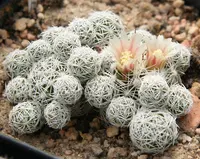
Stomatium mustelinum is a small, clumping succulent from arid regions of South Africa. It forms low mats of thick, paired leaves with rough, textured surfaces. In good light it produces yellow, daisy-like flowers that open mainly in the evening, adding interest despite the plant’s compact size. The species grows in rocky, very well-drained soils and is adapted to strong sun and periods of drought. Its slow growth and sensitivity to excess moisture make it best suited to patient growers who can avoid overwatering. A basic understanding of how to care for Stomatium mustelinum helps keep this plant healthy in containers or rock gardens.

Main Plant Requirements

Care Difficulty

Moderate Care

Light Preference

Full Sun

Water Requirements

Low Water

Temperature Preference

Warm Climate

Hardiness Zone

9–11

Soil Texture

Sandy, Loamy, Rocky

Soil pH

Slightly acidic (6.5–7.0), Neutral (7.0)

Soil Drainage

Well-drained

Fertilization

Minimal (feed rarely)

Get Personalized Care Plan

Scan your plant to receive care tips personalized for your specific plant

Available on iOS and Android

How to Care for the Stomatium mustelinum

This compact succulent thrives in bright, open conditions with strong but not scorching sun.

  • Provide 6–8 hours of direct sun daily, ideally with morning sun and light afternoon shade, especially in hotter regions.
  • Outdoors, plant in a south or east-facing spot; in very intense climates, use filtered light during 12–4 pm to prevent leaf scorch and wrinkling.
  • If stems stretch or leaves lose their grey-green tone, light is too low; increase sun exposure gradually over 7–10 days to avoid shock.

Watering should mimic a dry, rocky habitat with brief wet periods and long dry intervals.

  • Allow the top 3–5 cm of soil to dry completely before watering, then soak thoroughly and let excess drain away.
  • In active growth, water roughly every 10–21 days depending on heat and wind; reduce sharply in cool, low-light months to prevent root rot.
  • Signs of overwatering include soft, splitting leaves and a sour smell in the soil, while severe wrinkling and leaf deflation indicate the plant stayed dry too long.

This species prefers moderate warmth and dry air, with good tolerance of typical outdoor temperature swings.

  • Aim for 65–80°F (18–27°C) during active growth, with cooler, drier nights supporting compact, dense leaf clusters.
  • Protect from frost; short dips to 30–32°F (-1–0°C) may be survived if soil is dry, but repeated freezes damage tissues and roots.
  • In hot climates, plants handle up to 95°F (35°C) if shaded during peak afternoon sun and given excellent airflow and very free-draining soil.

This species is adapted to dry air and usually does not need extra humidity indoors.

  • Target 30–50% relative humidity, similar to most heated homes.
  • Brown, soft leaf tips or unexplained rot often indicate humidity combined with overwatering rather than air that is too dry.
  • Increase air movement with a small fan and avoid crowding plants, which helps leaves dry quickly and limits fungal issues for Stomatium mustelinum.

Use a very fast‑draining, mineral‑rich mix to keep roots dry between waterings.

  • Combine roughly 30% cactus potting mix with 70% coarse mineral material such as pumice, perlite, and 2–4 mm grit or coarse sand.
  • Aim for slightly acidic to neutral pH around 6.0–7.2, avoiding strongly acidic or alkaline substrates that can restrict nutrient uptake.
  • Ensure the mix feels loose and crumbly; large mineral particles create air pockets that protect roots of Stomatium mustelinum from suffocation.
  • Avoid peat‑heavy, compact, or moisture‑retentive mixes and never allow containers or beds to stay wet or muddy.

This species is well suited to container growing because of its compact, shallow root system.

  • Choose a wide, shallow pot so roots spread horizontally while excess water exits quickly.
  • Use unglazed terracotta if extra evaporation is needed; switch to a thicker, less porous pot in very hot, dry climates to slow drying slightly.
  • Fill the container with a raised, sloped surface so water naturally runs off the crown instead of pooling around it.

This compact succulent grows well with very light feeding in a fast-draining mineral mix.

  • Use a low-dose, balanced liquid fertilizer (around 10-10-10) diluted to 25–50% strength for Stomatium mustelinum in active growth.
  • Feed once every 4–6 weeks in spring and early summer only if growth appears pale or weak.
  • Avoid organic compost-heavy mixes that retain moisture, which can cause root rot.
  • Stop feeding in late summer and do not fertilize during winter dormancy.

This species needs minimal pruning, mainly to maintain a tidy cushion and healthy foliage.

  • Trim spent flower stalks in late spring or early summer to keep the plant compact and encourage new growth.
  • Pinch or cut back elongated, leggy stems to maintain a low, dense shape and better light exposure to all rosettes.
  • Remove any dead, shriveled, or rotting leaves promptly to reduce disease risk in Stomatium mustelinum clumps.
  • Use clean, sharp scissors or small snips and allow wounds to dry in good airflow before watering.

Container-grown plants benefit from infrequent but careful repotting into very well-drained soil.

  • Repot when roots circle the pot, growth slows, or soil stays wet too long, usually every 3–4 years.
  • Plan repotting for late winter to early spring, just before strong active growth begins in Stomatium mustelinum.
  • Use a shallow, wide pot with extra drainage holes and a gritty mix, handling the brittle roots gently.
  • Let roots dry for 1–2 days after unpotting, then repot, water lightly once, and keep shaded for a week.

This mat-forming succulent is most commonly propagated vegetatively to preserve plant characteristics.

  • Divide mature clumps in late winter or early spring, separating offsets with their own roots.
  • Replant divisions into a dry, gritty mix, spacing pieces so air can move between them.
  • For stem cuttings, allow cut surfaces to callus for 2–3 days, then place on barely moist substrate.
  • Sow seeds on the surface of well-drained soil, keeping bright light and slightly cool conditions for germination.

This succulent is moderately cold tolerant but still needs thoughtful winter management, especially in containers.

  • Tolerates light frosts when kept dry, but repeated freezes can damage fleshy leaves and crowns.
  • In cold regions, move pots under cover or indoors to a bright, cool spot above 40°F.
  • Keep soil almost dry in winter to prevent rot, watering only enough to prevent severe shriveling.
  • Avoid heavy mulches directly against the crown; use coarse gravel around the base instead.

Care Tips

Nighttime ventilation

Provide good airflow at night by slightly opening a window or using a small fan so the foliage stays dry and cool, which helps reduce fungal issues and encourages compact, firm growth when growing Stomatium mustelinum.

Shallow potting

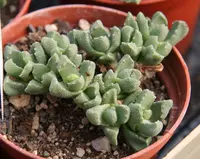
Use a wide, shallow pot and position the plant slightly above the soil line so the neck of the plant stays dry and the fleshy leaves do not rest on damp substrate, which helps prevent rot at the crown.

Top-dress with grit

Add a 0.5–1 cm layer of coarse mineral grit or small gravel on the soil surface to keep the leaf bases dry, limit algae growth, and stabilize the plant against toppling as the clump enlarges.

Winter rest adjustment

Reduce handling, avoid repotting, and keep the plant in a bright, cool place during its main winter growth phase so it can form dense, healthy leaf mats without stress from temperature or root disturbance.

Targeted pest checks

Inspect the tight leaf clusters and the base of the plant with a hand lens every few weeks for mealybugs or scale, and if found, spot-treat immediately with a cotton swab dipped in isopropyl alcohol to avoid systemic infestations.

Common Pests and Diseases

Mealybugs

This pest often hides in leaf bases and between the thick paired leaves, sucking sap and causing yellowing, distortion, and sticky honeydew. Symptoms include slowed growth and cottony white clusters on sheltered parts of the plant.

Solution

Isolate the plant, then dab visible insects with cotton swabs dipped in 70% isopropyl alcohol and repeat weekly until clear. Improve light and air movement, avoid overfertilizing, and use a low-residue insecticidal soap on cool mornings, making sure to reach all crevices of the clumps when caring for Stomatium mustelinum.

Aphids

These insects cluster on flower stalks and tender new growth, feeding on sap and excreting honeydew that can lead to sooty mold. Symptoms include curling new leaves, deformed flower buds, and a sticky film on nearby surfaces.

Solution

Rinse the plant thoroughly with a firm but gentle stream of water, focusing on flower stalks and soft growth, and repeat as needed. If populations persist, apply insecticidal soap or a light horticultural oil, ensuring the plant is kept in bright, airy conditions to recover.

Spider mites

This pest thrives in hot, dry conditions around the fleshy leaves, causing tiny pale speckling and fine webbing between leaves or around the crown. Symptoms include dull, stippled foliage and a faded, stressed appearance even when soil moisture is adequate.

Solution

Increase humidity locally with occasional gentle misting around, not on, the leaves and rinse the plant under lukewarm water to remove webbing and mites. Follow with applications of insecticidal soap or a labeled miticide every 5–7 days for several cycles, and avoid placing the plant in very hot, stagnant air.

Fungal leaf spots

This disease appears as small dark spots or irregular lesions on the thick leaves, often starting near the base where moisture lingers. Symptoms include slow-spreading blemishes and occasional yellow halos, especially when foliage stays wet and airflow is poor.

Solution

Remove and discard affected leaves, then adjust watering so leaves and crown stay dry and the soil dries well between waterings. Improve air circulation, avoid overhead watering, and if spotting continues, apply a sulfur-based or other labeled fungicide suitable for succulents according to product directions.

Crown and stem rot

This disease develops when the crown or stems stay wet and cool for extended periods, leading to soft, discolored tissue and sudden collapse of parts of the clump. Symptoms include a mushy base, brown or blackened tissue at soil level, and a sour smell from decaying plant parts.

Solution

At the first signs, cut away all soft or discolored tissue with sterile tools and discard severely affected sections. Repot healthy firm offsets into fresh, fast-draining gritty soil, water very sparingly until active growth resumes, and keep the plant in bright light with excellent drainage and no standing water in saucers.

Interesting Facts

Night-fragrant blooms

This species produces small yellow, daisy-like flowers that often release a stronger clove-like scent toward evening, an adaptation that likely helps attract crepuscular pollinators in its native habitat.

Fissured cushion leaves

The plant forms tight, low cushions of paired, slightly triangular leaves with rough, fissured surfaces, which help reduce water loss and reflect intense sunlight in its arid South African environment.

Winter-active growth

In cultivation and in its native range, this species tends to grow and leaf out during the cooler winter-rain season and slows down or becomes semi-dormant in the hottest, driest part of summer, reflecting its adaptation to a winter-rainfall climate.

FAQs about Stomatium mustelinum

This species usually flowers in late winter to spring, often responding to cooler nights and bright light. Under good conditions it can bloom more than once a year, with flushes of small, scented, daisy-like flowers.

Grow Healthy Plants with Botan Care

Keep your plants happy and healthy with plant identification, disease detection, and easy care guidance.

Botan plant care app — identify plants on mobile

Explore More Plants