Blue Roundhead Care (Stropharia caerulea)

Blue Roundhead

About Blue Roundhead

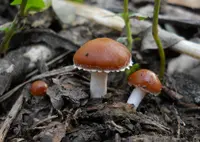
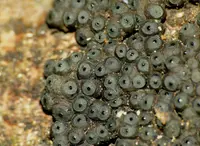
Blue roundhead, Stropharia caerulea, is a small, blue-green mushroom rather than a leafy plant. It forms rounded to slightly conical caps with a slimy surface when fresh.

This species appears in grasslands, woodland edges, and disturbed soils, mainly in Europe and parts of North America. It often grows in small groups, emerging during moist, cool seasons.

Its striking color makes it attractive to foragers and gardeners, but it is not considered a reliable edible species. For anyone trying to care for Blue Roundhead in a garden or experimental setting, stable moisture, cool temperatures, and organically rich soil are usually important.

Main Plant Requirements

Care Difficulty

Hard Care

Light Preference

Partial Shade

Water Requirements

Keep Soil Moist

Temperature Preference

Cool Climate

Hardiness Zone

Unknown

Soil Texture

Loamy, Silty, Organic-rich

Soil pH

Acidic (5.5–6.5), Slightly acidic (6.5–7.0)

Soil Drainage

Moist but well-drained

Fertilization

Minimal (feed rarely)

Get Personalized Care Plan

Scan your plant to receive care tips personalized for your specific plant

Available on iOS and Android

How to Care for the Blue Roundhead

This woodland mushroom prefers cool, filtered light similar to a lightly shaded forest edge.

  • Provide dappled shade or gentle morning sun with 1–3 hours of direct light, avoiding harsh midday and afternoon sun that can dry the substrate and damage primordia.
  • Site Blue Roundhead where it receives bright, indirect light under shrubs, trees, or shade cloth that reduces full sun by about 40–60%.
  • In summer, increase shade coverage; in cooler months, allow slightly more morning sun while still protecting the bed from strong drying winds.

This species needs consistently moist, not waterlogged, substrate to fruit well.

  • Maintain evenly moist woodchip or rich organic beds; surface should feel damp but not squelchy, and top 1–2 cm should not fully dry out between waterings or rainfall.
  • Increase watering during hot, windy periods, using slow, gentle soaking so water penetrates 5–10 cm without pooling or standing for more than 1–2 hours.
  • Reduce supplemental water in cool, wet seasons, watching for signs of overwatering such as sour odor, standing water, or slimy, collapsing mycelium patches.

This mushroom fruits best in cool to mild outdoor conditions.

  • Optimal fruiting occurs around 55–68°F (13–20°C), with mycelium growth possible from roughly 45–75°F (7–24°C) if moisture is stable.
  • Stropharia caerulea tolerates brief drops near 32°F (0°C) in the substrate, but repeated hard frosts can damage fruiting bodies and slow mycelial spread.
  • Above about 80°F (27°C), shade the bed heavily and keep it moist, since prolonged heat and drying can stall growth or invite competing fungi.

This wood-loving mushroom needs consistently moist, humid conditions to form reliable Blue Roundhead fruiting bodies.

  • Aim for 70–90% humidity around logs or beds, keeping substrates evenly moist but never waterlogged.
  • Dry air leads to cracked caps, slow pin formation, and aborting young mushrooms along the substrate surface.
  • Increase humidity with regular fine misting, damp burlap or shade cloth over the bed, and wind protection to reduce evaporation.

Stropharia caerulea grows best in moist, organic-rich substrates rather than typical mineral garden soil.

  • Use a deep layer of shredded straw, wood chips, or leaf mulch over the inoculated area to provide structure and long-lasting food.
  • Ensure the substrate drains freely yet stays evenly moist; avoid compacted clay or standing water, which suffocate mycelium.
  • A slightly acidic to neutral base (around pH 6.0–7.0) suits this species; mix in leaf mold or composted wood to adjust.
  • Loosen underlying ground and avoid heavy trampling so air can move through the substrate and support steady mycelial growth.

This species is not well suited to long-term container growing, but it can be trialed in large outdoor tubs with ample substrate.

  • Choose a wide, deep, opaque tub to hold a thick wood chip or straw layer that stays cool and shaded.
  • Drill side and bottom holes to improve air flow through the substrate while still allowing slow moisture loss.
  • Raise the container on bricks so excess water drains away and the base does not stay saturated against the ground.

This wood-decaying fungus rarely needs added nutrients when grown in rich organic beds or mulch.

  • For cultivated beds, mix in well-rotted compost or aged manure before inoculating rather than using synthetic fertilizer.
  • If growth appears weak, apply a very light, balanced NPK liquid feed at 1/4 strength to surrounding vegetation, not directly on fruiting bodies.
  • Limit any supplemental feeding to the main growing season, then stop in winter when mycelial activity slows.

Pruning is generally not relevant for the mushroom-forming fungus Stropharia caerulea.

This species is usually managed in outdoor beds or logs rather than as a container plant, so focus on transplanting colonized substrate.

  • Transplant when mycelium has clearly colonized straw, wood chips, or other substrate but before it fully exhausts nutrients.
  • Plan moves for mild, moist weather in spring or fall to reduce drying and temperature stress on the mycelium.
  • Lift colonized substrate gently, keeping blocks or layers intact to avoid tearing the fungal network.
  • Rebed into fresh, moist organic material, firm lightly, water well, then shade the area until new growth resumes.

Stropharia caerulea is propagated by spores or by transferring colonized substrate rather than by traditional plant methods.

  • Use spore slurries or commercially prepared spawn on fresh, moist wood chips, straw, or compost-rich beds in spring or early summer.
  • Maintain consistently moist, shaded conditions to support mycelium establishment and spore germination.
  • When beds are thriving, move chunks of colonized substrate into new prepared beds to expand the patch.
  • Minimize disturbance after inoculation and avoid chemical treatments that can suppress fungal growth.

Outdoor beds of Blue Roundhead in temperate climates typically need minimal winter intervention once established.

  • In regions with freezing winters, a 5–8 cm layer of loose mulch over the bed helps buffer temperature swings.
  • Avoid waterlogged conditions by ensuring the bed drains well before heavy winter rains or snow.
  • Container-based cultures in cold zones can be overwintered in an unheated but frost-free shed or garage.

Care Tips

Woodchip bed renewal

Top up the woodchip layer annually with fresh, untreated hardwood chips to maintain a loose, moist substrate that supports new mycelial growth and consistent fruiting.

Shaded edge placement

Site beds along the north or east side of hedges, fences, or shrubs so the mycelium benefits from cool, stable moisture and the mushrooms develop with minimal sunscald and drying.

Moisture monitoring trick

Insert a short wooden stake or untreated chopstick into the woodchip layer and check it every few days; if the buried section feels dry rather than cool and damp, apply a thorough watering.

Targeted slug control

Place beer traps or corrugated cardboard shelters around the bed and remove collected slugs regularly to protect young fruiting bodies without disturbing the fungal network.

Minimal disturbance rule

Harvest by gently twisting or cutting mushrooms at the base and avoid raking or digging through colonized chips so the underground mycelium remains intact, which is essential for growing Blue Roundhead over multiple seasons.

Common Pests and Diseases

Fungus gnat larvae

This pest develops in the damp substrate used to fruit Blue Roundhead and can feed on mushroom mycelium and pins, reducing yields and causing poorly formed caps. Symptoms include slow colonization, damaged primordia, and small black adult flies hovering near trays or bags.

Solution

Reduce excess surface moisture, allow the top layer of the substrate or casing to dry slightly between misting, and use fine mesh screens on vents to block adult entry. Remove heavily infested blocks, apply yellow sticky traps for adults, and where allowed use a biological control such as Bacillus thuringiensis israelensis (Bti) in the watering system according to label directions.

Mite infestations

These insects, often grain or soil mites, thrive in high-humidity mushroom setups and can graze on mycelium and developing fruiting bodies, leading to deformed or aborted mushrooms. This pest may appear as tiny moving white or tan specks on stems, caps, or substrate surfaces.

Solution

Lower humidity slightly within the recommended range, improve air movement, and promptly remove and discard heavily infested substrate blocks. Clean racks and tools with hot water and detergent, avoid storing grain or straw near fruiting areas, and use physical barriers and tight seals around doors and vents to limit mite entry.

Green mold (Trichoderma)

This disease is a common contamination of Blue Roundhead substrates, starting as white mycelium and rapidly turning bright or dull green, outcompeting the mushroom mycelium. Symptoms include stalled colonization, patches of green spores, and a reduction or complete loss of fruiting in affected areas.

Solution

Immediately remove and bag any contaminated block or tray, then discard outside the grow area to prevent spore spread. Improve hygiene by thoroughly cleaning equipment, reducing dust, ensuring proper pasteurization or sterilization of substrate, and reducing excess moisture and stagnant air that favor Trichoderma over Stropharia caerulea.

Bacterial blotch

This disease is caused by opportunistic bacteria that thrive on persistently wet caps, leading to yellow to brown slimy spots and soft, water-soaked tissue. Symptoms include discolored patches on caps and a greasy appearance that makes mushrooms unsellable even if structurally intact.

Solution

Reduce cap wetness by switching from heavy spraying to finer misting, increase fresh air exchange, and avoid condensation dripping from ceilings or lids onto the mushrooms. Remove and dispose of blotched mushrooms, clean surfaces with a food-safe disinfectant, and keep tools and hands clean when harvesting to reduce spread.

Competing saprophytic molds

This disease group includes various molds such as Penicillium and Aspergillus that colonize incompletely pasteurized straw, wood chips, or other substrate, resulting in patchy colonization and poor fruiting. Symptoms include colored fuzzy or powdery patches (often blue, gray, or black) and a musty odor, while the desired mycelium weakens or withdraws.

Solution

Discard heavily contaminated substrate and avoid opening contaminated blocks near healthy cultures to limit spore dispersal. For future cycles, improve substrate preparation by using correct pasteurization or sterilization temperatures and times, cool substrate quickly after treatment, and inoculate promptly with vigorous spawn to let the mushroom mycelium colonize before molds establish.

Interesting Facts

Distinct blue coloration

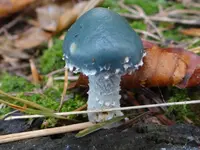
Young fruiting bodies often show a striking blue to blue-green cap, caused by specific pigment compounds, but this color typically fades to yellowish or brownish tones as the mushroom ages or dries.

Saprotrophic soil recycler

This species is a saprotroph, meaning it feeds on dead organic matter such as leaf litter and woody debris, helping break down complex plant material and recycle nutrients back into forest and grassland soils.

Preference for nutrient-rich ground

Fruiting bodies are most often recorded on disturbed, nutrient-rich soils such as park lawns, garden beds, woodchip mulches, and roadside verges rather than deep forest interiors.

FAQs about Blue Roundhead

This mushroom is not considered a choice edible. Identification is difficult, and it can be confused with toxic blue species. For safety, it is best treated as inedible and left unharvested.

Grow Healthy Plants with Botan Care

Keep your plants happy and healthy with plant identification, disease detection, and easy care guidance.

Botan plant care app — identify plants on mobile

Explore More Plants