celandine poppy Care (Stylophorum diphyllum)

Also known as: Wood-poppy
celandine poppy

About celandine poppy

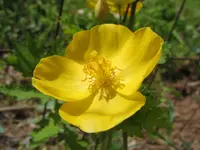
Celandine poppy (Stylophorum diphyllum) is a woodland perennial native to eastern North America. It forms small clumps with soft, deeply lobed blue‑green leaves. In spring, it produces bright yellow, poppy-like flowers above the foliage, often blooming again lightly in cool weather. Plants spread slowly by seed in suitable conditions, creating naturalized patches over time. This species prefers partial shade, consistent moisture, and humus-rich, well-drained soil, similar to many shade perennials. It is generally considered easy to grow where summers are not extremely hot and dry, so care for celandine poppy focuses mainly on providing shade and steady moisture.

Main Plant Requirements

Care Difficulty

Easy Care

Light Preference

Partial Shade

Water Requirements

Regular Water

Temperature Preference

Cold Hardy

Hardiness Zone

4–9

Soil Texture

Loamy, Silty, Organic-rich

Soil pH

Acidic (5.5–6.5), Slightly acidic (6.5–7.0)

Soil Drainage

Moist but well-drained

Fertilization

Minimal (feed rarely)

Get Personalized Care Plan

Scan your plant to receive care tips personalized for your specific plant

Available on iOS and Android

How to Care for the celandine poppy

Stylophorum diphyllum prefers dappled woodland-style light that protects foliage from harsh midday sun.

  • Aim for bright shade or filtered light with 2–4 hours of gentle morning sun and full shade in the afternoon.
  • Site celandine poppy under open trees, on the north or east side of buildings, or where it gets broken light through shrubs.
  • Too much direct sun, especially in summer, scorches leaves and dries soil quickly, while deep, constant shade reduces flowering and weakens growth.

Stylophorum diphyllum performs best in consistently moist, well-drained soil that never becomes waterlogged.

  • Water when the top 2–3 cm of soil feel dry, allowing moisture to reach the root zone without saturating the planting area.
  • In spring and early summer, when growth and flowering peak, monitor rainfall closely and supplement during dry spells lasting more than 4–5 days.
  • Yellowing, soft stems suggest overwatering or poor drainage, while limp, dull leaves and dry soil indicate the plant needs a thorough soak.

This woodland perennial thrives in cool to mild temperatures and tolerates typical outdoor seasonal swings.

  • Ideal growth occurs around 55–75°F (13–24°C), especially in cool spring conditions with consistent soil moisture.
  • Established plants tolerate winter lows near 0°F (-18°C) when grown in the ground with mulch, dying back and re-sprouting in spring.
  • Heat above 85°F (29°C) can stress foliage; provide shade, maintain soil moisture, and use mulch to moderate root-zone temperature during hot spells.

This woodland perennial prefers moderately moist air but usually adapts to typical outdoor humidity.

  • Aim for 40–60% humidity in shaded garden sites to reduce leaf edge crisping during hot, dry spells.
  • Celandine poppy tolerates brief dry air, but persistent low humidity combined with heat can cause wilting and dull, papery foliage.
  • Increase local humidity outdoors with organic mulch and close planting, which slow surface evaporation around the root zone.

Stylophorum diphyllum thrives in moist, humus-rich, well-drained soil that mimics a deciduous woodland floor.

  • Use a loose, loamy mix with high organic matter, such as garden soil blended with 40–50% compost or leaf mold.
  • Ensure drainage is steady, not rapid, so the soil stays evenly moist without puddling or becoming waterlogged.
  • Aim for slightly acidic to neutral pH, roughly 6.0–7.0, which supports nutrient availability and healthy root development.
  • Improve aeration and structure in heavy clay by working in shredded leaf mold and fine bark, and avoid compacted or rocky ground.

This species can grow in containers for shade patios or balconies if moisture and root space are carefully managed.

  • Choose a deep, wider-than-tall pot to accommodate its spreading root system and reduce surface drying.
  • Use a heavy, non-porous container material like glazed ceramic to stabilize moisture and prevent the pot from tipping in wind.
  • Set the container in bright shade where the pot itself stays cool, since heated pot sides quickly dry the limited root zone.

Stylophorum diphyllum is a woodland perennial that needs only light feeding in average garden soil.

  • In early spring, top-dress with a thin layer of compost around the root zone, keeping material off the crowns.
  • Use a balanced, slow-release fertilizer (around 10-10-10) at half strength once per year if growth appears weak.
  • Avoid feeding during summer dormancy and winter, as celandine poppy naturally rests and excess nutrients can stress roots.
  • Do not apply fertilizer to dry soil; water first, then feed to reduce the risk of root burn.

Pruning Stylophorum diphyllum is minimal and mainly keeps the plant tidy and healthy.

  • In late spring and early summer, remove spent flower stems at the base to encourage a cleaner look and possible light rebloom.
  • Cut back yellowing or damaged foliage during or after bloom to reduce disease risk and improve appearance.
  • Use clean, sharp hand pruners or scissors and disinfect blades when moving between plants.
  • In late fall, allow remaining foliage to die back naturally, then remove collapsed material to limit overwintering pests.

Stylophorum diphyllum is usually grown in the ground, where it dislikes frequent disturbance.

  • Plan transplanting for early spring or early fall, when temperatures are cool and soil moisture is steady.
  • Look for signs such as crowded clumps, declining vigor, or bare centers rather than roots circling a container.
  • Dig a wide, deep root ball, keep soil intact around the fleshy roots, and replant at the same depth in rich, moist soil.
  • Water thoroughly after transplanting, then keep soil evenly moist and shaded for 1–2 weeks to reduce transplant shock.

Stylophorum diphyllum is commonly propagated by seed or careful division of established clumps.

  • Sow fresh seeds outdoors in late summer or fall so they experience natural winter chilling, which improves germination.
  • Lightly cover seeds with fine soil, keep the bed evenly moist, and expect seedlings the following spring.
  • For division, lift mature clumps in early spring, keeping large root masses intact and separating only into a few pieces.
  • Replant divisions promptly at the original depth, water well, and provide partial shade until growth resumes strongly.

Stylophorum diphyllum is cold hardy in much of the US and usually needs little special winter care.

  • After foliage dies back in fall, leave a thin mulch layer (2–5 cm) of leaves or compost to insulate the root zone.
  • Avoid heavy, soggy mulch against crowns to limit rot during freeze–thaw cycles.
  • For container-grown plants in colder zones, move pots to an unheated garage or sheltered spot to keep roots from extreme freezing.

Care Tips

Self-seeding management

Mark the area where plants are allowed to self-sow and gently thin excess seedlings in early spring so established clumps stay vigorous and do not crowd out neighboring shade plants.

Summer dormancy care

If foliage declines or goes dormant in summer heat, leave the root system undisturbed and use a light mulch or nearby groundcovers to shade the soil and keep the crown from overheating.

Slug and snail control

Place rough copper tape or coarse grit (such as crushed gravel) around the planting zone in early spring to reduce slug and snail damage to the tender new shoots without using heavy chemical controls.

Woodland mulching strategy

Top-dress annually with a thin layer of shredded leaves or fine bark in late fall to mimic woodland leaf litter, improve soil structure, and stabilize moisture around the shallow roots.

Transplant timing

If clumps must be moved, divide and transplant in early spring just as new growth emerges, then water steadily for several weeks, since this timing causes the least stress when caring for celandine poppy.

Common Pests and Diseases

Slugs and snails

This pest is strongly attracted to the tender, shade-grown foliage and can chew large, irregular holes in leaves, especially in spring. Symptoms include shredded leaf margins, slime trails, and damage concentrated on lower, outer leaves.

Solution

Hand-pick slugs and snails in the evening, use iron phosphate bait placed away from children and pets, and reduce hiding spots by clearing dense debris near the clump. A coarse mulch barrier and keeping foliage slightly drier at the soil surface also lower damage while preserving the moist conditions needed for Stylophorum diphyllum care.

Leaf spots

This disease often appears in damp, shaded beds as small brown to purplish spots that may merge into larger patches, causing cosmetic damage to the foliage. Symptoms include spotting that starts on older leaves and may lead to premature yellowing and drop in very wet seasons.

Solution

Remove and discard heavily spotted leaves, especially late in the season, to reduce fungal spore load, and water at soil level rather than overhead. Improve air movement by spacing plants properly; in severe, recurring cases, a copper or chlorothalonil-based fungicide labeled for ornamental perennials can be used according to label directions.

Powdery mildew

This disease can develop in still, humid shade as a white, powdery film on upper leaf surfaces, sometimes causing leaves to curl or distort. Symptoms include a dusty coating that starts on a few leaves and may spread under prolonged mild, humid conditions.

Solution

Thin crowded stems or nearby plants to improve airflow, avoid overhead watering late in the day, and promptly remove heavily infected leaves. If needed, apply a sulfur or potassium bicarbonate product labeled for powdery mildew on ornamentals, starting early in the season and following label directions.

Aphids

These insects feed on the undersides of young leaves and flower stems, sucking sap and causing slight curling, distortion, or sticky honeydew on the foliage. This pest tends to appear during cool, lush spring growth and may attract ants or promote sooty mold on the honeydew.

Solution

Spray colonies off with a firm stream of water in the morning, and prune off heavily infested soft tips. For persistent populations, apply insecticidal soap or a light horticultural oil, ensuring full coverage of stems and leaf undersides while avoiding spraying in full, hot sun.

Leaf miners

These insects create pale, winding tunnels inside the leaves, which can make the foliage look blotchy and reduce its ornamental value. Symptoms include serpentine or blotchy trails that follow the inner leaf tissue while the surface remains mostly intact.

Solution

Remove and dispose of affected leaves as soon as mines are noticed, which helps break the life cycle before adults emerge. Keep the plant otherwise healthy through proper shade, moisture, and soil conditions; in severe recurring cases, use a systemic insecticide labeled for leaf miners on ornamental perennials, following all label instructions carefully.

Interesting Facts

Spring woodland specialist

This species is a native North American wildflower that naturally occurs in rich, deciduous woodlands and shaded limestone bluffs from the Midwest into parts of the eastern United States, where it helps form the spring forest understory before the trees fully leaf out.

Latex-like orange sap

Broken leaves and stems exude a bright yellow-orange sap that functions as a chemical defense against many herbivores; this sap contains isoquinoline alkaloids, a group of nitrogen-containing compounds also found in related poppy species.

Explosive seed dispersal

Its seed capsules dry and split open to release shiny black seeds that are further spread by ants, which are attracted to the fleshy elaiosomes (food bodies) attached to the seeds, a dispersal strategy known as myrmecochory.

Botan icon

Did you know?

In the wild, celandine poppy often forms loose colonies because its shallow, slowly creeping root system and ant-dispersed seeds allow it to expand gradually across suitable moist, humus-rich forest soils over many years.

FAQs about celandine poppy

This species spreads gently by self-seeding and short rhizomes, forming loose colonies rather than choking other plants. In suitable shade gardens it can naturalize, but unwanted seedlings are easy to pull while young.

Grow Healthy Plants with Botan Care

Keep your plants happy and healthy with plant identification, disease detection, and easy care guidance.

Botan plant care app — identify plants on mobile

Explore More Plants