Japanese pagoda tree Care (Styphnolobium japonicum)

Also known as: Chinese scholar tree, Scholar tree, pagoda tree
Japanese pagoda tree

About Japanese pagoda tree

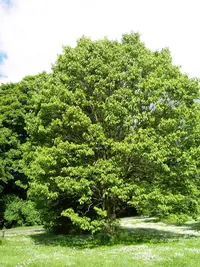
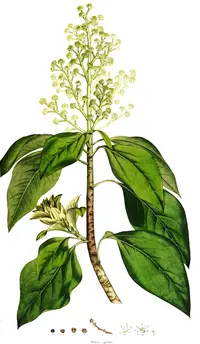
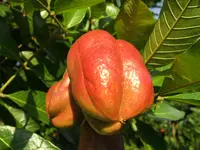
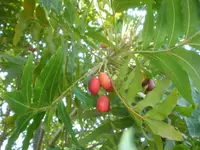
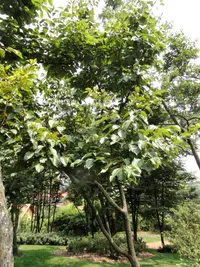
The Japanese pagoda tree, Styphnolobium japonicum, is a medium to large deciduous tree valued for its elegant form and summer flowers. It typically develops a broad, spreading crown with compound leaves and creamy white, pea-like blossoms that attract pollinators. Native to China and Korea, it is widely planted in cities and parks in many temperate regions for shade and ornamental interest. It tolerates urban pollution, pruning, and a range of soils, which usually makes it a reliable choice for streets and larger gardens. In general, it prefers full sun, moderately moist but well-drained soil, and benefits from thoughtful planning on how to care for Japanese pagoda tree from a young age.

Main Plant Requirements

Care Difficulty

Easy Care

Light Preference

Full Sun

Water Requirements

Moderate Water

Temperature Preference

Cold Hardy

Hardiness Zone

4–8

Soil Texture

Sandy, Loamy, Clay

Soil pH

Slightly acidic (6.5–7.0), Slightly alkaline (7.0–7.5)

Soil Drainage

Well-drained

Fertilization

Minimal (feed rarely)

Get Personalized Care Plan

Scan your plant to receive care tips personalized for your specific plant

Available on iOS and Android

How to Care for the Japanese pagoda tree

This sun-loving tree thrives in open, bright conditions from youth to maturity.

  • Provide full sun for 6–8 hours per day; young trees benefit from morning sun with some relief from intense late-afternoon exposure in very hot climates.
  • Tolerates light or partial shade (around 3–4 hours direct sun), but canopy density and flowering of Japanese pagoda tree decrease as shade increases.
  • Avoid heavily shaded sites where trunks may become lanky and weak; in hot, dry regions, use nearby structures or taller trees to give filtered afternoon sun in summer.

This species prefers deep, infrequent watering once established, rather than frequent light applications.

  • In the first 2–3 growing seasons, water when the top 5–8 cm of soil feels dry, soaking the root zone deeply to encourage downward root growth.
  • Mature Styphnolobium japonicum copes with moderate drought; yellowing leaves and early leaf drop indicate underwatering, while persistent wilting in moist soil suggests poor drainage or overwatering.
  • Plant in well-drained soil; avoid spots where water stands for more than 24 hours to reduce root rot risk, especially during cool, wet seasons.

This hardy deciduous tree tolerates a wide range of outdoor temperatures once established.

  • Optimal growth occurs around 65–85°F (18–29°C), with strongest shoot extension and foliage development in warm late spring and summer.
  • The tree is cold-hardy to about -10°F to -15°F (-23°C to -26°C) once established; young trees benefit from shelter from harsh winter winds and freeze–thaw cycles.
  • Heat tolerance is good up to about 95°F (35°C) if soil moisture is adequate; extended extreme heat with drought can cause leaf scorch and earlier leaf drop.

Humidity is not a critical factor for this species in most outdoor conditions.

  • Performs reliably in 30–60% relative humidity typical of outdoor temperate climates.
  • Tolerates dry air and urban conditions with little impact on canopy health.
  • Only prolonged hot, very dry winds may cause marginal leaf scorch on young Japanese pagoda tree specimens.

Styphnolobium japonicum prefers moderately fertile, deep, well-drained mineral soil.

  • Choose a loamy or sandy loam structure that is crumbly, not compacted, to support root expansion.
  • Aim for slightly acidic to neutral pH around 6.0–7.5; avoid highly acidic or strongly alkaline soils.
  • Incorporate 10–20% compost plus coarse sand or fine gravel to improve both nutrient supply and drainage.
  • Break up hardpan layers and avoid sites that remain waterlogged after rain, which increase risk of root decline.

This species can be grown in containers when young, but long-term cultivation is challenging due to eventual tree size.

  • Use a deep, heavy container that resists tipping as the trunk thickens and the crown becomes top-heavy.
  • Select a pot material that moderates moisture, such as thick-walled clay, to reduce rapid drying in summer heat.
  • Position the container where wind exposure is limited, since tall, leaf-heavy growth increases leverage on the root ball.

This tree generally needs modest feeding once established, especially in reasonably fertile soil.

  • For young or container-grown Japanese pagoda tree, use a balanced slow-release fertilizer (such as 10-10-10) in early spring.
  • Apply once per growing season; in poor soils, a light second application in midsummer can support growth.
  • Reduce or skip feeding in fall and winter when growth slows or stops.
  • Use at 50–75% of label strength, and water well before and after application to limit root burn.

Pruning is helpful to develop a strong framework and maintain safe, balanced structure in Styphnolobium japonicum.

  • Carry out main pruning in late winter or very early spring before bud break.
  • Remove dead, diseased, damaged, crossing, or crowded branches to improve airflow and light penetration.
  • Thin rather than shear, cutting back to branch collars to preserve natural shape and strong scaffold limbs.
  • Use clean, sharp bypass pruners or loppers, and disinfect blades between trees to reduce disease spread.

This species is usually grown in the ground, so management focuses on careful transplanting of young trees.

  • Transplant in late winter or early spring while the tree is dormant to reduce stress and improve establishment.
  • Look for signs such as roots circling the container, slowed growth, or the root ball drying out quickly before moving a container-grown tree.
  • Shift to a container or planting hole 1.5–2 times wider than the root ball, using well-drained soil and planting at the same depth.
  • Water deeply after transplanting, mulch 5–8 cm around but not against the trunk, and keep soil evenly moist during the first 1–2 growing seasons.

Propagation of Styphnolobium japonicum is typically done from seed and requires patience and suitable conditions.

  • Collect ripe seeds in late summer to fall, then store dry and cool until sowing.
  • Scarify the hard seed coat lightly and soak seeds in warm water for 12–24 hours to improve germination.
  • Sow in a free-draining seed mix, keep at 68–77°F, and maintain consistent, slightly moist conditions.
  • Young seedlings need bright light, gentle air movement, and gradual acclimation before planting out.

Mature trees are quite cold hardy in much of the US and usually need minimal winter care.

  • Established plants tolerate typical temperate frosts, though very young trees benefit from extra attention.
  • Apply a 5–8 cm mulch layer over the root zone in late fall, keeping it away from the trunk to limit rot.
  • For container-grown trees, move pots to a sheltered, unheated but frost-moderated area and keep soil barely moist.

Care Tips

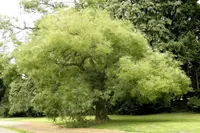
Establish central leader

In the first 3–5 years, selectively prune competing upright shoots to maintain a single strong central leader, which reduces the risk of weak branch unions and storm damage later.

Manage heavy branching

On young trees, remove or shorten steep, thick lateral branches (over 1/2 the trunk diameter) before they exceed 3–4 cm, to prevent narrow crotch angles and future limb failure.

Plan for brittle wood

Site the tree away from roofs, parked cars, and high-traffic areas because mature wood is somewhat brittle, and schedule inspections after major storms to remove cracked or hanging branches promptly.

Support urban establishment

In compacted or paved sites, create a wide (90–150 cm) mulch ring free of turf and add structural soil or loosened backfill beyond the planting hole to encourage stable root spread when growing Japanese pagoda tree.

Time major pruning

Carry out major structural pruning in late winter when the tree is dormant, then limit summer cuts to light crown thinning to reduce stress and lower the risk of sunscald on newly exposed limbs.

Common Pests and Diseases

Japanese beetles

These insects feed heavily on foliage, often skeletonizing the leaves and giving the canopy a lacy, thinned appearance. This pest is a frequent defoliator of Japanese pagoda tree in many urban landscapes.

Solution

Hand-pick beetles from reachable branches in early morning and drop them into soapy water, and consider using pheromone traps placed away from the tree to draw adults off the canopy. For heavier infestations, apply a targeted insecticide labeled for Japanese beetles to foliage during peak activity, and manage grubs in nearby turf with appropriate soil treatments to reduce future populations.

Lecanium scale

This pest appears as small, rounded brown bumps on twigs and branches, producing sticky honeydew that can lead to sooty mold on leaves or surfaces below the tree. Heavy infestations can weaken the tree over time and cause branch dieback.

Solution

Prune out and destroy heavily infested twigs where practical, then use a strong stream of water to wash honeydew and sooty mold from accessible foliage. For long-term control, apply horticultural oil as a dormant or crawler-stage spray according to label directions, and consider systemic insecticides in severe, repeated infestations as part of broader Styphnolobium japonicum plant care.

Leaf spot

This disease causes small brown to dark spots on leaves that may merge into larger blotches, sometimes leading to premature leaf drop, especially in humid weather. Symptoms include more noticeable spotting on inner canopy leaves where airflow is poor.

Solution

Rake and remove fallen leaves to reduce fungal inoculum, and avoid overhead irrigation that keeps foliage wet for long periods. Improve canopy airflow with light structural pruning, and if leaf spot recurs severely, consider a preventative fungicide labeled for ornamental tree leaf spots applied in early spring as new leaves emerge.

Powdery mildew

This disease shows as white to gray powdery patches on leaves, especially on shaded or crowded branches, which can cause distorted or stunted new growth. Symptoms include a dull, dusty look to the foliage late in the growing season.

Solution

Thin crowded branches to improve light penetration and air movement, and avoid excessive nitrogen fertilization that promotes lush, susceptible growth. In landscapes with yearly problems, apply a preventative or early-stage fungicide specifically labeled for powdery mildew on ornamental trees, following label timing and coverage instructions.

Verticillium wilt

This disease is a soil-borne fungus that invades the water-conducting tissues, leading to sudden wilting, branch dieback, and often one-sided canopy decline. Symptoms include sparse foliage, yellowing leaves, and brown discoloration in the sapwood when branches are cut.

Solution

Remove and dispose of severely affected branches promptly, sterilizing pruning tools between cuts, and avoid replanting susceptible species in the same location. Support the remaining tree by reducing drought stress with deep, infrequent watering, applying a light mulch layer over the root zone, and avoiding root disturbance; severely affected trees may need to be removed and replaced with more resistant species.

Interesting Facts

Nitrogen-fixer turned orphan

This species was long placed in the genus Sophora, but molecular studies showed it is genetically distinct, so it was moved into its own genus, Styphnolobium, even though it still forms nitrogen-fixing root nodules typical of many legumes.

Late-summer floral resource

Unlike many temperate trees, it flowers in late summer, providing an important nectar and pollen source for bees and other pollinators when few other large trees are in bloom in urban environments.

Urban air pollution tolerance

It is widely planted as a street tree because it shows notable tolerance to air pollutants such as ozone and sulfur dioxide, along with resistance to soil compaction and reflected heat common along roadsides.

Botan icon

Did you know?

Despite its common name Japanese pagoda tree, this species is native to China and Korea; it became associated with Japan historically because it was frequently planted around Buddhist temples and pagodas there, which influences how to take care of Japanese pagoda tree in designed temple-style gardens.

FAQs about Japanese pagoda tree

Lack of flowers often results from tree immaturity, excessive nitrogen fertilization, heavy pruning of young shoots, or insufficient summer warmth. Many trees need 8–10+ years before first flowering, even with good Styphnolobium japonicum care.

Grow Healthy Plants with Botan Care

Keep your plants happy and healthy with plant identification, disease detection, and easy care guidance.

Botan plant care app — identify plants on mobile

Explore More Plants