Suillus collinitus Care

Suillus collinitus

About Suillus collinitus

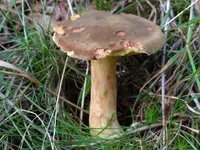
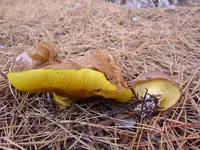
Suillus collinitus is a mycorrhizal mushroom-forming fungus, often called a bolete, that partners with pine roots in forests and plantations. It forms smooth, sticky brown caps with a yellow pore surface instead of gills and a pale, slender stem. This species is native to Europe and parts of western Asia but appears wherever suitable pines grow, sometimes in parks and managed landscapes. It spreads by spores and by its underground mycelium, so it cannot be grown like a typical houseplant. For anyone trying to care for Suillus collinitus, success depends on compatible pine hosts, well-drained, slightly acidic soil, and moderate moisture, not on pot culture indoors.

Main Plant Requirements

Care Difficulty

Moderate Care

Light Preference

Partial Shade

Water Requirements

Regular Water

Temperature Preference

Cool Climate

Hardiness Zone

Unknown

Soil Texture

Sandy, Loamy, Organic-rich

Soil pH

Acidic (5.5–6.5)

Soil Drainage

Moist but well-drained

Fertilization

Minimal (feed rarely)

Get Personalized Care Plan

Scan your plant to receive care tips personalized for your specific plant

Available on iOS and Android

How to Care for the Suillus collinitus

This ectomycorrhizal fungus prefers bright, open woodland light rather than deep forest shade.

  • Provide 3–6 hours of dappled or filtered sun, ideally with gentle morning sun and protection from intense afternoon exposure in open pine stands.
  • Allow partial shade under sparse pine canopies; heavy, continuous shade reduces fruiting and can lead to sparse or misshapen caps on Suillus collinitus.
  • In hot, dry summers, favor more shade and leaf-litter cover to limit direct sun on the soil surface and reduce desiccation of mycelium and fruiting bodies.

This species depends on consistent but not waterlogged soil moisture around its pine hosts.

  • Aim for mineral, well-drained soil that stays slightly moist 5–10 cm below the surface; avoid standing water, which promotes root and mycelial rot.
  • Use rainfall as the main moisture source; in managed sites, irrigate only when the top 3–5 cm are dry and nearby pines show mild drought stress, such as slight needle droop.
  • Reduce supplemental watering in cool or wet seasons to prevent prolonged saturation, and monitor for sour, swampy odors as a sign of overwatering stress in the habitat.

This fungus performs best in mild to warm conditions typical of many pine woodlands.

  • Optimal fruiting usually occurs around 55–70°F (13–21°C), with slow mycelial activity outside this band but continued survival in the soil.
  • Tolerates winter lows near 20–25°F (-6 to -4°C) once established, but repeated freeze–thaw cycles with waterlogged soil can damage fine mycelial strands.
  • Handles short warm spells up to about 80–85°F (27–29°C) if soil moisture is maintained; extended heat above this range dries the upper soil and suppresses Suillus collinitus fruiting.

Humidity is not a significant factor for Suillus collinitus, which is a mycorrhizal fungus rather than a typical potted plant.

Suillus collinitus depends on living tree roots rather than conventional potting soil, so focus on suitable outdoor site conditions instead of container mixes.

  • Choose a sandy or sandy-loam mineral soil that mimics dry pine woodland, avoiding heavy, compacted, or clay-dominant sites.
  • Ensure very sharp drainage; soils that stay waterlogged for more than 24 hours after rain will suppress fruiting and damage host tree roots.
  • Aim for slightly acidic conditions around pH 5.0–6.5, which favor both pine roots and the fungal mycelium network.
  • Incorporate coarse sand or fine grit into the top 5–10 cm if the existing soil is dense, to improve aeration and surface drainage around young pines.

This species is not suitable for container growing because it requires a long-term symbiosis with pine roots in open ground.

This ectomycorrhizal fungus relies mainly on its pine host and soil nutrients, so fertilizing is usually unnecessary.

Suillus collinitus mushrooms themselves are not pruned, and the associated pine host only needs minimal structural maintenance.

This species is almost always managed in the ground with its pine host, so care focuses on transplanting young host trees rather than moving containers.

  • Transplant pine seedlings colonized by the fungus in early spring or early fall, when temperatures are mild and soil is moist.
  • Look for signs of stress such as slow tree growth or poor establishment before deciding to move a young planting.
  • Dig a wide root ball, disturb roots as little as possible, and keep mycorrhizal soil attached around fine roots.
  • Water thoroughly after transplanting and maintain even moisture for several weeks to reduce transplant shock and support fungal recovery.

Reproducing this fungus is done indirectly, mainly by establishing compatible pines in suitable soil rather than by direct home propagation.

In typical climates for its pine hosts, this fungus is cold hardy and requires no specific winter care.

Care Tips

Mycorrhizal partner selection

Establish this fungus only near compatible pine hosts (Pinus spp.), ideally young to mid-aged trees, and avoid planting near broadleaf-only stands where its mycorrhizal association will not form properly.

Host-root inoculation

When planting young pines, dust the root ball or backfill soil with a small amount of colonized Suillus substrate to increase contact between fine roots and fungal material, improving the chance of successful mycorrhiza formation.

Minimal soil disturbance

Once the fungus is established, keep cultivation, raking, and edging around the host tree to a minimum so the shallow fungal mycelium and fruiting bodies are not damaged.

Targeted mulching practice

Apply a thin, loose layer of pine needles or coarse bark mulch over the colonized zone to conserve moisture while avoiding heavy, compact mulches that can suffocate the mushroom’s fruiting zone.

Ethical fruiting harvest

Cut or gently twist mature caps at the base rather than pulling up whole clusters, leaving some fruiting bodies intact to release spores and support the long-term sustainability of growing Suillus collinitus around the host tree.

Common Pests and Diseases

Mycophagous springtails

These insects feed on young fruiting bodies and mycelium, sometimes tunneling into caps and stems and causing misshapen or aborted mushrooms. Symptoms include small surface pits, fine tunnels, and a pepper-like movement of tiny white or gray insects around the base of the mushrooms.

Solution

Reduce excess surface moisture by improving drainage and avoiding standing water in the fruiting zone, then carefully remove heavily infested mushrooms. Where necessary, use sticky traps around the fruiting area and apply a targeted soil-safe insecticidal soap or spinosad drench around, not on, developing mushrooms, always following label directions and avoiding treatment immediately before harvest.

Fungus gnat larvae

This pest lives in moist soil and litter, feeding on developing mycelium and pin-stage fruiting bodies, which can collapse or fail to mature. Symptoms include thinning or patchy mushroom flushes and soft, water-soaked damage at the base of stems.

Solution

Allow the upper soil or litter layer to dry slightly between irrigations, and remove heavily damaged fruiting bodies. Use fine-mesh barriers where practical, reduce night lighting that attracts adults, and place yellow sticky traps to reduce adult numbers; in cultivation settings, a biological control such as Bacillus thuringiensis var. israelensis can be applied to the substrate following label instructions for mushroom or compost use.

Parasitic Hypomyces infection

This disease is caused by parasitic fungi such as Hypomyces species that colonize boletes, leading to deformed, felt-like, or crusty surfaces on caps and pores. Symptoms include a spreading white to colored coating that replaces the pore layer and halts normal development.

Solution

Promptly remove and destroy any distorted or coated fruiting bodies to reduce spore spread in the immediate area used for growing Suillus collinitus. Avoid moving contaminated soil, tools, or baskets between sites, and if repeatedly present in a managed bed, rotate the planting area and reduce dense organic debris that favors long-term persistence of parasitic fungi.

Slug and snail grazing

These pests feed on the soft caps and stems, especially during cool, wet conditions, leaving irregular holes, slime trails, and sometimes complete loss of young mushrooms. Symptoms include gnawed edges, missing chunks, and visible slime on nearby litter or soil.

Solution

Hand-pick slugs and snails during evening or early morning, and use simple barriers such as copper tape or sharp grit rings around high-value fruiting spots. In managed sites, deploy iron phosphate slug baits placed away from the mushrooms according to label directions, and limit dense groundcover that shelters large slug populations.

Interesting Facts

Pinkish stem base

This species can be distinguished from several close relatives by its pale to vivid pink coloration at the base of the stem, a stable field character used by mycologists for identification.

Preference for dry pines

Suillus collinitus shows a marked preference for dry, often calcareous soils in association with pines such as Pinus halepensis and Pinus nigra, and is frequently found in relatively warm, open pine woodlands around the Mediterranean region.

Sticky cap cuticle

The cap surface produces a strongly viscid, glue-like layer in wet conditions, which helps protect the underlying tissues from desiccation and mechanical damage and is a key macroscopic trait in Suillus collinitus care instructions used for field recognition.

Botan icon

Did you know?

Suillus collinitus forms ectomycorrhizal associations with pine roots and plays an important role in reforestation and soil stabilization in degraded Mediterranean landscapes, where it enhances water and nutrient uptake and improves young trees’ survival rates under drought-prone conditions.

FAQs about Suillus collinitus

This bolete is considered edible but of modest culinary value. The slimy cap skin should be peeled, and only fresh, undamaged fruiting bodies collected. Always have wild mushrooms confirmed by an experienced mycologist before eating.

Grow Healthy Plants with Botan Care

Keep your plants happy and healthy with plant identification, disease detection, and easy care guidance.

Botan plant care app — identify plants on mobile

Explore More Plants