
Slippery Jack Identification (Suillus luteus)

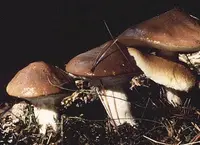
To recognize Slippery Jack, look first for a smooth brown cap with a distinctly slimy surface, a pore layer instead of gills, and a white ring high on the stem.

The stem is usually stout and pale above the ring, often dotted below it, and the cap commonly spans about 2-4 inches (5-10 cm).

Suillus luteus Identification

Is This Slippery Jack?

Take a photo and use Botan to confirm your plant identification.

Clear images work best. Avoid photos taken too close or too far away

Check a few visible mushroom features before relying on color alone.

  • Cap is smooth and very slimy when moist, rounded to broadly convex, often 2-4 inches (5-10 cm) across.
  • Underside has a sponge-like pore surface, not gills, with small round yellow pores.
  • Stem is pale yellow to tan and usually shows a white to purplish ring near the upper part.
  • Above the ring, the stem often has many tiny brown glandular dots.

The ring plus pores is one of the quickest visible combinations to confirm.

Suillus luteus shows clear age-related changes in cap shape, veil, and pore surface.

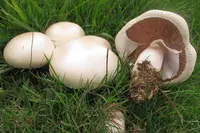
  • Young plant: Young fruit bodies are button-like, with a rounded cap and a pale partial veil stretched from cap edge to stem, hiding the pores.
  • Mature plant: As Slippery Jack expands, the cap becomes broadly convex to nearly flat, often 2-4 inches (5-10 cm) wide, and the sticky surface is more obvious.
  • Fruiting stage: At the fruiting stage, the veil breaks and leaves a distinct ring on the stem; the pore surface opens and shifts from pale to yellow.

Suillus luteus is most visible in fall, when fresh mushrooms appear on the ground beneath pine trees. Caps are often shiny or sticky in wet weather, which makes the common look of this species easier to spot. As the season advances, older fruiting bodies darken, flatten, and may look less glossy. The ring on the stem is usually easiest to notice on younger fall specimens.

Several boletes can be mistaken for Slippery Jack.

chicken fat bolete(Suillus americanus)

Both are sticky-capped Suillus found with pines. Suillus americanus is bright yellow to golden with brownish dots on the stem and usually lacks the white ring that often marks Suillus luteus.

weeping bolete(Suillus granulatus)

This species also has a slimy brownish cap and yellow pores. The quickest check is the stem: Suillus granulatus lacks a ring, while Suillus luteus usually has a clear membranous ring.

Suillus luteus is native across much of Europe and northern Asia, and it is closely tied to pine forests. It fruits on the ground in conifer woods, plantations, and woodland edges where pines are present, often in sandy or acidic soils. That habitat is a strong identification clue. Finding it with pine, especially in planted or natural pine stands rather than broadleaf woods, helps narrow the ID because Suillus species are commonly host-specific with particular trees.

  • Misidentification risk: This mushroom is handled and sometimes eaten, so correct identification matters for humans. Confusing it with a harmful bolete is possible. Check for pores, not gills, and the slimy cap and ring on the stem typical of Suillus luteus.
  • Skin contact: The slimy cap coating can irritate skin in some people during handling. The concern is skin contact, not airborne exposure, and mainly affects humans.

Confirm the Species with Botan

Upload a photo to compare key details and get help identifying it or confirming the match before you label it.

FAQ

The standout feature is the very slimy brown cap paired with yellow pores instead of gills. A white partial veil often leaves a ring on the stalk, a strong clue when identifying Slippery Jack.

More Plant Identification Guides

Identify First. Learn What Comes Next.

Use Botan to identify it from a photo, then see plant details, care information, and common problems for the matched species.

Botan app identifying a plant from a photo
How Often to Water Fruit Trees

7 min read · 11 Aug 2026

How Often to Water Fruit Trees

Irrigation needs change as roots establish and weather shifts. This guide gives practical starting intervals, explains how soil and tree type change them, and shows how to recognize both excess moisture and drought stress.

Plant Care
How Often to Water Fruit Trees
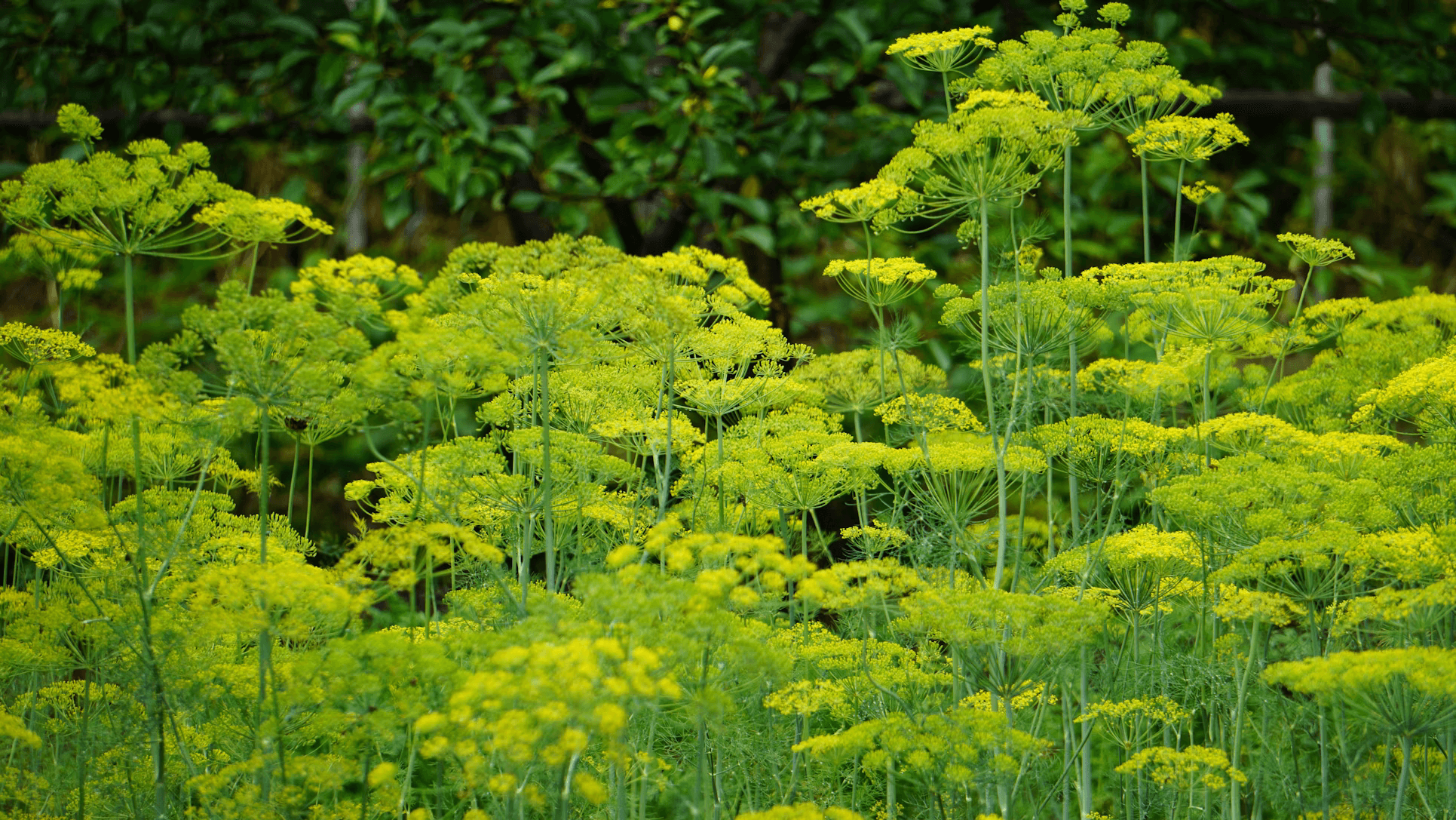
Dill Companion Plants – What to Grow Next to Dill

9 min read · 17 Jul 2026

Dill Companion Plants – What to Grow Next to Dill

Dill is an easy-to-grow plant that gets along well with many vegetables. This guide describes 15 plants that can be planted alongside it, a few to avoid, and mistakes that can quietly sabotage the entire process.

Plant Recommendations
Dill Companion Plants – What to Grow Next to Dill
Top 15 Fast-Growing Trees For Your Garden

13 min read · 28 Jul 2026

Top 15 Fast-Growing Trees For Your Garden

Learn which of the 15 fastest-growing trees will suit your area. We’ll share detailed information on each: growth rate, mature spread, key tree demands, and main vulnerabilities. Read on and make the best choice possible.

Plant Recommendations
Top 15 Fast-Growing Trees For Your Garden