Staggered Division
Divide clumps every 3–4 years in early spring, but stagger divisions across different sections of the planting so flowering impact is minimal and plant vigor is maintained long term.

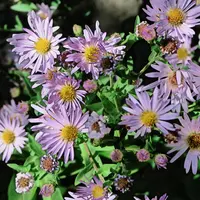
Pacific aster, Symphyotrichum chilense, is a perennial flowering plant native to coastal regions of western North America, especially California. It typically forms clumps with upright stems and narrow green leaves.
In late summer to fall, it produces many small, daisy-like flower heads with purple to lavender rays and yellow centers, often attracting bees and butterflies. Its natural tolerance for wind, salt spray, and seasonal dryness makes it a relatively resilient choice for low-maintenance gardens.
Gardeners who want to care for Pacific aster should know it prefers sun to light shade, moderate moisture, and well-drained soil, but usually adapts well to ordinary garden conditions.

Care Difficulty
Easy Care

Light Preference
Full Sun

Water Requirements
Moderate Water

Temperature Preference
Cold Hardy

Hardiness Zone
6–10

Soil Texture
Sandy, Loamy, Clay

Soil pH
Slightly acidic (6.5–7.0), Neutral (7.0)

Soil Drainage
Moist but well-drained

Fertilization
Minimal (feed rarely)
Scan your plant to receive care tips personalized for your specific plant
Available on iOS and Android
This coastal perennial thrives in full sun with some tolerance for light shade, especially in hotter inland areas.
This species prefers evenly moist, well-drained soil but is more drought-tolerant once established.
This coastal aster is adapted to mild climates but tolerates a fairly wide temperature range once established outdoors.
This coastal perennial tolerates a wide humidity range but grows best with moderately moist air.
This species prefers loose, well-drained mineral soils that still retain some moisture.
This species can adapt to container growing if the pot allows for its spreading root system and seasonal top growth.
This coastal native needs only light feeding, especially when grown in poor or sandy soils.
Pruning helps Symphyotrichum chilense stay compact and produce more flowers.
This species is usually grown in the ground and benefits more from thoughtful transplanting than frequent repotting.
Symphyotrichum chilense is commonly propagated by division, basal cuttings, or seed.
This perennial is generally cold hardy in much of its range and needs only modest winter care.

Plant Health Check
Not sure what's wrong with your plant? Check your plant's health inside the app.
This coastal aster naturally grows near the Pacific shoreline and tolerates salty spray and sandy, fast-draining soils better than many other asters, which helps it stabilize fragile dunes and bluffs.
It flowers from late summer into fall in its native range, providing nectar and pollen for native bees, butterflies, and other insects when many earlier-blooming coastal plants have already finished.
The plant spreads via short rhizomes, forming low, dense colonies that can persist for many years and act as a living groundcover in windy coastal habitats.

Genetic and field studies have shown that this species is closely tied to the California coast, with natural populations largely restricted to a narrow Pacific strip from southern Oregon to southern California, making it a regionally specialized component of coastal prairie and salt marsh edge communities.
This species is highly attractive to native bees, honeybees, and many butterfly species, especially in late summer and fall. Dense clusters of small, nectar-rich flowers provide a reliable food source when many other garden plants are fading.
Keep your plants happy and healthy with plant identification, disease detection, and easy care guidance.