Staking in Wind
In open or windy sites, insert slender stakes on the windward side and loosely tie stems with soft ties to prevent lodging and flower breakage as plants reach full height.

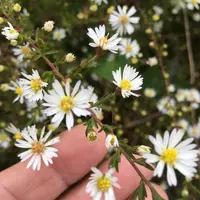
Rice button aster, Symphyotrichum dumosum, is a compact, clump-forming perennial from eastern North America. It typically grows as a low, bushy mound with many small, daisy-like flowers.
Flowers are usually pale lavender to white with yellow centers, creating a fine-textured, airy look in late summer and fall. Its narrow leaves and branched stems give it a light, informal structure that fits well in naturalistic or pollinator-focused plantings.
The species is adaptable and generally easy to grow, as long as it receives good light and reasonably well-drained soil. Its toughness and low maintenance needs make it a practical choice for gardeners who want to care for rice button aster without complex routines.

Care Difficulty
Easy Care

Light Preference
Full Sun

Water Requirements
Moderate Water

Temperature Preference
Cold Hardy

Hardiness Zone
4–8

Soil Texture
Sandy, Loamy, Clay

Soil pH
Acidic (5.5–6.5), Slightly acidic (6.5–7.0)

Soil Drainage
Moist but well-drained

Fertilization
Minimal (feed rarely)
Scan your plant to receive care tips personalized for your specific plant
Available on iOS and Android
This species performs best in open, bright sites with several hours of direct sun each day.
Symphyotrichum dumosum prefers steadily moist but not soggy soil, especially during its main growing and flowering season.
This hardy perennial tolerates a wide temperature range but flowers best in moderate conditions.
Humidity is not a major factor for Symphyotrichum dumosum, which adapts well to typical outdoor conditions.
This species prefers moderately moist, well-drained, open soil that does not stay waterlogged.
This species can grow successfully in containers if the potting setup manages moisture and stability carefully.
This native perennial needs only modest feeding, especially when grown in decent garden soil.
Symphyotrichum dumosum responds well to thoughtful pruning that maintains a dense, floriferous clump.
This species is usually grown in-ground, with transplanting more common than true container repotting.
Symphyotrichum dumosum is commonly propagated by division, but seed and cuttings are also possible.
This hardy perennial usually needs minimal winter care in most temperate climates.

Plant Health Check
Not sure what's wrong with your plant? Check your plant's health inside the app.
This species flowers very late in the season, often from late summer into mid-autumn, providing nectar and pollen when many other native wildflowers have already finished blooming.
Dense clumps offer cover for small invertebrates, while the seeds are eaten by small birds such as finches, linking this plant to both insect and bird food webs in eastern North American habitats.
In the wild it occurs in open woods, roadsides, old fields, and moist meadows, showing a notable tolerance for different soil textures and light levels, from full sun to light shade.

Genetic and field studies have shown that this species often hybridizes with closely related asters, which contributes to high morphological variation and can make it difficult to identify correctly in the wild.
This species is highly attractive to native bees, honey bees, butterflies, and other beneficial insects, especially late in the season. Dense clusters of small flowers provide both nectar and pollen when many other garden plants are fading.
Keep your plants happy and healthy with plant identification, disease detection, and easy care guidance.