white heath aster Care (Symphyotrichum ericoides)

Also known as: many-flowered aster, heath aster
white heath aster

About white heath aster

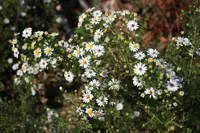
White heath aster, Symphyotrichum ericoides, is a fine‑textured perennial in the aster family, valued for its profusion of small, daisy‑like white flowers. It forms bushy clumps or low, branching mounds covered in narrow, heath‑like leaves and blooms mainly in late summer to fall.

This species is native to North American prairies, open woods, and roadsides, where it thrives in sunny, well‑drained, often dry soils. It is generally easy to grow, tolerant of poor soil, drought, and temperature swings, which makes it suitable for low‑maintenance gardens.

Gardeners who want to learn how to care for white heath aster mainly need to provide strong light, avoid heavy, waterlogged soil, and allow enough space for its spreading habit.

Main Plant Requirements

Care Difficulty

Easy Care

Light Preference

Full Sun

Water Requirements

Moderate Water

Temperature Preference

Cold Hardy

Hardiness Zone

3–9

Soil Texture

Sandy, Loamy, Clay

Soil pH

Acidic (5.5–6.5), Slightly acidic (6.5–7.0)

Soil Drainage

Well-drained

Fertilization

Minimal (feed rarely)

Get Personalized Care Plan

Scan your plant to receive care tips personalized for your specific plant

Available on iOS and Android

How to Care for the white heath aster

This sun-loving perennial thrives in open, bright conditions that mimic prairie or meadow habitats.

  • Provide 6–8 hours of direct sun daily; morning and midday sun promote dense growth and abundant flowering.
  • Plant white heath aster where it receives full sun but can tolerate light afternoon shade in very hot regions, especially on south- or west-facing exposures.
  • In partial shade (3–4 hours sun), expect taller, looser stems and fewer blooms; too much shade leads to legginess and reduced flowering.

This species prefers evenly moist, well-drained soil and tolerates brief dryness better than standing water.

  • Allow the top 3–5 cm of soil to dry before watering again; soil should feel dry at the surface but still slightly moist deeper down.
  • During hot, dry periods, increase frequency if foliage wilts in the afternoon and fails to recover by evening, a sign of underwatering in Symphyotrichum ericoides.
  • Avoid overwatering by using sharply drained soil; yellowing lower leaves, soft stems, or a sour smell in the root zone indicate excess moisture and poor drainage.

This hardy perennial is adapted to outdoor climates with cold winters and warm summers.

  • Optimal growing temperatures during the active season are 60–80°F (16–27°C), which support strong vegetative growth and reliable flowering.
  • Established plants tolerate winter cold down to about -30°F (-34°C) in the ground, dying back above soil level and re-sprouting in spring.
  • Mature plants handle summer heat up to about 90–95°F (32–35°C) if soil moisture is maintained; prolonged extremes beyond this can stress plants and reduce bloom quality.

Humidity is rarely a concern for Symphyotrichum ericoides, which thrives in typical outdoor conditions.

  • Performs well in 30–60% humidity, matching most temperate outdoor environments.
  • Tolerates dry air and wind; white heath aster rarely needs humidity boosting outdoors.
  • Humidity stress shows mainly as drought-like leaf scorch; prevent by consistent soil moisture rather than misting.

This species prefers lean, well-drained mineral soils and tolerates relatively poor ground.

  • Use sandy or sandy-loam soil with moderate organic matter so roots stay aerated and dry between waterings.
  • Ensure sharp drainage; blend 50–70% native mineral soil with coarse sand and a small amount of compost.
  • Aim for slightly acidic to neutral pH around 6.0–7.0, adjusting very alkaline soils with organic matter if needed.
  • Avoid heavy clay, waterlogged sites, or peat-heavy mixes that stay wet, which promote root rot in Symphyotrichum ericoides.

This species can grow successfully in containers outdoors if the pot is set up to prevent waterlogging.

  • Choose a deep, relatively wide container so the spreading root system and clump growth do not become crowded mid-season.
  • Use a heavier material like ceramic or thick-walled terracotta in windy sites to stabilize tall, flowering stems.
  • Combine a peat-free potting mix with 30–40% coarse sand or fine gravel to keep drainage fast and the root zone oxygenated.

This sun-loving perennial needs only modest feeding in most garden soils, especially when white heath aster is established outdoors.

  • Apply a light dressing of compost or a balanced slow-release fertilizer (around 10-10-10) in early spring to support new growth.
  • Use about half the label-recommended strength to avoid lush, floppy stems and reduced flowering.
  • Skip additional feeding in mid to late summer unless growth is clearly weak or pale.
  • Do not fertilize in late fall or winter, as the plant is dormant and excess nutrients can leach away.

Pruning Symphyotrichum ericoides helps maintain a compact shape and encourages abundant late-season flowering.

  • In late winter or very early spring, cut back previous year’s dead stems to just above ground level using clean hand pruners.
  • Remove any dead, diseased, or storm-damaged stems during the growing season to maintain plant health.
  • Pinch or lightly shear taller shoots in late spring to early summer to reduce height and promote bushier growth.
  • After flowering, deadhead spent blooms if desired to tidy the plant and limit self-seeding.

This species is most often grown in the ground, so care focuses on dividing and transplanting clumps rather than frequent repotting.

  • Transplant or divide clumps every 3–4 years in early spring or early fall, when temperatures are mild.
  • Choose a new site with full sun and well-drained soil, matching the original planting depth to limit transplant shock.
  • If container-grown, repot when roots circle the pot or growth slows, stepping up only 1–2 in in diameter.
  • Water thoroughly after moving and keep soil evenly moist for 1–2 weeks to help roots re-establish.

Symphyotrichum ericoides is commonly propagated by division, stem cuttings, and seeds, allowing gardeners to expand plantings effectively.

  • Divide mature clumps in early spring or immediately after flowering, replanting firm, healthy sections with vigorous buds.
  • Take softwood or semi-ripe stem cuttings in late spring to early summer, rooting them in a sterile, moist, well-drained medium.
  • Maintain bright, indirect light and high humidity around cuttings until roots form, usually in several weeks.
  • Sow seeds in fall outdoors or early spring under cover, providing light, consistent moisture, and cool to moderate temperatures for germination.

This cold-hardy perennial generally needs minimal winter care in the ground across most temperate climates.

  • Plants tolerate frost and typical winter lows in many regions once established.
  • After the first hard frost, optional cutting back of dead stems to a low stubble keeps beds tidy.
  • Apply a 5–8 cm mulch layer over the root zone in colder areas to moderate soil temperature and moisture.
  • For container-grown plants, move pots to a sheltered, unheated but frost-sheltered spot to protect roots from extreme freeze-thaw cycles.

Care Tips

Staggered Renewal Cutting

Every 2–3 years, cut back one-third of the oldest, most woody stems to ground level right after flowering to keep the clump youthful, maintain strong flowering, and prevent the plant from becoming overly woody and sparse in the center.

Midseason Pinch Management

In late spring to early summer, pinch or lightly shear back the top 5–8 cm of new growth from only the tallest stems to encourage bushier plants and a more even flowering canopy without delaying bloom across the entire clump.

Airflow Through Clumps

When dividing or replanting, space divisions so that mature plants just barely touch, creating small air corridors that reduce leaf wetness time and lower the risk of foliar diseases in humid or rainy climates.

Strategic Pollinator Support

Combine plants of slightly different bloom times and heights around your aster bed so that Symphyotrichum ericoides supports late-season pollinators while earlier and taller neighbors provide nectar and light shade, creating a more resilient small ecosystem.

Winter Debris Management

Leave stems standing over winter to protect the crown and support beneficial insects, then remove and dispose of the top growth in late winter before new shoots emerge to limit overwintering pests and disease spores, which is especially helpful when growing white heath aster in smaller gardens.

Common Pests and Diseases

Aster yellows

This disease causes yellowing, stunted growth, bushy or witches’-broom shoots, and deformed, greenish flowers that may fail to set seed. Symptoms include irregular flower color and shape, often on scattered plants within a group.

Solution

Remove and destroy affected plants promptly to reduce the source of infection and control leafhopper populations, which spread the phytoplasma, using fine mesh row covers or targeted insecticidal soap. Avoid planting new asters directly next to previously infected plants and maintain good weed control around the bed, since weeds can host the pathogen and vectors, which supports Symphyotrichum ericoides care instructions overall.

Powdery mildew

This disease appears as white, powdery patches on leaves and stems, often late in the season when nights are cool and humidity is high. Symptoms include dull, distorted foliage that may yellow and drop early.

Solution

Improve air circulation by thinning crowded stems and avoiding overhead watering, especially in the evening. Remove heavily infected leaves or stems and, if needed, apply a sulfur or potassium bicarbonate-based fungicide according to label directions at the first sign of disease to keep plants vigorous through the flowering season.

Rust

This disease causes small orange to brown pustules on the undersides of leaves, sometimes with yellow spots visible on the upper surface. Symptoms include premature leaf drop and a generally weakened plant if infection is heavy.

Solution

Promptly remove and discard infected leaves to reduce spore spread, and keep foliage as dry as possible by watering at the base of the plant. Increase spacing between plants for better airflow, and if rust recurs yearly, consider applying a labeled ornamental rust fungicide early in the season on susceptible plantings.

Leafhoppers

These insects are small, wedge-shaped and fast-moving, feeding on plant sap and causing pale stippling or bleaching of leaves. This pest can also transmit aster yellows, increasing the impact of even light feeding.

Solution

Reduce hiding places by controlling weeds around plantings, and use yellow sticky traps to monitor populations. If numbers are high, spray plants thoroughly with insecticidal soap or a horticultural oil in the evening, repeating as needed, and consider floating row covers over young plants during peak leafhopper activity periods.

Aphids

These insects cluster on soft stems and buds, sucking sap and causing curling or distortion of new growth, with sticky honeydew sometimes attracting sooty mold. This pest can weaken plants and reduce flowering quality, especially in young or stressed asters.

Solution

Dislodge colonies by spraying plants with a firm stream of water, focusing on shoot tips and undersides of leaves. If aphids return, apply insecticidal soap or neem oil, ensuring thorough coverage of all plant surfaces, and encourage natural predators such as lady beetles by avoiding broad-spectrum insecticides nearby.

Interesting Facts

North American prairie specialist

This species is native to open prairies, glades, and roadsides across much of central and eastern North America and is especially characteristic of dry to mesic tallgrass prairie remnants.

Late-season pollinator magnet

It flowers late in the growing season, often from late summer into fall, providing abundant nectar and pollen for native bees, syrphid flies, and migrating butterflies when many other wildflowers have finished blooming.

Fine heath-like foliage

Its very small, narrow leaves give stems a fine-textured, heath-like appearance, which is unusual among North American asters and helps distinguish it from broader-leaved related species.

Botan icon

Did you know?

Genetic and taxonomic research led to this species being reclassified from the large catch-all genus Aster into the genus Symphyotrichum, making it part of a group that clarified evolutionary relationships among many North American asters.

FAQs about white heath aster

This species spreads steadily by short rhizomes and self-seeding but is not usually invasive in managed gardens. Clumps can expand 30–60 cm over several seasons. Divide or remove unwanted seedlings every few years to control size.

Grow Healthy Plants with Botan Care

Keep your plants happy and healthy with plant identification, disease detection, and easy care guidance.

Botan plant care app — identify plants on mobile

Explore More Plants