Comfrey Care (Symphytum 'Hidcote Blue')

About Comfrey

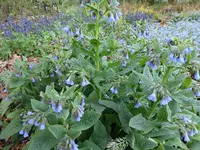
Symphytum 'Hidcote Blue' is a herbaceous perennial grown mainly for its clusters of tubular blue flowers and sturdy, leafy clumps. It forms a low, spreading mound that slowly expands to create good ground cover in borders or under light shade.

This cultivar originates from garden selections of Eurasian comfrey species, which are naturally found in meadows, woodland edges, and moist riverbanks. It is generally robust and forgiving, which makes it easier for beginners learning how to care for Comfrey.

The plant prefers moist but well-drained soil and does well in partial shade to full sun in cooler climates, as long as it does not dry out for long periods.

Main Plant Requirements

Care Difficulty

Easy Care

Light Preference

Partial Shade

Water Requirements

Regular Water

Temperature Preference

Cold Hardy

Hardiness Zone

4–8

Soil Texture

Loamy, Clay, Organic-rich

Soil pH

Acidic (5.5–6.5), Slightly acidic (6.5–7.0)

Soil Drainage

Moist but well-drained

Fertilization

Minimal (feed rarely)

Get Personalized Care Plan

Scan your plant to receive care tips personalized for your specific plant

Available on iOS and Android

How to Care for the Comfrey

Symphytum 'Hidcote Blue' grows best in bright, gentle light typical of woodland or border edges.

  • Provide 3–6 hours of sun daily, ideally morning or early evening sun with light afternoon shade to protect leaves from scorch.
  • Site plants in partial shade; dappled or filtered light under open trees or on the east or north side of buildings suits Comfrey well.
  • In hotter summers, increase shade during midday; in cooler climates, allow more morning sun to support flowering while watching for leaf wilting or bleaching.

Symphytum 'Hidcote Blue' prefers consistently moist, not soggy, soil.

  • Water when the top 3–5 cm of soil feels slightly dry, aiming for evenly damp soil that does not form puddles or mud.
  • Improve drainage with organic matter so water soaks in and excess drains away, reducing root rot risk and allowing oxygen around the roots.
  • In spring and summer, monitor foliage for wilting or crispy edges as a sign to water more, and for yellowing, limp growth as a sign to reduce watering.

This hardy perennial tolerates cool conditions but grows best in mild temperatures.

  • Optimal growth occurs around 55–75°F (13–24°C), with strong leaf and flower production during the cool parts of spring and early summer.
  • Plants survive down to about 0°F (-18°C) once established, dying back to the roots in winter and re-sprouting when soil warms.
  • In hot regions, growth may slow above 85°F (29°C); provide extra shade and mulch to keep roots cool during heat waves.

Humidity is rarely a limiting factor for Symphytum 'Hidcote Blue' in typical outdoor conditions.

Symphytum 'Hidcote Blue' prefers a moist, fertile, well-structured soil that does not stay waterlogged.

  • Use a loamy soil rich in organic matter, such as garden soil mixed with 30–50% compost.
  • Ensure moderate drainage so the soil stays evenly moist but not saturated, avoiding standing water after rain or watering.
  • Aim for slightly acidic to neutral pH, roughly 6.0–7.0, which supports nutrient availability and healthy growth.
  • Improve aeration and prevent compaction by incorporating coarse sand or fine grit into heavy clay before planting.

This species can be grown in containers outdoors if the pot is large and stable enough to handle its spreading root system.

  • Choose a deep, wide container of at least 30–40 cm diameter to give the vigorous roots and crowns enough horizontal space.
  • Select a heavy or weighted pot material, such as thick terracotta or concrete, to keep the plant stable as top growth becomes dense.
  • Use containers with multiple or enlarged drainage holes so excess water exits quickly, preventing crown rot at the base of the plant.

This deep-rooted perennial needs minimal feeding but responds well to light nutrition in poor soils when caring for Comfrey.

  • Use a balanced, all-purpose fertilizer (for example 10-10-10) or well-rotted compost as a top dressing in early spring.
  • Apply fertilizer 1–2 times during the growing season if growth appears weak or leaves pale.
  • Use diluted liquid feed at 1/2 strength for container plants to avoid excess salt buildup.
  • Stop feeding in late summer and do not fertilize during dormancy in fall and winter.

Thoughtful pruning keeps Symphytum 'Hidcote Blue' dense, tidy, and flowering well.

  • Cut back spent flower stems to the base after blooming to encourage fresh foliage and possible rebloom.
  • In late autumn or very early spring, remove dead, damaged, or crowded stems with clean hand pruners.
  • Shear or cut the whole clump down to 5–8 cm if foliage becomes tattered, promoting compact new growth.
  • Disinfect blades before and after use to limit disease spread between plants.

This vigorous perennial is usually grown in the ground, so focus on site preparation and careful transplanting.

  • Transplant in early spring or early fall, when temperatures are mild and soil moisture is steady.
  • Move plants only when necessary, as deep taproots resent disturbance and may slow growth afterward.
  • Choose a well-drained, fertile bed, planting crowns at the same depth and spacing clumps 45–60 cm apart.
  • Water thoroughly before and after transplanting, then shade or mulch lightly for 7–10 days to limit root stress.

Symphytum 'Hidcote Blue' is most often propagated by division or root cuttings rather than seed.

  • Divide mature clumps in early spring or early fall, lifting sections with a spade and preserving as many roots as possible.
  • Replant divisions immediately into moist, well-drained soil, keeping crowns at original depth.
  • Take 5–8 cm root cuttings in late winter, lay horizontally in a free-draining mix, and cover lightly.
  • Maintain even moisture and moderate temperatures around 60–70°F to support rapid root and shoot development.

This hardy perennial typically needs minimal winter care in most temperate climates.

  • The plant tolerates freezing conditions and normally dies back to the crown, regrowing in spring.
  • After the first hard frost, cut spent stems to ground level to reduce disease carryover.
  • Apply a 5–8 cm mulch layer over the root zone in colder areas to moderate soil temperature and moisture.
  • In containers, move pots to a sheltered, unheated area so roots do not experience extreme freeze–thaw cycles.

Care Tips

Rhizome Containment

Install a root barrier or plant in a large, bottomless container sunk into the soil to keep the spreading rhizomes from invading nearby beds while still allowing deep rooting.

Targeted Biomass Harvest

Cut back the top growth 2–3 times per season and use the foliage as mulch or in a contained compost system, which both controls size and converts the high-biomass growth into a useful soil amendment.

Early Slug Management

Place slug traps or rough copper barriers around young plants in early spring, since tender emerging leaves are especially attractive and damage at this stage can slow establishment.

Division For Rejuvenation

Lift and divide mature clumps every 3–5 years in early spring or fall, replanting only strong, white rhizome sections to maintain vigorous growth and reduce congestion in the crown.

Pollinator-Friendly Positioning

Site plants near fruit trees or vegetable beds so that the long flowering period supports bumblebees and other pollinators, which can indirectly benefit nearby crops when growing Comfrey as a companion plant.

Common Pests and Diseases

Comfrey rust

This disease causes orange to brown powdery pustules on the undersides of leaves, often leading to yellowing and early leaf drop. Symptoms include reduced vigor and unsightly foliage, especially in dense, moist plantings.

Solution

Remove and dispose of heavily infected leaves to reduce spore load, and avoid overhead watering to keep foliage dry. Improve spacing and airflow, and if rust recurs badly each year, apply a sulfur or copper-based fungicide labeled for rust early in the season according to label directions.

Powdery mildew

This disease produces a white, floury coating on the upper leaf surfaces, often in late summer when conditions are warm and dry with cool nights. Symptoms include distorted new growth and reduced photosynthesis if the coating becomes dense.

Solution

Thin or divide crowded clumps to improve air circulation and avoid excessive nitrogen fertilization that stimulates soft, mildew-prone foliage. Remove the worst-affected leaves and, if necessary, apply a horticultural oil or potassium bicarbonate product labeled for powdery mildew at the first sign of spotting.

Slugs and snails

These pests chew irregular holes in tender leaves and can skeletonize new growth, especially in damp, shaded conditions. This pest often leaves slime trails on soil or foliage around damaged areas.

Solution

Hand-pick slugs and snails in the evening, use iron phosphate bait around the clump, and place simple traps such as sunken saucers of beer to reduce numbers. Keep mulch thin and remove dense debris around the crown to make the area less favorable for hiding during the day.

Comfrey leaf spot

This disease causes small brown to purple spots that may merge into larger blotches, giving foliage a scorched or tattered appearance over time. Symptoms include premature yellowing and drop of older leaves, especially after periods of wet weather.

Solution

Cut off and discard badly spotted leaves to remove infected tissue and reduce splash spread. Water at the base in the morning, improve airflow, and if leaf spot recurs severely, consider a preventive copper-based fungicide applied early in the growing season as part of broader Comfrey care instructions.

Interesting Facts

Sterile hybrid origin

This cultivar is a selected form of the hybrid Symphytum × hidcotense, which is functionally sterile and does not usually set viable seed, so it spreads mainly by short creeping rhizomes rather than self‑seeding around the garden.

Long flowering window

In suitable temperate climates, it often produces nodding blue bells from mid spring into early summer, and may give a lighter repeat flush later in the season, providing an unusually extended flowering period compared with many other comfrey types.

Shade-tolerant groundcover

It was selected at Hidcote Manor in England for its ability to form a dense, weed‑suppressing carpet of foliage and flowers in partial shade, especially under deciduous shrubs and trees where many sun‑loving perennials fail to thrive.

Botan icon

Did you know?

Because it is a clonal, non‑seeding hybrid, distinct garden populations of Symphytum 'Hidcote Blue' are essentially copies of the original plant selected at Hidcote Manor in the early 20th century, so most plants grown today trace back to that single cultivated source.

FAQs about Comfrey

This species spreads mainly through deep, fleshy roots that easily resprout from small pieces. Clumps gradually enlarge and can become difficult to remove, so choose a permanent site and avoid unnecessary digging once established.

Grow Healthy Plants with Botan Care

Keep your plants happy and healthy with plant identification, disease detection, and easy care guidance.

Botan plant care app — identify plants on mobile

Explore More Plants