Tuber orientation check
When planting or repotting, position the tuber so that previous stem scars face upward and keep the top just below the soil surface, which encourages strong shoot emergence and reduces risk of rot in heavy mixes.

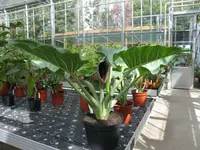
Synandrospadix vermitoxicus is a terrestrial aroid from dry, open habitats in Argentina, Bolivia, Paraguay, and nearby regions. It grows from a tuber, producing low, arching leaves and an unusual, often mottled inflorescence close to the ground. Flowers are mainly pollinated by insects attracted to its distinctive spadix and spathe. The plant tolerates seasonal drought and prefers a free-draining, gritty soil, which makes it suitable for rock gardens and specialized collections in mild climates. It is not a typical beginner’s houseplant; care for Synandrospadix is easier for growers already familiar with bulb-like or tuberous species.

Care Difficulty
Moderate Care

Light Preference
Partial Shade

Water Requirements
Moderate Water

Temperature Preference
Warm Climate

Hardiness Zone
9–11

Soil Texture
Loamy, Sandy, Organic-rich

Soil pH
Acidic (5.5–6.5), Slightly acidic (6.5–7.0)

Soil Drainage
Moist but well-drained

Fertilization
Minimal (feed rarely)
Scan your plant to receive care tips personalized for your specific plant
Available on iOS and Android
This species prefers bright but softened light similar to open woodland edges.
This plant prefers steadily moist but never waterlogged soil.
This species performs best in mild, frost-free conditions with moderate seasonal change.
This aroid prefers moderate, stable humidity and shows stress if air is too dry for long periods.
Synandrospadix vermitoxicus performs best in loose, humus-rich soil that stays evenly moist yet drains quickly.
This species can be grown in containers if the pot supports its fleshy, spreading root system and moisture needs.
This species from nutrient-poor habitats needs only modest feeding in cultivation.
Synandrospadix vermitoxicus needs minimal pruning, focused mainly on cleanliness rather than shaping.
This tuberous aroid resents frequent disturbance, so repot or transplant only when clearly necessary.
Propagation of this species is possible but slow and best suited to patient growers.
This hardy ground-dwelling aroid tolerates moderate cold but benefits from some winter preparation outdoors.

Plant Health Check
Not sure what's wrong with your plant? Check your plant's health inside the app.
In its native South American range, this species is pollinated mainly by scarab beetles that are attracted to the heat and odor produced by the flowering structure, a strategy typical of some aroids but carried out here by a very restricted beetle group in dry Chaco habitats.
Unlike many aroids that favor moist tropical forests, this plant is native to the seasonally dry Chaco woodlands of Argentina, Bolivia, Paraguay, and Brazil, where it tolerates strong sun, temperature extremes, and prolonged dry periods in well‑drained soils.
It develops a creeping rhizome (a horizontal underground stem) that allows the plant to spread slowly and resprout after unfavorable seasons, an adaptation to the highly seasonal climates where it naturally occurs.

Ethnobotanical records from parts of its native range document the use of its rhizome by Indigenous communities as a vermifuge (a remedy targeting intestinal worms), which is reflected in the species name vermitoxicus, although such traditional uses must be evaluated with modern toxicological research before any practical application.
This species performs best outdoors in mild, frost-free climates where it can develop a deep root system and full-sized tuber. Indoors it survives, but growth and flowering are usually weaker unless humidity, space, and light are carefully managed.
Keep your plants happy and healthy with plant identification, disease detection, and easy care guidance.