Calcium-rich substrates
Use a limestone chip or crushed shell top-dressing over your base medium to mimic the naturally calcareous rock this moss inhabits and to maintain a slightly alkaline micro-environment.

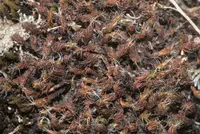
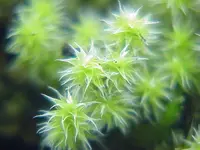
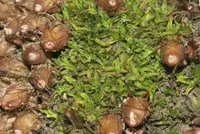
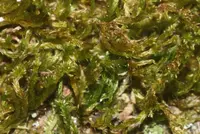
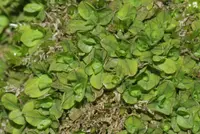
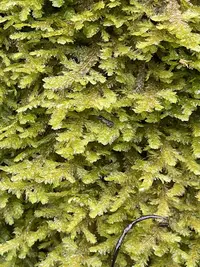
Tortula moss, now classified as Syntrichia calcicola, is a small, clumping moss that forms dense green cushions or patches on rocks and thin soils. Its leaves are narrow and often end in a tiny hair-like tip, giving the cushions a fine, textured look.
This species typically grows in dry, often calcareous habitats such as limestone outcrops, walls, and rocky slopes in temperate regions. It tolerates periods of drought by drying out and then quickly rehydrating, which makes it relatively resilient and suitable for beginners who want to learn how to care for tortula moss.
It generally prefers bright, indirect light, moderate moisture, and a well-drained, mineral-rich substrate rather than rich, organic potting soil.

Care Difficulty
Moderate Care

Light Preference
Partial Shade

Water Requirements
Moderate Water

Temperature Preference
Cold Hardy

Hardiness Zone
3–8

Soil Texture
Rocky, Sandy, Loamy

Soil pH
Neutral (7.0), Slightly alkaline (7.0–7.5)

Soil Drainage
Well-drained

Fertilization
Minimal (feed rarely)
Scan your plant to receive care tips personalized for your specific plant
Available on iOS and Android
Syntrichia calcicola prefers cool, bright conditions that mimic lightly exposed rock surfaces.
This moss is drought-tolerant but responds best to steady, light moisture around its rhizoids (anchoring structures).
This species tolerates a wide temperature range but grows most actively in cool to mild conditions.
This moss prefers moderately humid air but copes with short dry spells if its substrate stays slightly moist.
This calcicole moss thrives on mineral, lime-rich, sharply drained substrates rather than soft, organic potting mixes.
This species adapts reasonably well to shallow containers that mimic rocky, lime-rich outcrops.
Syntrichia calcicola grows on low‑nutrient substrates and usually needs no additional fertilizer under normal conditions.
Syntrichia calcicola needs only minimal pruning, mainly for appearance and hygiene in cultivated patches.
This moss is usually grown on rocks or shallow trays, so transplanting focuses on refreshing the substrate rather than classic repotting.
Syntrichia calcicola is commonly propagated vegetatively rather than from spores for practical home culture.
This moss is naturally cold hardy and normally requires no special winter protection outdoors.

Plant Health Check
Not sure what's wrong with your plant? Check your plant's health inside the app.
This moss is strongly associated with calcareous rocks and soils rich in calcium carbonate, often forming small cushions on limestone outcrops and mortar in old walls.
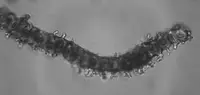
Its leaves have distinct hyaline cells at the tips that help regulate water movement, an adaptation that supports survival on exposed, drying rock surfaces.
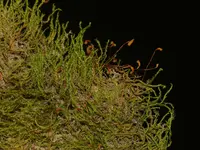
The species produces cylindrical to slightly curved spore capsules on setae that are relatively short for the genus, a feature used by bryologists to distinguish it from closely related rock-dwelling taxa.
Growth is slow. Under steady moisture and mild temperatures, new cushions expand a few millimeters to about 1 cm per year. Dry or very hot conditions can almost halt growth until humidity and temperature improve again.
Keep your plants happy and healthy with plant identification, disease detection, and easy care guidance.