tansyleaf evening primrose Care (Taraxia tanacetifolia)

tansyleaf evening primrose

About tansyleaf evening primrose

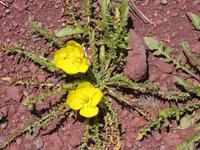
Tansyleaf evening primrose (Taraxia tanacetifolia) is a low-growing perennial wildflower from western North America, often found in dry meadows, open woods, and rocky slopes. It forms compact rosettes of finely divided, fernlike leaves that stay close to the ground.

In spring to early summer it produces bright yellow, evening-opening flowers that attract moths and other pollinators. Plants tolerate poor, sandy, or gravelly soil and natural drought, which can make it relatively low-maintenance in suitable climates.

Understanding how to care for tansyleaf evening primrose mainly involves providing full sun, good drainage, and avoiding consistently wet conditions.

Main Plant Requirements

Care Difficulty

Easy Care

Light Preference

Full Sun

Water Requirements

Low Water

Temperature Preference

Cold Hardy

Hardiness Zone

4–8

Soil Texture

Sandy, Loamy, Rocky

Soil pH

Slightly acidic (6.5–7.0), Neutral (7.0)

Soil Drainage

Well-drained

Fertilization

Minimal (feed rarely)

Get Personalized Care Plan

Scan your plant to receive care tips personalized for your specific plant

Available on iOS and Android

How to Care for the tansyleaf evening primrose

This sun-loving perennial thrives in open, bright conditions typical of dry, western habitats.

  • Provide full sun for 6–8 hours per day; tansyleaf evening primrose flowers best with open, unshaded exposure.
  • Allow light afternoon shade in very hot regions to reduce leaf scorch, especially on south- or west-facing slopes.
  • In spring and fall aim for maximum sun; in peak summer, filtered light after 2–3 pm helps prevent wilting and sunburned foliage.

This species prefers dry, well-drained conditions and is sensitive to prolonged soil moisture.

  • Water only when the top 3–5 cm of soil feel completely dry, then soak deeply so water reaches the root zone.
  • Use sandy or gravelly soil with excellent drainage to prevent root rot; avoid clay sites that stay wet after rain.
  • In spring, slightly more moisture supports active growth; in midsummer drought, leaves may wilt but should recover after a thorough, infrequent watering.

This hardy perennial tolerates wide outdoor temperature swings once established.

  • Optimal growth occurs around 60–80°F (16–27°C), typical of mild spring and early summer conditions.
  • Plants usually survive down to about 10–15°F (-12–-9°C) in well-drained soil, though young seedlings are more vulnerable to hard frost.
  • In hot spells above 90°F (32°C), flowering may slow; light afternoon shade and dry, airy soil help prevent heat stress and crown damage.

Humidity is rarely a concern for Taraxia tanacetifolia in typical outdoor conditions.

Taraxia tanacetifolia prefers dry, open soils that drain rapidly.

  • Use sandy or gravelly loam with low to moderate organic matter to mimic its native, well-aerated habitat.
  • Ensure very fast drainage; raised beds or sloped sites prevent water from pooling around the crown and roots.
  • Aim for slightly acidic to neutral pH around 6.0–7.5, avoiding strongly acidic or alkaline extremes.
  • Avoid compacted clay, waterlogged spots, or heavy peat-based mixes that stay wet and exclude air from roots.

This species can be grown in containers if the setup prevents prolonged moisture around the roots.

  • Choose a relatively deep, narrow pot so the taproot can extend downward without curling tightly.
  • Use a gritty mix such as 50–70% coarse sand or grit in potting soil to keep the root zone sharply drained.
  • Place the container where wind exposure is moderate so the light, fast-drying medium does not desiccate between checks.

This dryland perennial needs minimal feeding, so focus on lean, well-drained soil when caring for tansyleaf evening primrose.

  • Use a light top-dressing of compost or a low-rate, balanced slow-release fertilizer (around 10-10-10).
  • Apply once in early spring, just as new growth starts, and avoid midsummer high-nitrogen feeds.
  • Dilute liquid fertilizer to 25–50% strength if used, and water it in thoroughly.
  • Do not fertilize during winter dormancy; excess nutrients reduce drought tolerance and can cause weak, floppy growth.

Taraxia tanacetifolia needs only light pruning to keep plants tidy and flowering well.

  • Cut back spent flower stalks after blooming to encourage a neater rosette and possible repeat flowering.
  • Remove dead, damaged, or diseased foliage at any time using clean, sharp scissors or hand pruners.
  • In late winter or early spring, trim away winter-killed leaves to expose fresh basal growth.
  • Avoid heavy cutting into healthy crowns, which can reduce vigor and flowering the following season.

This species is usually grown in the ground and dislikes frequent disturbance of its taproot.

  • Transplant in early spring or fall, when temperatures are mild and soil is moist but not waterlogged.
  • Choose a sunny, sharply drained site and avoid moving established plants unless growth is clearly stunted.
  • If grown in a pot, shift to a slightly larger container only when roots circle the drainage holes or growth slows.
  • Minimize root stress by keeping the rootball intact, watering well after planting, and shading lightly for a few days.

Taraxia tanacetifolia is most reliably propagated from seed rather than by division or cuttings.

  • Sow fresh seed in late fall outdoors to allow natural cold stratification, or chill moist seed 4–6 weeks in a refrigerator.
  • Use a gritty, well-drained seed mix and barely cover the seed, maintaining light moisture but never waterlogging.
  • Provide cool to mild temperatures (50–65°F) and bright light to support strong seedling development.
  • Transplant seedlings gently once they have several true leaves, disturbing the developing taproot as little as possible.

This plant is cold hardy in many temperate regions and usually needs little winter care in the ground.

  • In colder zones, apply a light, dry mulch around the crown after the ground cools to buffer freeze–thaw cycles.
  • Avoid heavy, wet mulches that trap moisture and increase crown rot risk.
  • Container-grown plants benefit from moving to a sheltered, unheated but frost-free spot with minimal winter watering.

Care Tips

Encourage Low Mounding

Pinch back the soft tips of young stems once or twice in early growth to encourage a denser, low mound that resists lodging and exposes more flower buds to light.

Controlled Self‑Seeding

After flowering, leave a portion of the dry seed capsules on the plant, then gently shake or crumble them over the desired area to promote a natural-looking colony while still removing excess to prevent overcrowding.

Gravel Surface Mulch

Apply a 1–2 cm layer of coarse sand or fine gravel around the crown to keep the root collar dry, reduce soil splash on foliage, and mimic the well-drained, open habitats that support healthy Taraxia tanacetifolia plant care.

Winter Crown Protection

In cold, wet climates, place a small, loose stone or gravel ring around the crown in late fall to improve drainage directly at the growing point and reduce the risk of winter rot.

Monitor For Aphids

Check flower stalks and undersides of leaves weekly in spring for aphids, and if present, dislodge them with a firm water spray in the morning or prune out heavily infested stems to keep populations low without stressing the plant.

Common Pests and Diseases

Flea beetles

These insects chew many small round holes in leaves, giving them a shot‑holed or lace‑like appearance and sometimes stunting young rosettes.

Solution

Use floating row covers over young plants in spring, reduce nearby weeds from the mustard and evening primrose family that harbor beetles, and if needed apply a low‑impact insecticide such as spinosad or pyrethrin in the evening when bees are less active.

Grasshoppers

These insects feed on foliage and flowers in dry, open sites, often removing large sections of leaves and petals.

Solution

Encourage natural predators by maintaining diverse vegetation, hand‑remove individuals where practical, and use physical barriers such as fine mesh or row covers around valuable stands during peak grasshopper season.

Leaf spots

This disease causes small brown to dark lesions on leaves that may merge into larger dead patches, especially after prolonged wet or humid weather.

Solution

Remove and discard affected leaves, avoid overhead watering so foliage dries quickly, and improve spacing and airflow; in persistent cases, a labeled copper or chlorothalonil fungicide can be used as a preventive spray according to local regulations.

Powdery mildew

This disease produces white to gray powdery patches on upper leaf surfaces, which can lead to yellowing and early leaf drop in crowded or shaded plantings.

Solution

Increase sun exposure where possible, thin nearby vegetation to improve air movement, water at soil level, and treat early outbreaks with sulfur or potassium bicarbonate sprays labeled for ornamental perennials.

Interesting Facts

Evening-opening flowers

The pale yellow flowers open in the late afternoon or evening and often close by the next morning, matching the behavior of many nocturnal pollinators in its native dry habitats.

Desert steppe specialist

This species is native to arid regions of western North America, where it grows in sandy or gravelly soils and low-competition steppe vegetation, tolerating intense sun and low rainfall.

Rosette and taproot form

It forms a low rosette of finely divided, tansy-like leaves attached to a strong taproot, an adaptation that helps it access deeper soil moisture in dry environments.

FAQs about tansyleaf evening primrose

This species strongly attracts night-flying moths and also benefits bees active at dusk or early morning. Fragrant, pale flowers and accessible nectar make it a useful plant for supporting local pollinator diversity in dry, open plantings.

Grow Healthy Plants with Botan Care

Keep your plants happy and healthy with plant identification, disease detection, and easy care guidance.

Botan plant care app — identify plants on mobile

Explore More Plants