bee-bee tree Care (Tetradium daniellii)

Also known as: Korean Euodia
bee-bee tree

About bee-bee tree

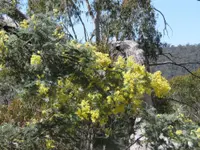
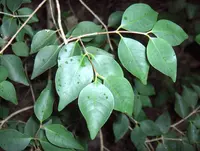
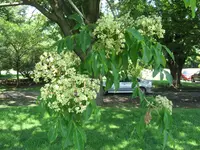
The bee-bee tree, Tetradium daniellii, is a medium-sized deciduous tree valued mainly for its nectar-rich summer flowers. It forms a rounded crown with glossy, pinnate leaves and clusters of small white blooms followed by red to black seed capsules.

This species is native to East Asia but is grown in many temperate regions as a landscape tree and important bee resource. It is generally considered easy to care for bee-bee tree where winters are cold enough, provided it receives sun, moderate moisture, and reasonably well-drained soil.

Main Plant Requirements

Care Difficulty

Easy Care

Light Preference

Full Sun

Water Requirements

Moderate Water

Temperature Preference

Cold Hardy

Hardiness Zone

4–8

Soil Texture

Loamy, Sandy, Clay

Soil pH

Acidic (5.5–6.5), Slightly acidic (6.5–7.0)

Soil Drainage

Moist but well-drained

Fertilization

Minimal (feed rarely)

Get Personalized Care Plan

Scan your plant to receive care tips personalized for your specific plant

Available on iOS and Android

How to Care for the bee-bee tree

This sun-loving tree performs best with strong light but some protection from harsh extremes.

  • Provide 6–8 hours of direct sun daily, ideally with morning sun and light afternoon shade, especially in hotter regions.
  • Bee-bee tree tolerates partial shade (around 3–4 hours direct sun) but flowering and nectar production decrease as shade increases.
  • In the first 1–2 years, avoid reflected heat and intense late-afternoon sun that can scorch young leaves, particularly during summer heatwaves.

This species prefers consistently moist but not waterlogged soil, especially while establishing.

  • Water when the top 3–5 cm of soil feels dry, giving a deep soak so moisture reaches the full root zone rather than frequent shallow watering.
  • Use well-drained soil; prolonged puddling or a sour smell indicates poor drainage and risks root rot in Tetradium daniellii.
  • In summer drought, watch for dull, drooping leaves as a sign to water; in cool or rainy seasons, reduce watering to avoid soggy conditions.

This hardy tree tolerates a wide temperature range but has clear limits for safe growth.

  • Optimal growing temperatures are about 65–80°F (18–27°C) during the active season, supporting steady shoot and root development.
  • Mature trees withstand winter lows near -10°F (-23°C) once established, but young plants need protection from hard freezes their first 1–2 winters.
  • In hot spells above 90°F (32°C), combine mulch with soil moisture management to reduce heat stress and prevent leaf scorch or premature leaf drop.

This species handles a wide humidity range and usually does not need special humidity control outdoors.

Tetradium daniellii prefers moderately fertile, well-structured soil that drains freely yet holds some moisture.

  • Use a loamy soil with a mix of mineral particles and organic matter to support both drainage and moisture retention.
  • Aim for slightly acidic to neutral pH, around 6.0–7.0, which supports nutrient availability and root health.
  • Incorporate 20–30% compost to improve structure and water-holding capacity, plus coarse sand if the native soil is heavy clay.
  • Avoid compacted, waterlogged, or very shallow soils, as poor aeration around the roots increases the risk of decline.

This tree can be grown in large containers for a limited time, mainly while young or as a patio specimen.

  • Choose a heavy, stable container (thick-walled ceramic or concrete) to prevent tipping as the canopy and root mass increase.
  • Use a deep pot to accommodate the developing taproot and reduce stress from restricted root volume.
  • Position the container where wind exposure is reduced, as tall, top-heavy growth is more prone to rocking and root disturbance.

This tree grows well in average soil and needs only modest feeding to stay healthy.

  • Apply a balanced slow-release fertilizer (around 10-10-10) once in early spring as new growth begins.
  • In poorer soils, supplement with a thin layer of compost over the root zone each spring for gentle nutrition.
  • During the growing season, avoid additional high-strength feeds; use any liquid fertilizer at 1/2 strength if needed.
  • Stop feeding bee-bee tree by late summer so new growth hardens before winter dormancy.

Pruning helps Tetradium daniellii develop a stable framework and maintain good flowering.

  • Carry out structural pruning in late winter to very early spring before bud break.
  • Remove dead, diseased, crossing, or inward-growing branches using clean, sharp bypass pruners or a pruning saw.
  • Thin congested interior shoots to improve light and air movement, which supports healthier growth and flowers.
  • Shorten or remove poorly placed limbs to shape the canopy and maintain strong, balanced branching.

This species is usually grown in the ground, so focus on correct planting and occasional transplanting of young trees.

  • Transplant container-grown or young field-grown trees in early spring or early fall while dormant or semi-dormant.
  • Look for circling roots, a pot-bound root ball, or slowing growth as signs a nursery plant needs a larger container before planting out.
  • When transplanting, keep the root ball intact, set it at the same soil level, and water deeply to settle soil and limit stress.
  • Mulch 5–8 cm around, but not touching, the trunk after transplanting to conserve moisture and support root establishment.

Propagation of this tree is usually done from seed, with cuttings used less often.

  • Collect ripe seed in late summer to fall and clean it before storage or sowing.
  • Use cold stratification at about 35–40°F for several weeks to break seed dormancy and improve germination.
  • Sow stratified seeds in a free-draining seed mix, keep evenly moist, and provide bright, indirect light for seedlings.
  • For summer softwood cuttings, apply rooting hormone, place in a humid, warm environment, and use well-drained propagation media.

Mature trees are generally cold hardy in much of the temperate US and need minimal winter care.

  • In colder regions, apply 5–8 cm of mulch over the root zone in late fall, keeping it off the trunk.
  • Young or newly planted trees benefit from extra mulch and wind exposure reduction to limit winter stress.
  • Container-grown plants in cold climates should be moved into a sheltered, unheated but frost-free space if possible.

Care Tips

Establish single leader

In the first 3–5 years, select one strong central stem and remove competing uprights in late winter to build a stable, tree-like structure that can support the heavy summer flower and bee activity.

Lift canopy gradually

Each dormant season, remove 1–2 of the lowest branches rather than many at once so light can reach underplantings and the trunk develops clear access for mowing and maintenance equipment.

Protect from wind rock

On exposed sites, stake young trees for 1–2 seasons with flexible ties and check twice a year so the root ball stays firm and the trunk develops slight movement without rubbing damage.

Manage root suckers

Inspect the base and surrounding soil line each spring and cut off any root suckers flush with the origin to prevent a thicket and keep energy focused on the main canopy.

Time pruning for nectar

Delay any nonessential pruning until after flowering if local pollinators rely on the tree, since heavy spring pruning will remove many flower buds and reduce nectar availability when caring for bee-bee tree.

Common Pests and Diseases

Aphids

These insects feed on young shoots and undersides of leaves, causing curling, distortion, and sticky honeydew that can attract sooty mold. This pest is often drawn to the rich new growth produced after pruning or strong fertilization.

Solution

Prune off heavily infested shoot tips, then hose down the tree with a firm stream of water to dislodge remaining insects. For persistent colonies, use insecticidal soap or a neem oil spray directed to the undersides of leaves, repeating every 7–10 days while monitoring beneficial insects such as lady beetles.

Asian giant hornets

These insects are strongly attracted to the abundant late-summer nectar and can use the tree as a staging site while hunting honey bees. This pest does not usually injure the tree directly but creates a safety concern and can increase predation pressure on nearby beehives.

Solution

Avoid placing beehives directly under or adjacent to the tree in areas where this hornet is present, and remove any nearby fallen fruit or sticky residues that may further attract them. Contact local extension or pest control services for guidance on trapping and nest removal rather than treating the tree itself, and limit human activity under the canopy when hornet activity is high.

Scale insects

These insects attach to stems and branches, sucking sap and forming small bumps that may be brown, gray, or whitish. Symptoms include weakened growth, yellowing leaves, and honeydew that can support black sooty mold on foliage and bark.

Solution

Scrape or prune out small, localized colonies and dispose of affected material. For larger infestations, apply horticultural oil during the dormant season to smother overwintering scales, and in the growing season use a light horticultural oil or insecticidal soap, ensuring thorough coverage of twigs and branch crotches while monitoring for natural predators.

Leaf spot

This disease causes small brown, tan, or purple spots on leaves, sometimes with yellow halos, which can merge and lead to early leaf drop in wet summers. Symptoms include heavier damage on crowded trees with poor air movement.

Solution

Rake and remove fallen leaves at the end of the season to reduce carryover of fungal spores, and thin nearby vegetation to improve airflow through the canopy. If leaf spot recurs severely each year, consult a local arborist about timing a preventive fungicide spray in late spring, focusing on early protection of newly expanding foliage.

Powdery mildew

This disease produces a white to gray powdery film on upper leaf surfaces, particularly in late summer when conditions are warm and dry with humid nights. Symptoms include distorted new leaves and reduced vigor if infections are repeated over several years.

Solution

Improve light and air circulation around the tree by selective pruning of dense inner branches and avoiding overhead watering in the evening. In landscapes where Tetradium daniellii care is focused on ornamental value, a horticultural oil or sulfur-based fungicide can be applied at the first sign of mildew, targeting young leaves and repeating as needed according to label directions.

Interesting Facts

Late-summer nectar magnet

This species flowers unusually late in the season, often from late July into September, providing one of the few abundant nectar sources for bees and other pollinators when many other trees have already finished blooming.

Red-black two-stage fruits

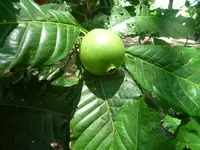
Its fruit clusters turn bright red as the capsules ripen, then split open to reveal shiny black seeds, creating a distinctive two-color display that is important for bird dispersal.

Cold-hardy East Asian native

Although native to China and Korea, it tolerates winter temperatures typical of USDA zones 4–8, which has led to its increasing use as an ornamental and bee forage tree in cooler regions.

Botan icon

Did you know?

In parts of Europe and North America, this species is now planted deliberately near apiaries because flowering can coincide with a natural nectar gap, and beekeepers report very noticeable increases in honey bee foraging activity around the trees during this period.

FAQs about bee-bee tree

Lack of flowers is usually due to insufficient maturity, too much shade, or heavy pruning that removed flower buds. Ensure full sun, avoid late-summer pruning, and be patient; young trees often need several years before reliable flowering.

Grow Healthy Plants with Botan Care

Keep your plants happy and healthy with plant identification, disease detection, and easy care guidance.

Botan plant care app — identify plants on mobile

Explore More Plants