Mulch Forest-Style
Apply a 5–8 cm layer of shredded leaves or fine bark around the clump each spring to mimic woodland leaf litter, stabilize soil moisture, and keep the shallow roots cool without burying the crown.

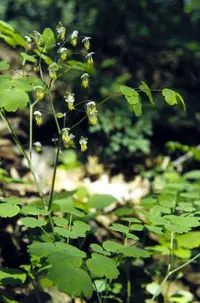
Early meadow-rue (Thalictrum dioicum) is a delicate woodland perennial native to eastern and central North America. It typically forms loose clumps of fine, fern-like foliage. In early spring, it sends up airy flower stalks with dangling greenish or purplish flowers that give the plant a soft, clouded look. Plants stay relatively low and blend well into naturalistic or shade gardens. Thalictrum dioicum prefers dappled light, consistent moisture, and humus-rich soil, so conditions that mimic a deciduous forest floor suit it best. Once established in the right spot, it is fairly low-maintenance, and learning how to care for early meadow-rue mainly involves keeping the soil evenly moist and undisturbed.

Care Difficulty
Moderate Care

Light Preference
Partial Shade

Water Requirements
Regular Water

Temperature Preference
Cold Hardy

Hardiness Zone
3–7

Soil Texture
Loamy, Silty, Organic-rich

Soil pH
Acidic (5.5–6.5), Slightly acidic (6.5–7.0)

Soil Drainage
Moist but well-drained

Fertilization
Minimal (feed rarely)
Scan your plant to receive care tips personalized for your specific plant
Available on iOS and Android
This woodland perennial prefers soft, filtered light that mimics a deciduous forest edge.
This species favors consistently moist, cool soil without becoming saturated.
This cool-climate perennial is adapted to temperate woodland conditions with cold winters and mild summers.
This woodland perennial prefers moderately moist air but usually adapts to typical outdoor humidity levels.
Thalictrum dioicum grows best in loose, humus-rich soil that mimics a shaded forest floor.
This species can be grown in containers, but only when the pot is set up to mimic a cool, moist woodland root zone.
This woodland perennial needs only light feeding, especially in rich soil, so focus on supporting soil health rather than frequent fertilizer use.
Pruning needs for Thalictrum dioicum are minimal and focus mainly on cleanup and maintaining a tidy clump.
This species is usually grown in the ground, so transplanting established clumps is more common than repotting.
New Thalictrum dioicum plants are typically produced by seed or careful division of mature clumps.
This woodland perennial is cold hardy in much of the US and generally needs only simple winter care in the ground.

Plant Health Check
Not sure what's wrong with your plant? Check your plant's health inside the app.
Early meadow-rue produces separate male and female plants; the male flowers hang in tassel-like clusters and release pollen into the air instead of using insect pollinators.
This species leafs out and flowers very early in spring, taking advantage of full sunlight in deciduous woodlands before the tree canopy closes and shade intensifies.
Male and female plants often look noticeably different, with male plants tending to be showier and sometimes taller due to their dangling, many-stamened flowers.

Early meadow-rue is a reliable indicator of intact, relatively undisturbed deciduous woodland habitats in parts of its native range, so botanists often use its presence as one clue when assessing forest quality.
This species mainly attracts small native bees and flies that act as pollinators, especially in spring. Its flowers are wind- and insect-pollinated, so it supports local ecosystems but is not a top nectar plant like milkweed.
Keep your plants happy and healthy with plant identification, disease detection, and easy care guidance.