

Encourage Bushy Shape
Pinch back the soft tips of stems every 2–3 weeks early in the season to keep plants compact, increase branching, and extend the flush of flowers.


Bristleleaf pricklyleaf (Thymophylla tenuiloba) is a low, mounding perennial often grown as an annual, valued for its fine, fernlike foliage and bright yellow, daisy-like flowers. It forms a dense, airy cushion that works well at the front of borders, in rock gardens, and in containers.
This species is native to dry, open areas of Texas and northern Mexico, so it is naturally adapted to heat, sun, and lean, well-drained soils. Its drought tolerance and compact habit make it relatively easy to manage, provided soil does not stay wet for long.
Those learning how to care for bristleleaf pricklyleaf should know it prefers full sun, good drainage, and moderate watering that allows the soil surface to dry between waterings.

Care Difficulty
Easy Care

Light Preference
Full Sun

Water Requirements
Low Water

Temperature Preference
Warm Climate

Hardiness Zone
7–10

Soil Texture
Sandy, Loamy, Rocky

Soil pH
Slightly acidic (6.5–7.0), Neutral (7.0)

Soil Drainage
Well-drained

Fertilization
Minimal (feed rarely)
Scan your plant to receive care tips personalized for your specific plant
Available on iOS and Android
Thymophylla tenuiloba thrives in bright, open sites with strong sun exposure.
Thymophylla tenuiloba prefers dry-leaning conditions with brief watering events and fast drainage.
This species performs best in warm, dry climates and dislikes frost and prolonged cold.
This species prefers relatively dry air and usually needs no special humidity adjustments indoors or outdoors.
This plant prefers lean, very well-drained, sandy soil that dries quickly between waterings.
This species is well suited to container growing, especially in sunny, dry locations.
Thymophylla tenuiloba grows best in lean, well-drained soil and usually needs only light feeding, even when grown as bristleleaf pricklyleaf in containers.
Thymophylla tenuiloba responds well to light, timely pruning that maintains a compact, floriferous mound.
This species is most often grown as a bedding or rock-garden annual, so transplanting is usually more relevant than long-term repotting.
Thymophylla tenuiloba is commonly propagated from seed, which allows quick production of many uniform plants.
In most climates this plant is treated as a tender annual, so extensive winter care is rarely needed.

Plant Health Check
Not sure what's wrong with your plant? Check your plant's health inside the app.
This species thrives in hot, dry habitats of south Texas and northern Mexico, where its finely divided, thread-like leaves reduce water loss by limiting the surface exposed to intense sun and dry air.
The leaves and stems contain aromatic glands that release a resinous scent when touched, which can help reduce herbivory by making the plant less palatable to grazing animals and insects.
In suitable warm climates, this plant often produces bright yellow, daisy-like flower heads from spring through fall, because it continually forms new flowering stems rather than blooming in a single flush.

Thymophylla tenuiloba is native to rocky limestone and calcareous soils, where it often grows in shallow, nutrient-poor substrates that would stress many ornamentals, yet it maintains dense, mound-forming growth due to its adaptation to high light, high drainage, and low organic matter conditions.
This species is usually grown as a warm-season annual, especially in cooler climates. In mild, frost-free areas it can behave as a short-lived perennial, but hard frost generally kills top growth and often the whole plant.
Keep your plants happy and healthy with plant identification, disease detection, and easy care guidance.

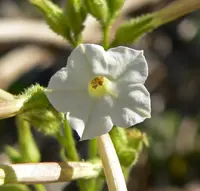
coyote tobacco
Nicotiana attenuata
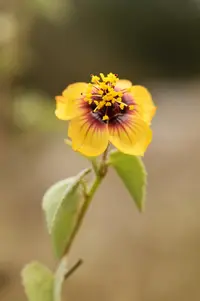
anglestem Indian mallow
Abutilon trisulcatum
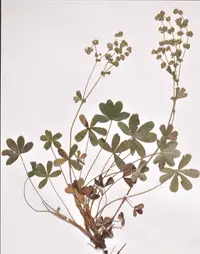
Alchemilla transiens
Alchemilla transiens
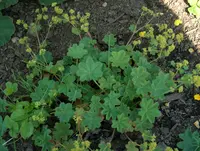
Silky Lady's-mantle
Alchemilla glaucescens
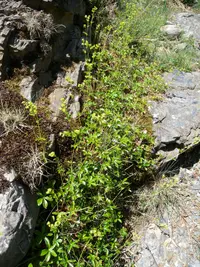
Alchemilla saxatilis
Alchemilla saxatilis
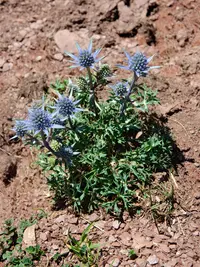
Pyrenean Eryngo
Eryngium bourgatii
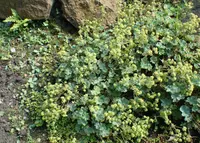
Alchemilla caucasica
Alchemilla caucasica
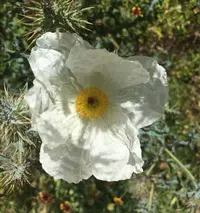
bluestem pricklypoppy
Argemone albiflora