Early-season thinning
When seedlings reach 5–8 cm tall, thin crowded patches so plants stand 10–15 cm apart to reduce competition and improve air movement, which lowers disease risk.

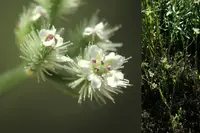
Bristlefruit hedgeparsley (Torilis leptophylla) is a delicate annual in the carrot family, usually found in dry, open habitats and disturbed ground. It forms slender, branching stems with finely divided, feathery leaves and small white umbels of flowers, followed by bristly fruits that catch on fur and clothing.
This species is native to parts of Europe, Asia, and North Africa, and has naturalized in some other temperate regions. It tends to be an easy, self-sowing plant where conditions suit it, especially in sunny sites with well-drained, lean soils. Understanding how to care for bristlefruit hedgeparsley starts with recognizing that it prefers relatively dry, low-fertility conditions rather than rich, wet ground.

Care Difficulty
Easy Care

Light Preference
Full Sun

Water Requirements
Low Water

Temperature Preference
Cool Climate

Hardiness Zone
6–9

Soil Texture
Sandy, Loamy

Soil pH
Slightly acidic (6.5–7.0), Neutral (7.0)

Soil Drainage
Well-drained

Fertilization
Minimal (feed rarely)
Scan your plant to receive care tips personalized for your specific plant
Available on iOS and Android
This annual prefers open, bright conditions typical of dry grasslands and field margins.
This species is adapted to relatively dry, free-draining sites rather than consistently moist ground.
This annual umbellifer thrives in temperate to warm conditions and is not suited to harsh frost.
Humidity is not a major factor for Torilis leptophylla, which thrives in typical outdoor air levels.
Torilis leptophylla prefers light, free-draining soil that mimics dry, open habitats.
This species can be grown in containers if the pot is set up to drain quickly and stay relatively dry.
Torilis leptophylla usually thrives in lean soils and needs little or no supplemental fertilizer.
Torilis leptophylla benefits from light, selective pruning to keep plants tidy and healthy.
This species is most often grown in the ground, so care focuses on gentle transplanting rather than frequent repotting.
Propagation of Torilis leptophylla is mainly done by seed, which suits its annual or short-lived habit.
As an annual or short-lived biennial, bristlefruit hedgeparsley usually needs no special winter care beyond normal garden hygiene.

Plant Health Check
Not sure what's wrong with your plant? Check your plant's health inside the app.
The fruits develop stiff, hooked bristles that readily cling to animal fur and clothing, allowing the seeds to disperse over long distances as classic burrs.
In many parts of its range, this species behaves as a winter annual, germinating in cooler months, forming a low rosette, then bolting, flowering, and dying within a single growing season.
It is most often found in disturbed, nutrient-rich sites such as roadsides, field margins, and waste ground, where open soil and reduced competition allow rapid establishment.
This species behaves as an annual in most climates, completing its life cycle in 1 growing season. Plants sprout from seed, flower, set bristly fruit, then die back, relying on new seedlings each year.
Keep your plants happy and healthy with plant identification, disease detection, and easy care guidance.