

Substrate anchoring
Press a fine mesh or nylon net lightly over freshly placed moss fragments for 2–4 weeks so rhizoids can attach firmly to the substrate without being dislodged by airflow or light misting.

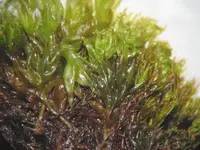
Tortula subulata, often called tortula moss, is a small, cushion-forming moss commonly found on soil, rocks, and old walls. It forms dense, green to yellow-green tufts with fine, upright leaves.
This species is widely distributed in temperate regions, particularly in Europe and North America, where it thrives in open, sometimes disturbed sites. It is hardy and adaptable, which makes it suitable for beginners who want to care for tortula moss in containers or terrariums.
Tortula subulata generally prefers bright, indirect light, steady moisture, and a well-drained, mineral-rich substrate rather than dense, waterlogged soil.

Care Difficulty
Easy Care

Light Preference
Partial Shade

Water Requirements
Keep Soil Moist

Temperature Preference
Cold Hardy

Hardiness Zone
3–9

Soil Texture
Loamy, Rocky, Organic-rich

Soil pH
Acidic (5.5–6.5), Slightly acidic (6.5–7.0)

Soil Drainage
Moist but well-drained

Fertilization
Minimal (feed rarely)
Scan your plant to receive care tips personalized for your specific plant
Available on iOS and Android
This moss prefers bright, indirect light with limited direct sun exposure.
This species is drought-tolerant but grows best with steady, light moisture.
This moss is hardy and adapts to a broad outdoor temperature range.
This moss prefers moderately moist air but adapts to a range of indoor conditions.
This species prefers a thin, sharply drained yet moisture-retentive substrate rather than deep, heavy soil layers.
This moss is suitable for shallow container culture, especially trays, bonsai accent plantings, and terracotta dishes.
This moss needs minimal feeding, especially when grown on nutrient-poor substrates like rock or compacted soil.
Pruning needs for Tortula subulata are light and mainly cosmetic.
This moss is usually grown on outdoor surfaces, so transplanting is more common than traditional repotting.
Tortula subulata is commonly propagated by division of existing mats rather than from spores at home.
This moss is cold hardy and usually needs little special winter care in most temperate climates.

Plant Health Check
Not sure what's wrong with your plant? Check your plant's health inside the app.
The narrow, awl-shaped leaves end in a short twisted point, which helps shed excess water and reduces direct surface exposure during dry or freezing periods.
This species commonly colonizes compacted, nutrient-poor urban soils, road banks, and old walls, tolerating disturbance and mild pollution better than many other mosses.
In temperate climates it often grows most actively in cool, moist seasons and becomes brownish and seemingly dead in summer drought, then quickly rehydrates and greens up after rain.

Tortula subulata produces a distinctive capsule with a long, narrowed neck and a 32-toothed peristome (ring of teeth around the opening) that regulates spore release in response to humidity, allowing gradual dispersal under changing environmental conditions.
Growth is slow to moderate. In suitable, stable conditions it usually spreads a few millimeters to about 1–2 cm per year. Growth often pauses during hot, dry weather and resumes in cooler, moist seasons.
Keep your plants happy and healthy with plant identification, disease detection, and easy care guidance.

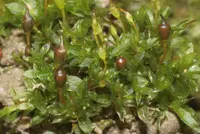
common pottia
Tortula truncata
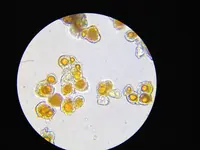
Trentepohlia umbrina
Trentepohlia umbrina

isothecium moss
Isothecium myosuroides
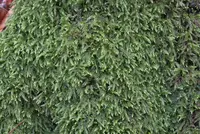
isothecium moss
Isothecium alopecuroides
montane dicranum moss
Orthodicranum montanum
greater whipwort
Bazzania trilobata

Handsome Woollywort
Trichocolea tomentella

Tree Fringewort
Ptilidium pulcherrimum