

Cutback for Vigor
Shear plants back by about one-third immediately after the main flowering flush to encourage dense regrowth and a lighter second bloom rather than letting aging stems become woody and sparse.

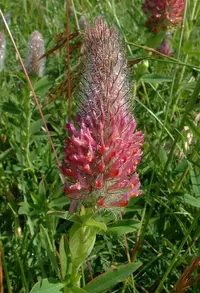
Red trefoil (Trifolium rubens) is a perennial clover grown mainly as an ornamental for its upright spikes of soft, reddish-pink flowers. The blooms rise above neat clumps of trifoliate, grey-green leaves and give the plant a vertical, slightly airy look.
This species is native to parts of central and southern Europe, where it grows in open, sunny meadows and dry slopes. It is generally undemanding, which makes it easier to care for Red Trefoil than many other flowering perennials.
It prefers full sun, moderately moist but well-drained soil, and does not need highly fertile ground. Once established, it tolerates short dry spells and suits informal borders, wildlife gardens, and naturalistic plantings.

Care Difficulty
Easy Care

Light Preference
Full Sun

Water Requirements
Moderate Water

Temperature Preference
Cool Climate

Hardiness Zone
5–8

Soil Texture
Sandy, Loamy, Organic-rich

Soil pH
Slightly acidic (6.5–7.0), Neutral (7.0)

Soil Drainage
Well-drained

Fertilization
Minimal (feed rarely)
Scan your plant to receive care tips personalized for your specific plant
Available on iOS and Android
This perennial clover prefers bright, open conditions with several hours of direct sun each day.
This species prefers evenly moist but not saturated soil during active growth.
This hardy perennial tolerates a wide temperature range but grows best in moderate conditions.
This species handles a wide humidity range and usually does not need special humidity management outdoors.
Trifolium rubens prefers moderately fertile, well-drained mineral soil that does not stay waterlogged.
This species can grow in containers if the pot and substrate are managed to stay free-draining and not overly rich.
Trifolium rubens grows well in average garden soil and usually needs only light feeding.
Pruning Trifolium rubens is mainly used to keep plants compact and encourage fresh flowering shoots.
This clumping perennial is better suited to beds and borders than long-term container culture.
Propagation of Trifolium rubens is most reliable from seed, with some potential for division in established clumps.
This hardy perennial generally needs minimal winter attention in most temperate gardens.

Plant Health Check
Not sure what's wrong with your plant? Check your plant's health inside the app.
This species is naturally restricted to dry, sunny habitats in central and southeastern Europe, often on calcareous (lime-rich) soils, and is not a widespread clover of lawns or pastures.
It forms dense, cylindrical flower spikes with numerous small reddish-pink to purple florets, which give the plant a distinct bottlebrush appearance compared with the round heads of many other clovers.
Like other true clovers, it hosts Rhizobium bacteria in root nodules that convert atmospheric nitrogen into a usable form, allowing it to thrive on relatively poor soils and contribute to soil fertility in natural grasslands.

In parts of its native range, this species is considered regionally threatened because of changes in traditional grassland management and habitat loss, so conservation-focused wildflower plantings sometimes include it to help support declining populations.
Lack of flowers often comes from insufficient light, soil that is too rich in nitrogen, or cutting plants back too hard in spring. Age also matters; young plants may need a season to establish before flowering well.
Keep your plants happy and healthy with plant identification, disease detection, and easy care guidance.

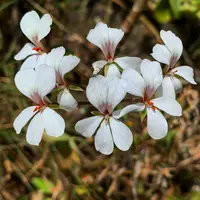
Pelargonium multibracteatum
Pelargonium multibracteatum
 POPULAR
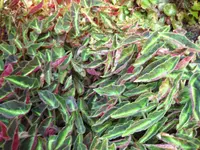
SІtriped begonia
Begonia listada
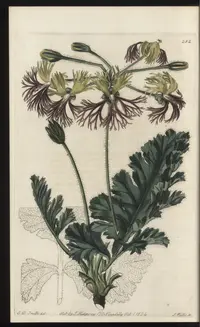
Orchid Pelargonium
Pelargonium schizopetalum
metal-leaf begonia
Begonia incarnata
hardy gloxinia
Incarvillea delavayi
Laelia eyermaniana
Laelia eyermaniana
Begonia fischeri
Begonia fischeri
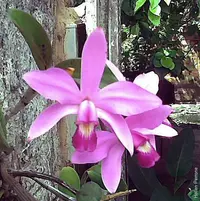
Violet Cattleya
Cattleya violacea