

Mark Dormant Clumps
Place discreet labels or stones where the plant grows so you do not accidentally dig into the dormant rhizomes when working in the bed in summer or fall.


Nodding wakerobin, Trillium flexipes, is a woodland perennial native to eastern and central North America. It grows from rhizomes and slowly forms small clumps over time. The plant has three broad leaves in a whorl and a delicate, nodding white flower that hangs beneath the foliage, giving it a discreet, understated look. It typically appears in rich, deciduous forests where spring light is bright before trees leaf out. Gardeners value it for naturalistic shade plantings, but it can be slow to establish and resents disturbance. To care for nodding wakerobin, provide humus-rich, consistently moist soil and protection from hot, direct sun.

Care Difficulty
Moderate Care

Light Preference
Partial Shade

Water Requirements
Keep Soil Moist

Temperature Preference
Cold Hardy

Hardiness Zone
4–8

Soil Texture
Loamy, Silty, Organic-rich

Soil pH
Acidic (5.5–6.5), Slightly acidic (6.5–7.0)

Soil Drainage
Moist but well-drained

Fertilization
Minimal (feed rarely)
Scan your plant to receive care tips personalized for your specific plant
Available on iOS and Android
Trillium flexipes prefers the dappled light of deciduous woodlands rather than direct, open sun.
This woodland perennial needs consistently moist but not saturated soil through its active growing season.
This species is adapted to temperate woodland climates with cool to mild growing seasons and cold winters.
This woodland perennial benefits from consistently moist air but usually manages in typical outdoor humidity.
This species prefers humus-rich, moist but well-drained woodland-type soil.
This woodland trillium can be grown in containers but is more demanding than in-ground plantings.
This woodland perennial needs minimal feeding when grown in rich, humusy soil; focus on supporting the soil rather than forcing growth.
Trillium flexipes requires almost no structural pruning, but light cleanup maintains plant health and appearance.
This species is best grown in the ground and is usually transplanted rather than repotted.
Trillium flexipes is most often propagated by careful division, with seed propagation reserved for patient growers.
This trillium is cold hardy in much of its range and typically requires only simple winter care in gardens.

Plant Health Check
Not sure what's wrong with your plant? Check your plant's health inside the app.
Unlike many trilliums with upright blooms, this species holds its white flower on a slender stalk that usually hangs beneath the leaves, giving it the name nodding wakerobin.
Trillium flexipes readily hybridizes with nearby white-flowered trilliums such as Trillium erectum and Trillium grandiflorum, which can make field identification difficult where species ranges overlap.
Its seeds bear a fleshy, nutrient-rich structure called an elaiosome that attracts ants, which carry the seeds away, eat the elaiosome, and leave the seed to germinate in a new location.

The species name flexipes refers to the flexible, bent flower stalk: in this trillium, the pedicel often curves so strongly that the flower appears hidden below the leaf whorl rather than displayed above it.
This species spreads slowly by rhizomes and, in suitable conditions, by seed. It usually forms modest clumps over many years and is not considered aggressive. In garden settings, it rarely requires containment or regular division to control spread.
Keep your plants happy and healthy with plant identification, disease detection, and easy care guidance.

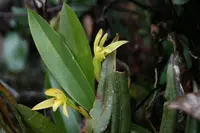
Maxillaria porrecta
Maxillaria porrecta

Persian Violet
Exacum affine

Plains coreopsis
Coreopsis tinctoria

butterfly amaryllis
Hippeastrum papilio
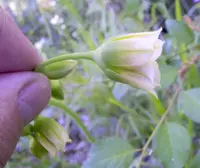
Bulgarian Honey Garlic
Allium siculum subsp. dioscoridis
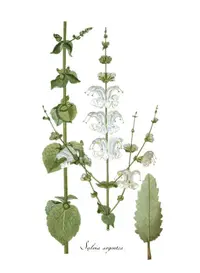
silver sage
Salvia argentea
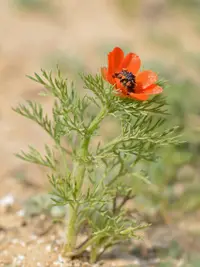
summer pheasant's eye
Adonis aestivalis
Heart-leaved pelagonium
Pelargonium cordifolium