Wind-firm training
In the first 2–3 years, lightly stake young trees and gradually loosen ties every 6–12 months so the trunk flexes and develops strong, wind-resistant wood rather than staying weak and top-heavy.

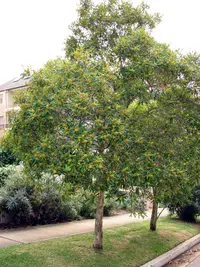
Water-gum, Tristaniopsis laurina, is an evergreen tree or large shrub valued for its dense foliage and smooth, often mottled bark. It typically has glossy, narrow leaves and small yellow flowers, creating a neat, tidy canopy that suits streets, gardens, and containers in mild climates.
This species is native to eastern Australia, where it grows along streams and moist forest edges. It is generally considered moderate in difficulty, mainly because it prefers consistent moisture and dislikes extreme drought or waterlogging.
Those who care for water-gum should know it performs best in bright light, well-drained soil, and locations sheltered from harsh, drying winds.

Care Difficulty
Moderate Care

Light Preference
Full Sun

Water Requirements
Regular Water

Temperature Preference
Warm Climate

Hardiness Zone
9–11

Soil Texture
Sandy, Loamy, Clay

Soil pH
Acidic (5.5–6.5), Slightly acidic (6.5–7.0)

Soil Drainage
Moist but well-drained

Fertilization
Minimal (feed rarely)
Scan your plant to receive care tips personalized for your specific plant
Available on iOS and Android
Tristaniopsis laurina grows best with bright, stable light across the day.
This species prefers steady moisture but not waterlogged soil.
This tree prefers mild, frost-free to light-frost climates.
This species prefers moderate humidity but adapts to many home and garden conditions.
Tristaniopsis laurina grows best in moist, well-drained, structured soil that does not stay waterlogged.
This species can grow successfully in containers when managed for root space and moisture balance.
This Australian native tree usually grows well in average soil, but light feeding improves vigor in containers and poor sites.
Tristaniopsis laurina responds well to light, planned pruning that maintains structure and health.
This species is usually grown in the ground, so focus on careful transplanting and only occasional container repotting.
This tree is most commonly propagated from seed, with semi-hardwood cuttings used when specific forms must be preserved.
In mild coastal or USDA 9–10 climates this species usually needs minimal winter care once established.

Plant Health Check
Not sure what's wrong with your plant? Check your plant's health inside the app.
This species belongs to the Myrtaceae family, so its leaves contain aromatic oil glands that give a faint resinous scent when crushed, similar to many eucalyptus and tea tree relatives.
In its native range in eastern Australia, this tree naturally grows along rivers and streams, where its roots are adapted to cope with both periodic flooding and well-drained sandy or gravelly soils.
The small yellow, lightly fragrant flowers produce nectar and pollen that support native bees and other insects, and the seeds are eaten by some birds, giving it an important role in riparian food webs.

Along some Australian waterways, dense stands of this species help stabilize riverbanks and can form semi-continuous gallery corridors, which provide sheltered movement routes and habitat structure for fish, aquatic invertebrates, and riparian wildlife.
Lack of flowers is usually linked to insufficient light, heavy pruning at the wrong time, or nutrient imbalance. Ensure strong sun, avoid harsh pruning just before flowering season, and use a balanced, slow-release fertilizer rather than high-nitrogen lawn food.
Keep your plants happy and healthy with plant identification, disease detection, and easy care guidance.