Precise planting depth
Plant bulbs at roughly 3× their height and in a sharply drained spot, as too-shallow planting makes them flop and too-deep planting weakens flowering in future seasons.

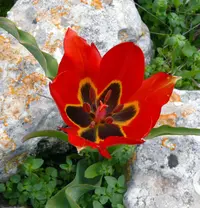
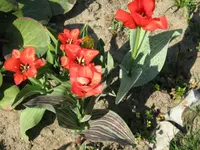
Tulipa agenensis, often called the eyed tulip, is a small spring-blooming bulb from the eastern Mediterranean region. It is usually found in grasslands, rocky slopes, and light scrub. The plant forms narrow leaves at the base and a single upright stem with a bright red flower marked by a dark, eye-like center. It has a natural, slightly wild look, so it suits informal borders, rock gardens, and meadow-style plantings. This tulip prefers sunny, open sites with well-drained soil and relatively dry summer conditions. Knowing how to care for Eyed Tulip starts with understanding its need for a dry rest period after flowering.

Care Difficulty
Moderate Care

Light Preference
Full Sun

Water Requirements
Moderate Water

Temperature Preference
Cool Climate

Hardiness Zone
5–8

Soil Texture
Sandy, Loamy, Rocky

Soil pH
Slightly acidic (6.5–7.0), Neutral (7.0)

Soil Drainage
Well-drained

Fertilization
Minimal (feed rarely)
Scan your plant to receive care tips personalized for your specific plant
Available on iOS and Android
This wild tulip needs strong light to flower well in spring.
Watering should support bulb growth while avoiding prolonged soil saturation.
This species prefers cool to mild conditions with a marked winter chill period.
Humidity is not a critical factor for Tulipa agenensis, which thrives in typical outdoor air conditions.
Tulipa agenensis grows best in well‑structured, fast‑draining mineral soil.
This species can be grown successfully in containers when drainage and depth are carefully managed.
Tulipa agenensis grows from stored bulb nutrients and needs only light feeding in average garden soil.
Pruning needs for Tulipa agenensis are minimal and mainly focused on post-flowering cleanup.
Transplanting Tulipa agenensis focuses on lifting and replanting bulbs rather than frequent container repotting.
Propagation of Tulipa agenensis is typically done by bulb offsets rather than from seed in home gardens.
This tulip is cold hardy in many temperate regions and usually needs only light winter care in the ground.

Plant Health Check
Not sure what's wrong with your plant? Check your plant's health inside the app.
This wild tulip is native to the Eastern Mediterranean, especially parts of Israel, Lebanon, Syria, and surrounding regions, where it grows on rocky slopes, disturbed fields, and open shrublands in a dry, seasonally cool climate.
The species is easily recognized by its bright red petals with a sharply contrasting dark blotch at the base, surrounded by a pale margin, which is why it is commonly called eyed tulip.
In its native range it flowers early in spring, often in March, taking advantage of moist, cool conditions before summer drought and heat arrive, a typical adaptation of many geophytes (bulb-forming plants).

Tulipa agenensis is often considered one of the wild ancestors behind some historic garden tulips, and its striking flower pattern has made it a subject of taxonomic debate, with past authors treating it as a form or subspecies of other red-flowered tulips before modern studies clarified its status as a distinct species.
Lack of chilling during winter, overcrowded or aging bulbs, planting too shallow or deep, and heavy shade commonly prevent flowering. After foliage yellows naturally, let it die back fully so the bulb can store energy for next season.
Keep your plants happy and healthy with plant identification, disease detection, and easy care guidance.