Mark Dormant Clumps
After foliage dies back, leave a low, durable marker at each planting spot so you can avoid disturbing resting bulbs during summer soil work or redesigns.

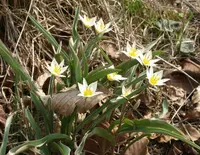
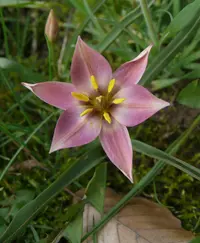
Turkestan tulip (Tulipa turkestanica) is a small, early flowering bulb from mountain regions of Central Asia. It forms low clumps of narrow leaves and many star-shaped white to creamy flowers with yellow centers.
This species often naturalizes in rock gardens, gravel beds, and well-drained borders, creating loose, airy drifts rather than dense clumps. Flowers usually open in sun and close in dull weather.
It prefers full sun, moderately dry conditions, and gritty, free-draining soil, which reflects its origin in rocky slopes. These traits generally make it undemanding where drainage is good and summers are relatively dry, which simplifies how to care for Turkestan tulip in suitable climates.

Care Difficulty
Moderate Care

Light Preference
Full Sun

Water Requirements
Moderate Water

Temperature Preference
Cold Hardy

Hardiness Zone
3–7

Soil Texture
Sandy, Loamy, Rocky

Soil pH
Slightly acidic (6.5–7.0), Neutral (7.0)

Soil Drainage
Well-drained

Fertilization
Minimal (feed rarely)
Scan your plant to receive care tips personalized for your specific plant
Available on iOS and Android
This species prefers bright, open conditions similar to sunny rock gardens or meadows.
This bulb needs modest moisture during active growth and drier soil once foliage begins to yellow.
This cold-hardy bulb relies on a cool winter followed by a mild spring for reliable flowering.
Humidity is not a major factor for Tulipa turkestanica, which prefers relatively dry air.
Tulipa turkestanica grows best in light, free-draining soil that mimics rocky or sandy slopes.
This species is well-suited to container growing outdoors if drainage is carefully controlled.
This species is adapted to lean, rocky soils, so fertilization for Turkestan tulip should stay light and targeted.
Pruning for Tulipa turkestanica focuses on timing and leaf management rather than reshaping the plant.
This small bulb is usually grown in the ground, so focus on lifting and transplanting clumps rather than frequent repotting.
Propagation relies mainly on bulb division, with seed used for long-term increase or naturalizing projects.
This tulip is quite cold hardy in most temperate climates and usually needs minimal winter attention in the ground.

Plant Health Check
Not sure what's wrong with your plant? Check your plant's health inside the app.
This species flowers very early in spring, often while snow is still present, reflecting its origin in high, cold regions of Central Asia where the growing season is short.
Each bulb can produce several slender stems, and each stem bears multiple small, star-shaped white flowers with yellow centers that open fully in sun and close in dull or cold weather.
It is naturally distributed in mountain regions of Turkestan, northern Iran, and surrounding areas, where it grows in rocky slopes and open scrub, adapted to well-drained, often stony soils.

Tulipa turkestanica was one of the early wild tulips introduced to European horticulture in the late 19th century, helping broaden interest in species tulips beyond the large, showy hybrid forms common in formal gardens.
Lack of flowers usually comes from bulbs planted too shallow or too deep, insufficient winter chilling, or bulbs exhausted by previous years. Crowded clumps, excessive shade, or heavy fertilizing after planting can also reduce flowering performance.
Keep your plants happy and healthy with plant identification, disease detection, and easy care guidance.