Dormancy rest period
Reduce water sharply and keep the pot in a bright, cool, very dry place during summer dormancy so the caudex can harden and store energy without rotting.

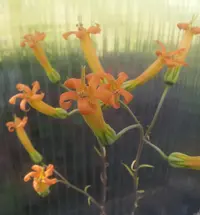
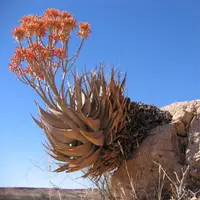
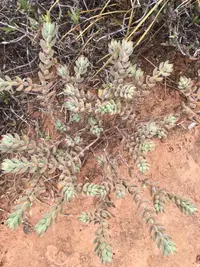
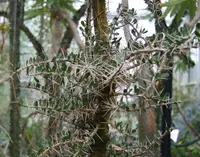
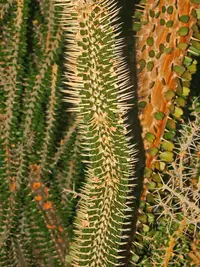
Grand butterbush, Tylecodon grandiflorus, is a caudiciform succulent shrub native to arid regions of South Africa and Namibia. It stores water in a swollen, woody base and thick, fleshy branches.
The plant produces clusters of tubular flowers above sparse, seasonal foliage, giving it a sculptural, bonsai-like look. Growth is slow, and the plant is long-lived when kept dry and bright.
It is moderately demanding, as it dislikes excess water and needs very good drainage and plenty of light. Understanding how to care for Grand Butterbush mainly involves controlling watering and avoiding cold, wet conditions.

Care Difficulty
Moderate Care

Light Preference
Full Sun

Water Requirements
Low Water

Temperature Preference
Tropical / Frost Sensitive

Hardiness Zone
10–11

Soil Texture
Sandy, Loamy, Rocky

Soil pH
Slightly acidic (6.5–7.0), Neutral (7.0)

Soil Drainage
Well-drained

Fertilization
Minimal (feed rarely)
Scan your plant to receive care tips personalized for your specific plant
Available on iOS and Android
This succulent prefers bright, direct light typical of arid habitats.
This species stores water in its thick stems and leaves and needs infrequent but thorough watering.
This drought-adapted succulent prefers warm, dry air with moderate temperature swings.
This drought-adapted succulent tolerates typical indoor humidity and does not need special moisture in the air.
Tylecodon grandiflorus prefers a very fast-draining, mineral-heavy substrate that mimics rocky, arid slopes.
This species is well suited to container growing due to its slow, compact, tuberous growth habit.
Tylecodon grandiflorus is a nutrient‑efficient succulent that benefits from light, controlled feeding during its active season.
Tylecodon grandiflorus needs minimal pruning focused on health and structure rather than heavy shaping.
This slow‑growing succulent is usually repotted infrequently, only when rootbound or when soil is exhausted.
This species is commonly propagated from seed and sometimes from semi‑ripe cuttings under controlled conditions.
This succulent is not frost hardy and needs protection from freezing conditions in most climates.

Plant Health Check
Not sure what's wrong with your plant? Check your plant's health inside the app.
This species is a deciduous, winter-growing succulent from arid parts of South Africa and Namibia, producing leaves mainly in the cool season and shedding them in the hot, dry summer dormancy.
It bears relatively large, tubular, orange to salmon flowers arranged in terminal clusters, which are adapted for bird pollination, especially by sunbirds that can access the nectar with their curved beaks.
Like several members of the Crassulaceae family, it contains cardiac glycosides, naturally occurring compounds that make the plant poisonous to livestock and act as an effective herbivore deterrent in its native habitat.

In its native range, this species is one of the so-called gifbol (poison bulb) plants to local farmers, and even dry plant material can be hazardous to grazing animals, so its presence in rangelands is monitored and controlled to prevent livestock poisoning.
Brown leaves usually result from underwatering, intense direct sun scorch, or past cold damage. Check the potting mix moisture, inspect roots for rot, and trim only dry, dead tissue, allowing new seasonal growth to replace damaged leaves.
Keep your plants happy and healthy with plant identification, disease detection, and easy care guidance.