
Bitter Bolete Identification (Tylopilus felleus)

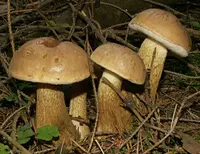
Recognize Bitter Bolete by its pinkish pore surface, a thick stalk marked with dark brown netting, and a dry tan to brown cap often 2 to 6 inches (5 to 15 cm) across.

The stalk is usually club-shaped to nearly equal in width, with the reticulation strongest near the top.

Tylopilus felleus Identification

Identify Your Plant with Botan

Upload a clear photo to check your plant identification with Botan.

Clear images work best. Avoid photos taken too close or too far away

Check the cap, pores, and stem pattern before considering finer details.

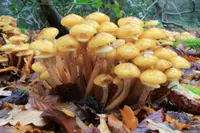
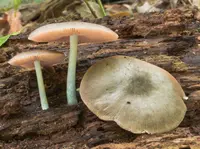
  • Cap is broad and convex to nearly flat, usually tan to brown, often 2-6 inches (5-15 cm) wide.
  • Underside has pores, not gills; the pore surface is white at first, then pinkish with age.
  • Stem is thick and club-shaped to nearly equal, commonly paler than the cap.
  • Upper stem shows a dark brown netlike pattern that stands out against the lighter background.
  • Flesh appears white in cut or broken spots and typically does not show blue bruising.

The pinkish pores and dark netted stem are especially useful field marks.

Bitter Bolete shows useful visual changes from a compact button to an expanded mushroom.

  • Young plant: The cap starts rounded or cushion-like, with the margin tucked under. Pores are pale and tight, and the stalk looks thick and short.
  • Mature plant: As it expands, the cap becomes broadly convex to nearly flat, often 2-6 inches (5-15 cm) across. Pores turn pinkish, and stalk reticulation stands out more clearly.
  • Fruiting stage: In fully developed fruiting bodies, the pore surface is distinctly pinkish rather than white. The cap appears drier and more even, while the stout stalk stays club-shaped or enlarged below.

Bitter Bolete is most identifiable from summer into fall, when the fruiting body appears above ground. At that time, look for a brown cap, pale pores that soon turn pinkish, and a stout stalk with a dark netlike pattern. Outside the fruiting season, this mushroom is usually not visible, so there are few useful off-season identification clues.

A few boletes are regularly mistaken for Bitter Bolete.

porcini(Boletus edulis)

Both are brown-capped, stout boletes with a pale pore surface. Porcini usually has a white to tan net pattern near the stem top and pores that stay white, then yellowish. Tylopilus felleus shows a darker net over much of the stem and pores that often turn pinkish with age.

bay bolete(Imleria badia)

It can overlap in cap color and pore shape. Bay bolete lacks the strong dark netting on the stem and its pores bruise blue, while Tylopilus felleus does not show that blue bruising.

Tylopilus felleus is widely recorded across temperate parts of North America and Europe. Geography helps only a little, since it occurs in more than one region, but habitat is useful when narrowing an identification. It is a woodland mushroom, most often found on the ground in coniferous or mixed forests, commonly with spruce, pine, or fir. Finding it in forest duff rather than grassland or wetlands supports the ID, especially in cool temperate woods.

  • Serious misidentification risk: This mushroom is not known as deadly, but mushroom identification errors can be dangerous for humans and pets if the wrong species is eaten.
  • Key look-alike warning: It can be confused with porcini-type boletes. A useful separating feature is the dark net-like pattern on the stalk and pinkish pores in mature Tylopilus felleus.

Confirm the Species with Botan

Upload a photo to compare key features and get a clearer second opinion before labeling it.

FAQ

The dark netlike pattern on the upper stem, called reticulation, is one of the best clues. The pore surface is pale to pinkish rather than yellow, which also helps with Bitter Bolete identification.

More Plant Identification Guides

Know What Plant You Have

Identify it from a photo with Botan, then see species-specific plant details, care information, and common problems.

Botan app identifying a plant from a photo
How to Bottom Water Plants: Complete Guide

6 min read · 13 Jul 2026

How to Bottom Water Plants: Complete Guide

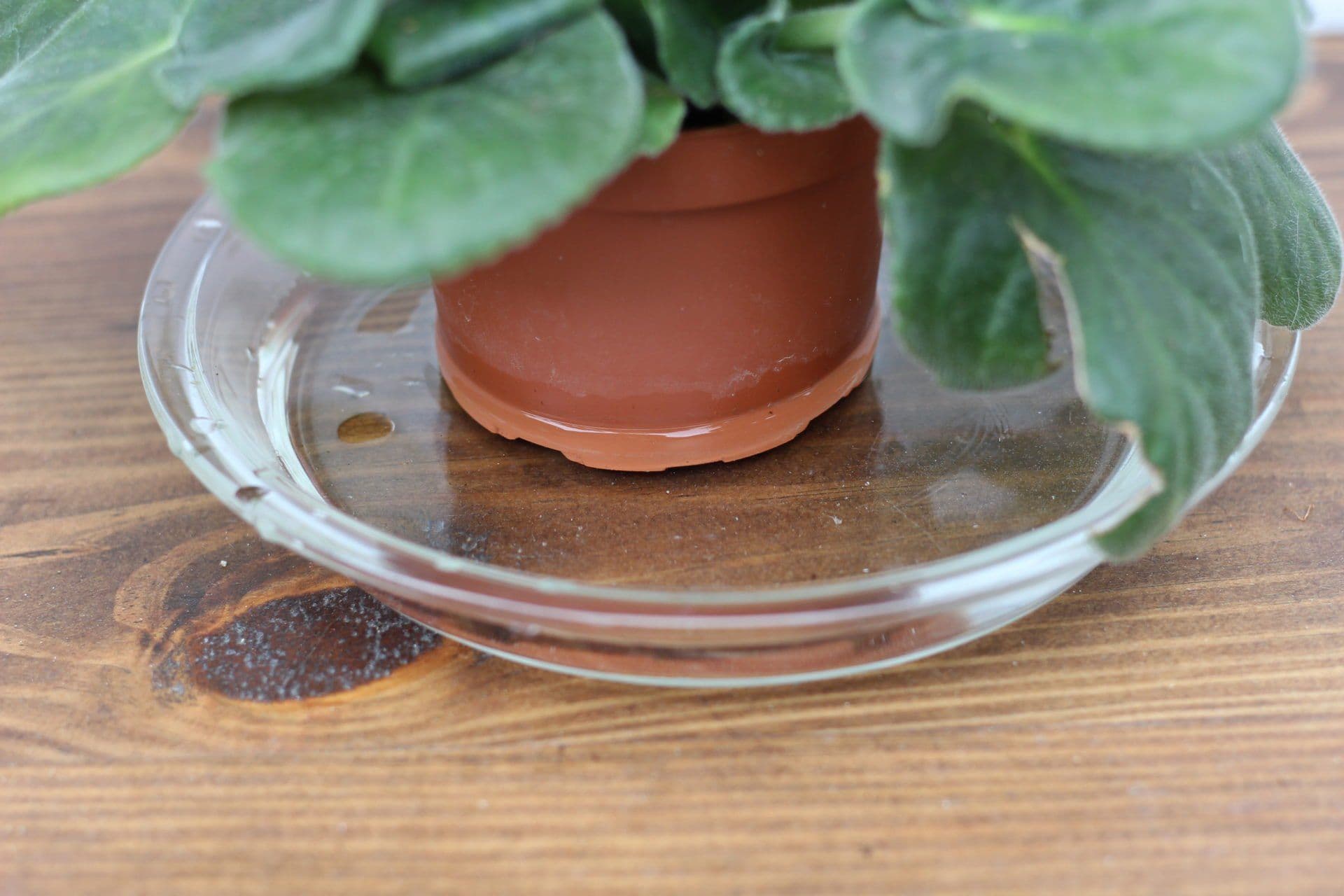
Bottom watering helps soil absorb moisture evenly and keeps foliage dry, reducing the risk of missed dry spots or root problems. Place the pot in a tray of water for a short time, then let it drain well.

Plant Care
How to Bottom Water Plants: Complete Guide
Plant Pot Sizes: How to Choose the Right Plant Container

7 min read · 20 Aug 2026

Plant Pot Sizes: How to Choose the Right Plant Container

Plant pot sizes can be confusing because the number on the label only tells you part of the required information. A container may look spacious but actually be too shallow. So, how to choose pot size for plant species?

Beginner Guides
Plant Pot Sizes: How to Choose the Right Plant Container
Rice Water for Plants – Which Plants Love It and How to Make It

8 min read · 14 Jul 2026

Rice Water for Plants – Which Plants Love It and How to Make It

Rice water can be an ideal DIY solution for orchids, roses, or fruiting plants. It supports growth, leaf count, and height. We’ll share how to make and apply it correctly for your plant.

Plant Care
Rice Water for Plants – Which Plants Love It and How to Make It