
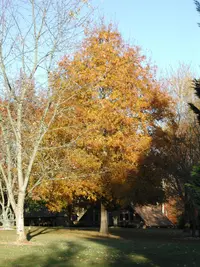

Wych Elm Identification (Ulmus glabra)

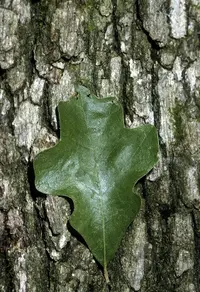
Recognize Wych Elm by its broad, rough leaves with a strongly uneven leaf base, doubly toothed edges, and an alternate arrangement along the twig. Leaves are often 4 to 6 inches (10 to 15 cm) long.

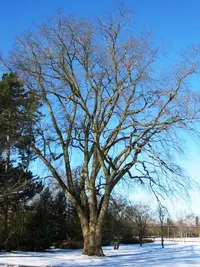
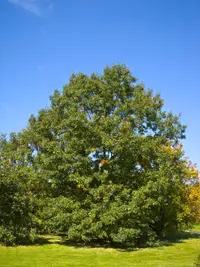
It also shows stout twigs and a broad crown with spreading, arching branches.

Ulmus glabra Identification

Check Your Plant ID

Not sure about your plant ID? Upload a photo and check it with Botan.

Clear images work best. Avoid photos taken too close or too far away

  • 1 free identification
  • No sign-up
  • 30,000+ plants in database

Check the tree’s broad crown, twigs, leaves, and winged seeds.

  • Leaves are large, usually 3-6 inches (8-15 cm) long, oval, with a strongly uneven leaf base and a pointed tip.
  • Leaf edges are sharply double-toothed, and the veins run straight to each tooth, giving a pleated look.
  • Twigs are stout and often softly hairy, with round, dark buds that sit close against the twig.
  • Fruits are round, papery winged samaras with the seed near the center, often clustered along short shoots.

Use several of these features together for a more confident identification.

Wych Elm shows clear visual shifts from early growth to flowering and fruiting stages.

  • Seedling: Seedlings have a slender upright stem with alternate, softly hairy leaves that are smaller and less strongly asymmetrical than on older plants.
  • Young plant: Young plants form a straight main stem with ascending side branches; leaves become broader and rougher, often reaching 4-6 inches (10-15 cm) long.
  • Flowering stage: Before full leaf expansion, short stalked clusters of small reddish flowers appear along twigs, making the crown look speckled rather than leafy.
  • Fruiting stage: After flowering, flat round samaras develop in hanging clusters; each papery wing surrounds a central seed, unlike the earlier bare-looking flower clusters.

Several named forms of Wych Elm can be separated in the field by crown shape and leaf variegation.

  • Ulmus glabra 'Camperdownii': Forms a broad, strongly weeping dome, with pendulous branches unlike the upright crown of the typical species.
  • Ulmus glabra 'Lutescens': Leaves emerge clear yellow to yellow-green in spring instead of the usual medium green.
  • Ulmus glabra 'Pendula': Shows a distinctly drooping habit, with branches hanging downward rather than spreading or ascending.
  • Ulmus glabra 'Horizontalis': Main branches extend in a flatter, more horizontal pattern, giving the crown a layered outline.
  • Ulmus glabra 'Variegata': Leaves have irregular creamy white mottling or margins, not the plain green blade of the typical form.

In spring, Ulmus glabra often flowers before or with the leaves, showing small reddish clusters on bare twigs. Soon after, flat round winged seeds become visible and can hang briefly as fresh green leaves expand. By late fall and winter, the broad crown is bare. This exposes the stout zigzag twigs, large dark buds, and rough gray bark that help confirm the tree.

Several elms can be mistaken for Wych Elm at a glance.

English elm(Ulmus procera)

Often confused because both are broad elms with rough, uneven-based leaves. English elm usually has smaller leaves and short-stalked twigs with denser, more upright branching; Ulmus glabra typically shows larger, broader leaves and a wider crown.

Scots elm(Ulmus × hollandica)

This hybrid can resemble it in leaf texture and general shape. Scots elm is usually less broad-leaved, with leaves that taper more evenly to the tip, and its branching is often neater and less sweeping than Ulmus glabra.

Ulmus glabra is native across much of Europe, from the British Isles to Scandinavia and south into mountain regions of central and southern Europe. It is most often found in moist, fertile deciduous woodland, ravines, valley slopes, and streamside forests. Seeing a large elm in cool upland woods or sheltered river valleys helps narrow identification, especially outside lowland urban settings.

Does Your Plant Match?

Botan can compare a photo to help identify it or confirm your result before you label it or keep searching.

FAQ

Flowers appear before the leaves in small, dense clusters on short stalks along the twigs. Each flower is greenish to reddish-purple and lacks showy petals, a useful detail for identifying Wych Elm in early spring.

More Plant Identification Guides

Identify First. Learn What Comes Next.

Use Botan to identify a plant from a photo, then review species details, care information, and common problems.

Botan app identifying a plant from a photo
Plants That Repel Mosquitoes – 10 Effective Choices

8 min read · 6 Jul 2026

Plants That Repel Mosquitoes – 10 Effective Choices

Plants that repel mosquitoes can help mask human scent naturally and make outdoor spaces more comfortable. Explore the most effective options, their benefits and drawbacks, and choose the right plant for your space.

Plant Recommendations
Plants That Repel Mosquitoes – 10 Effective Choices
Best Fertilizer for Vegetable Gardens – What to Use for Each Plant

11 min read · 20 Jul 2026

Best Fertilizer for Vegetable Gardens – What to Use for Each Plant

Here, you’ll find the right fertilizer formula for vegetables in your garden. Learn how to adjust feeding correctly throughout the growing cycle, spot nutrient deficiencies by their symptoms, and keep your plants healthy and prolific.

Plant Recommendations
Best Fertilizer for Vegetable Gardens – What to Use for Each Plant
Best Fertilizer for Grass in Summer: How to Choose the Right One

6 min read · 18 Aug 2026

Best Fertilizer for Grass in Summer: How to Choose the Right One

The right fertilizer in summer can make a lawn thrive. The wrong one can damage it. Here, you’ll learn the best NPK ratios by grass type, when and how to apply your formula, and how to recognize the signs of over- or under-fertilizing.

Plant Care
Best Fertilizer for Grass in Summer: How to Choose the Right One