Encourage Strong Leader
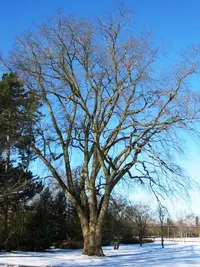
In the first 5–7 years, select one straight central leader and remove competing upright stems during late winter so the tree develops a stable, wind-resistant structure.

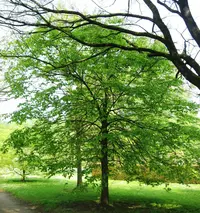
Rock elm, Ulmus thomasii, is a long-lived hardwood tree native to central and northeastern North America. It naturally grows in rich, well-drained forests and upland sites.
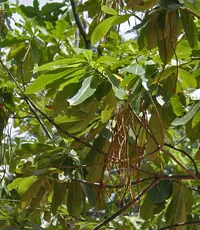
The tree has a strong central trunk, dense rounded crown, and thick, deeply furrowed bark. Its leaves are rough-textured, with a classic elm shape, and turn yellow in autumn.
Rock elm is valued for its very hard, durable wood and good tolerance to cold and wind. It can be slower to establish and may be vulnerable to Dutch elm disease, which affects how to care for rock elm in managed landscapes.
In cultivation it prefers full sun, moderate soil moisture, and fertile, slightly acidic to neutral soil with good drainage.

Care Difficulty
Moderate Care

Light Preference
Full Sun

Water Requirements
Moderate Water

Temperature Preference
Cold Hardy

Hardiness Zone
3–9

Soil Texture
Sandy, Loamy, Clay

Soil pH
Slightly acidic (6.5–7.0), Neutral (7.0)

Soil Drainage
Moist but well-drained

Fertilization
Minimal (feed rarely)
Scan your plant to receive care tips personalized for your specific plant
Available on iOS and Android
Ulmus thomasii performs best with sustained, direct outdoor light in a temperate climate.
Ulmus thomasii prefers evenly moist, well-drained soil that does not stay saturated.
This cold-hardy North American elm thrives outdoors across a wide temperate range.
Ulmus thomasii tolerates a wide humidity range and usually does not need special humidity control outdoors.
Ulmus thomasii prefers deep, well-aerated, moderately moist mineral soils that resist waterlogging.
This species is generally unsuitable for long-term container growing due to its large, deep root system and mature size.
Ulmus thomasii usually needs minimal feeding in the ground, but light, targeted fertilization supports young or stressed trees.
Ulmus thomasii responds well to structured pruning that maintains a strong, open crown.
Rock elm is typically grown in the ground, so management focuses on careful transplanting rather than frequent repotting.
Ulmus thomasii is usually propagated by seed or hardwood cuttings in professional or conservation settings rather than at home.
Ulmus thomasii is a cold-hardy deciduous tree that usually needs little special winter care once established in the landscape.

Plant Health Check
Not sure what's wrong with your plant? Check your plant's health inside the app.
Rock elm has very dense, strong wood with interlocking grain, historically valued for uses that required high shock resistance such as wheel hubs, shipbuilding elements, and industrial flooring.
This elm is native mainly to the upper Great Lakes and adjacent regions, where it is adapted to cold winters and often grows on rocky ridges and limestone-derived soils that many other elms avoid.
Its winter buds are sharply pointed, chestnut-brown, and often slightly curved, making it one of the easier native North American elms to identify when leaves are absent.

Rock elm is considered one of the more resistant native North American elms to Dutch elm disease compared with species like American elm, although it is not fully immune and can still be affected in heavily infested areas.
Growth is moderate, often 30–60 cm per year under good conditions. Young trees become visually prominent in 8–12 years, but full stature and trunk thickness develop over several decades, especially on deeper, well-drained soils.
Keep your plants happy and healthy with plant identification, disease detection, and easy care guidance.