Submerged Container Barriers
When planting in ponds or slow streams, place the roots in a wide, shallow aquatic basket or perforated container to limit spread and make it easier to lift and divide clumps without disturbing the whole shoreline.

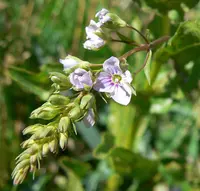
Blue water-speedwell, Veronica anagallis-aquatica, is a semi-aquatic perennial often found along streams, ditches, and ponds. It naturally occurs across much of Europe, Asia, North Africa, and North America.
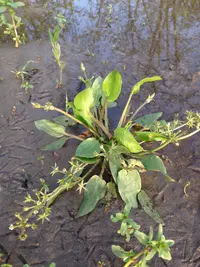
The plant forms low, branching stems with smooth, oval leaves and small pale blue flowers held in loose clusters above the water or wet soil surface. It spreads by creeping stems and can form dense patches in consistently wet conditions.
This species prefers full sun to light shade, shallow water, or saturated soil with good access to fresh, moving water. For those learning how to care for blue water-speedwell, its need for constant moisture is the main factor that affects ease of cultivation.

Care Difficulty
Moderate Care

Light Preference
Full Sun

Water Requirements
Aquatic

Temperature Preference
Cold Hardy

Hardiness Zone
4–9

Soil Texture
Loamy, Silty, Organic-rich

Soil pH
Slightly acidic (6.5–7.0), Neutral (7.0)

Soil Drainage
Waterlogged tolerant

Fertilization
Minimal (feed rarely)
Scan your plant to receive care tips personalized for your specific plant
Available on iOS and Android
This aquatic perennial prefers consistent light that mimics open stream banks and pond margins.
This species is adapted to saturated soils and shallow water, not to drying out between waterings.
This wetland plant is hardy in cool to temperate climates but responds best to moderate temperatures.
This amphibious species prefers very high humidity and constant moisture around foliage and roots.
This species grows best in permanently wet, fine-textured, organic-rich substrate rather than conventional potting soil.
This species can be grown in containers if the setup keeps the root zone continuously wet and stable.
Veronica anagallis-aquatica in natural or pondside settings usually needs little added fertilizer if water and soil are nutrient rich.
Pruning Veronica anagallis-aquatica is mainly used to control spread and keep growth tidy in wet areas or containers.
This aquatic species is more often transplanted or divided than repotted, especially when managing spread along pond margins.
New plants of Veronica anagallis-aquatica are commonly produced by stem cuttings, division, or self-sown seed in wet habitats.
In much of its range, blue water-speedwell is reasonably cold tolerant and usually needs little special winter care in ponds or slow streams.

Plant Health Check
Not sure what's wrong with your plant? Check your plant's health inside the app.
This species can grow fully submerged, floating, or rooted in shallow mud, adjusting its stem length and leaf shape to different water levels in streams, ditches, and ponds.
It is naturally widespread across Europe, Asia, Africa, and parts of the Americas, reflecting strong ecological flexibility in cool to warm, slow-moving freshwater habitats.
Dense stands create microhabitats where aquatic insects, snails, and other small invertebrates feed on its tissues, biofilms, and trapped organic particles around its stems and leaves.
This species spreads readily by creeping stems and self-seeding in shallow water or saturated soil. In small ponds or slow ditches it can form dense patches, so regular thinning is recommended where containment is important.
Keep your plants happy and healthy with plant identification, disease detection, and easy care guidance.