Edge Containment
Install a shallow plastic or metal edging strip 5–8 cm deep around beds or paths to keep this fast-spreading groundcover from creeping into lawns or mixed borders, making long-term maintenance much easier.

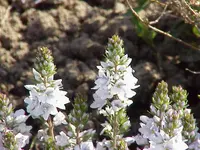
Corsican speedwell, Veronica repens, is a low-growing, mat-forming perennial often used as a groundcover or between paving stones. It forms dense carpets of tiny, rounded green leaves. In spring to early summer it produces small, pale blue to white flowers that give a soft, delicate look without needing much height or staking. The plant naturally occurs in parts of southern Europe, often in rocky or alpine habitats. Its compact growth, cold tolerance, and ability to handle light foot traffic make it relatively easy for many gardeners. It generally prefers sun to light shade, moderate moisture, and well-drained soil. Understanding how to care for Corsican Speedwell helps it form a healthy, long-lasting mat.

Care Difficulty
Easy Care

Light Preference
Full Sun

Water Requirements
Moderate Water

Temperature Preference
Cold Hardy

Hardiness Zone
4–9

Soil Texture
Sandy, Loamy, Rocky

Soil pH
Acidic (5.5–6.5), Slightly acidic (6.5–7.0)

Soil Drainage
Moist but well-drained

Fertilization
Minimal (feed rarely)
Scan your plant to receive care tips personalized for your specific plant
Available on iOS and Android
Veronica repens thrives with bright light but benefits from some protection in hotter climates.
Veronica repens prefers evenly moist but not waterlogged soil.
This groundcover handles a wide temperature range but grows best in mild conditions.
This species grows best in moderate ambient humidity but usually adapts well to typical home conditions.
Veronica repens prefers light, well-structured soil that drains quickly yet holds some moisture around the roots.
This low, mat-forming groundcover is suitable for containers, troughs, and shallow bowls.
This low-growing groundcover needs only modest feeding to maintain dense, healthy mats.
Light pruning keeps Veronica repens dense, tidy, and flowering well.
This plant is usually grown as groundcover, so transplanting in the garden is more common than container repotting.
Veronica repens is commonly propagated to extend groundcover areas or fill gaps between stones.
This groundcover is generally cold hardy in much of the US and needs only modest winter care in the ground.

Plant Health Check
Not sure what's wrong with your plant? Check your plant's health inside the app.
This species is naturally native to mountainous regions of Corsica and Sardinia, where it often grows in shallow, lime-rich soils on rocky slopes and ledges. Its preference for alkaline, stony substrates distinguishes it from many other creeping speedwells that tolerate more acidic conditions.
Veronica repens produces very short, creeping stems that root at the nodes and create a tightly knit carpet only a few centimeters tall. This growth form helps the plant resist soil erosion on slopes and withstand light foot traffic when used as a groundcover between paving stones.
In suitable climates, this species tends to bloom most heavily in spring and early summer with small pale blue to white flowers, then may rebloom more lightly in cooler autumn conditions. Flowering often slows or pauses during hot midsummer weather, especially in exposed, dry sites.

In parts of its native range, Veronica repens naturally occupies microsites in rock crevices and between stones where competition from taller plants is low, allowing it to form nearly continuous living carpets that visually soften otherwise bare rock faces.
This species spreads slowly to moderately by short stems and rooting at the nodes, forming a low mat. It usually stays well behaved, but in ideal conditions can edge into nearby spaces and between paving stones over time.
Keep your plants happy and healthy with plant identification, disease detection, and easy care guidance.