Provide sturdy trellising
Install a 1.5–2 m tall, firm trellis or netting before sowing so vines can climb early, which improves air flow around foliage and reduces disease on pods and leaves.

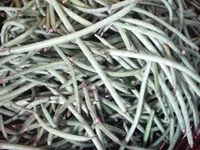
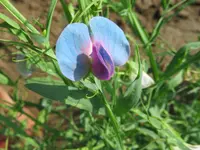
Blackeyed pea (Vigna unguiculata) is a warm-season legume grown for its edible seeds and pods. It is usually cultivated as an annual, with a bushy or vining growth habit. The plant has trifoliate leaves and pale white or cream flowers that develop into slender pods containing the characteristic seeds with a dark “eye.”
Vigna unguiculata originates from Africa but is now widely grown in warm and subtropical regions worldwide, including the southern United States. It is valued for its tolerance of heat and relatively poor soils, which makes it easier to grow than many other legumes. In general, it prefers full sun, well-drained soil, and moderate, even moisture. These traits guide how to care for blackeyed pea in home gardens or small-scale plantings.

Care Difficulty
Easy Care

Light Preference
Full Sun

Water Requirements
Moderate Water

Temperature Preference
Tropical / Frost Sensitive

Hardiness Zone
9–11

Soil Texture
Sandy, Loamy, Clay

Soil pH
Acidic (5.5–6.5), Slightly acidic (6.5–7.0)

Soil Drainage
Well-drained

Fertilization
Minimal (feed rarely)
Scan your plant to receive care tips personalized for your specific plant
Available on iOS and Android
This warm-season legume needs strong sun to flower and set pods reliably.
This crop prefers evenly moist but not saturated soil, especially during flowering and pod set.
This warm-season plant grows best in stable heat without exposure to frost.
This species grows well in typical outdoor humidity and seldom needs special humidity management.
This species performs best in loose, well-drained, slightly acidic to neutral soil.
This species is suitable for container growing when root depth and drainage are prioritized.
Vigna unguiculata responds well to moderate feeding in nutrient-poor soils but often manages with minimal inputs in fertile ground.
Pruning Vigna unguiculata is light and mostly focused on plant health and manageable growth rather than shaping.
Cowpea is usually grown as an annual crop, so transplanting young Vigna unguiculata seedlings correctly matters more than long-term repotting cycles.
Gardeners usually multiply cowpea by seed, which is the most reliable method for Vigna unguiculata.
Vigna unguiculata is a frost-tender warm-season annual, so plants are usually finished by winter in temperate climates.

Plant Health Check
Not sure what's wrong with your plant? Check your plant's health inside the app.
This species can pause growth during dry periods and quickly resume when water returns, which helps it survive semi-arid climates where many other crops fail.
Its roots form nodules with Rhizobium bacteria that convert atmospheric nitrogen into forms the plant can use, improving soil fertility for following crops in rotation systems.
Both the immature pods and the dried seeds are widely eaten, and the leaves are also used as a leafy vegetable in several African farming traditions.

Cowpea domestication is thought to have occurred in Africa more than 4,000 years ago, and the crop later spread to Asia and the Americas, becoming a staple in many traditional food cultures such as Southern U.S. black-eyed peas.
Yellow leaves usually come from nitrogen deficiency, natural aging of lower foliage, or water stress. Check that soil drains well, water evenly, and consider a balanced fertilizer. Also inspect roots for rot and leaves for pests or disease spots.
Keep your plants happy and healthy with plant identification, disease detection, and easy care guidance.