Ivy Leaved Violet Care (Viola hederacea)

Also known as: Australian violet, Ivy-Leaf Violet, Trailing Violet
Ivy Leaved Violet

About Ivy Leaved Violet

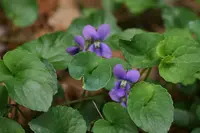
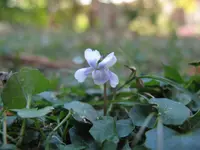
Ivy leaved violet, Viola hederacea, is a low, spreading perennial groundcover with small rounded leaves and delicate white to pale purple flowers. It forms soft, dense mats that can edge paths, spill from pots, or fill gaps between larger plants.

This species is native to moist, cool regions of Australia, often found in open forests and along stream edges. Its creeping habit and quick rooting make it useful for gentle coverage, but it can spread widely in ideal conditions.

It is generally easy to grow when given consistent moisture, partial shade, and humus-rich soil. Understanding how to care for Ivy Leaved Violet helps keep it compact, healthy, and flowering well in home gardens or containers.

Main Plant Requirements

Care Difficulty

Easy Care

Light Preference

Partial Shade

Water Requirements

Keep Soil Moist

Temperature Preference

Cool Climate

Hardiness Zone

8–10

Soil Texture

Loamy, Sandy, Organic-rich

Soil pH

Acidic (5.5–6.5), Slightly acidic (6.5–7.0)

Soil Drainage

Moist but well-drained

Fertilization

Light (every 4–6 weeks)

Get Personalized Care Plan

Scan your plant to receive care tips personalized for your specific plant

Available on iOS and Android

How to Care for the Ivy Leaved Violet

Viola hederacea prefers soft, indirect light that mimics a dappled woodland edge.

  • Provide bright, filtered light or light shade, with 2–4 hours of gentle morning sun and protection from strong midday and afternoon sun.
  • Plant in a position that receives partial shade for most of the day; in hotter climates, choose areas shaded after 11 a.m. to prevent leaf scorch and wilting.
  • In winter, slightly brighter exposure supports compact growth, while in summer extra shade or a thin shade cloth helps reduce sun stress and faded foliage on Ivy Leaved Violet.

This species thrives in consistently moist but not saturated soil.

  • Aim for soil that feels evenly moist; let the top 2–3 cm dry slightly before watering again, rather than following a fixed calendar schedule.
  • Increase watering during active growth in spring and summer, reducing slightly in cooler months while never allowing the root zone to dry out completely.
  • Watch for yellowing, limp leaves and a sour smell as signs of overwatering and poor drainage, and for dull, drooping foliage and dry soil as signs the plant needs water; Viola hederacea dislikes waterlogged clay.

This groundcover prefers mild, stable temperatures without extremes.

  • Optimal growth occurs around 60–75°F (16–24°C), where foliage stays dense and flowering is more reliable.
  • The plant tolerates short dips to about 25–28°F (-4 to -2°C) once established, but repeated hard frosts can damage leaves and young runners.
  • In hot summers above 85°F (29°C), provide extra shade and mulch to keep roots cooler, and expect slower growth if nights stay above 75°F (24°C).

This species prefers moderately moist air but usually adapts to typical household humidity.

  • Aim for 40–60% humidity to reduce leaf edge browning and keep foliage lush.
  • Tolerates short periods of drier air, but prolonged levels below 30% can cause curled, crispy leaves and slower growth.
  • Increase humidity by grouping pots, placing trays with water and pebbles nearby, or using a small humidifier in very dry rooms.

This creeping violet prefers light, moist, and well-aerated soil that does not stay waterlogged.

  • Use a loose, loamy mix made from roughly 2 parts all-purpose potting mix, 1 part fine compost, and 1 part perlite or fine bark for structure.
  • Ensure fast drainage so water runs freely from the pot, while the organic matter holds enough moisture between waterings.
  • Aim for slightly acidic to neutral pH around 6.0–7.0, which supports nutrient uptake and balanced growth in Viola hederacea.
  • Avoid heavy clay, compacted soil, or mixes with lots of fine peat that stay soggy, since these promote root rot and weak growth.

This species is well suited to container growing, especially for hanging baskets, shallow bowls, or low planters.

  • Choose a wide, shallow container to match its creeping root system and allow even surface coverage without deep unused soil staying wet.
  • Select a slightly heavier pot material like ceramic if grown outdoors so the spreading foliage does not tip the container in wind.
  • Raise the pot slightly on feet or pot risers so drainage holes stay clear and excess water escapes quickly after rain or watering.

Viola hederacea grows well in modestly fertile soil and benefits from light feeding during active growth.

  • Use a balanced liquid fertilizer (around 10-10-10 or 20-20-20) diluted to 1/4–1/2 strength for Ivy Leaved Violet.
  • Apply every 4–6 weeks in spring and summer when growth is active.
  • Stop feeding in late fall and winter when growth slows.
  • In beds, a thin layer of compost in spring often supplies enough nutrients.

Pruning Viola hederacea is mainly done to keep groundcover growth tidy and healthy.

  • Best time is late winter or early spring before strong new growth starts.
  • Trim back straggly, overcrowded, or damaged runners with clean scissors or hand pruners.
  • Remove spent or yellowing leaves to reduce disease risk and improve air movement.
  • Light trimming encourages denser mats and more even flowering over the planting area.

Container or garden-grown plants benefit from occasional transplanting to prevent overcrowding and root stress.

  • Check for roots circling the pot, drying out quickly, or reduced growth as signs of needing a larger container or division.
  • Plan repotting or transplanting in early spring or early fall, avoiding extreme heat or frost.
  • Typically move or divide clumps every 2–3 years to refresh soil and manage spread.
  • Water thoroughly before and after moving, keep roots shaded, and maintain even moisture until new growth resumes.

Expansion of Viola hederacea is straightforward and commonly done by division or separating rooted runners.

  • Divide established clumps in early spring or early fall, lifting sections with a hand fork.
  • Gently pull apart pieces with several leaves and healthy roots, then replant at the same depth.
  • Use stolons or runners that have rooted naturally; cut and move them to new positions.
  • Seeds can be sown in shallow trays, kept evenly moist, and placed in bright, indirect light for germination.

This groundcover is relatively cold tolerant in mild climates and usually needs only light winter care.

  • In regions with light frosts, top growth may thin but roots generally survive without special measures.
  • Apply a 2–5 cm mulch layer around the root zone in late fall to buffer soil temperature.
  • In colder zones or exposed sites, grow Viola hederacea in containers and move indoors or to a frost-free porch.
  • Reduce watering in winter, keeping soil just slightly moist to prevent root rot.

Care Tips

Edge Containment

Use shallow edging, stones, or a plastic barrier sunk 5–7 cm into the soil around beds or paths to keep this spreading groundcover from overtaking nearby plants while still allowing healthy runners to form inside its designated area.

Runners Management

Every few months, lift and redirect wayward stolons (above-ground runners) back into bare spots or toward areas you want to fill, trimming only the longest sections so the mat stays dense without becoming tangled or patchy.

Renewal Division

Every 2–3 years in early spring, slice and lift crowded outer sections of the mat with a sharp spade, replanting vigorous pieces and discarding woody or sparse centers to maintain a fresh, compact carpet and quickly propagate new patches.

Container Overwintering

In colder climates, move containers to a bright, frost-free spot such as an unheated garage or cold frame and water just enough to keep the root ball slightly moist, which greatly improves survival and supports successful Ivy Leaved Violet indoor care.

Foot-Traffic Protection

Where paths cross the planting, install stepping stones or pavers set level with the soil surface so occasional foot traffic lands on the hard surface rather than directly on the foliage, preventing bruising and bare patches in the mat.

Common Pests and Diseases

Two-spotted spider mites

This pest thrives on Viola hederacea foliage in warm, dry or sheltered spots, causing fine speckling, dull leaves, and delicate webbing on the undersides. Symptoms include slowed growth and leaves that may yellow and drop if populations are high.

Solution

Rinse foliage thoroughly with a firm, lukewarm water spray, focusing on leaf undersides, and repeat every few days for 1–2 weeks. Increase ambient humidity slightly, improve airflow, and, if needed, use insecticidal soap or a horticultural oil labeled for mites, applied in the evening to avoid leaf scorch.

Aphids

These insects cluster on soft new runners, stems, and flower stalks, sucking sap and excreting sticky honeydew that can attract sooty mold. Symptoms include distorted young growth and reduced flowering.

Solution

Pinch or hose off heavily infested tips, then wash plants with a gentle but thorough water spray. For persistent colonies, apply insecticidal soap to all green parts, repeating at 5–7 day intervals until populations stay low, and reduce nearby ant activity that protects aphids.

Slugs and snails

This pest is strongly attracted to the moist, low-growing mats of creeping violet, chewing irregular holes in leaves and sometimes consuming flowers. Symptoms include shredded edges, slime trails, and missing young shoots, especially after rain or heavy watering.

Solution

Hand-pick at dusk or early morning and remove hiding places such as dense debris or boards around plantings. Use barriers like copper tape for containers, set out beer or yeast traps, or place iron phosphate slug bait away from children and pets, following label directions.

Powdery mildew

This disease appears as white to gray powdery patches on leaves and petioles, often starting in shaded, humid areas of dense groundcover. Symptoms include yellowing, distortion, and premature leaf drop, which can thin the mat.

Solution

Remove and discard affected leaves to reduce inoculum, then thin or divide dense patches to improve light and airflow. Water at soil level in the morning, avoid overhead watering late in the day, and, if needed, apply a sulfur or potassium bicarbonate fungicide labeled for powdery mildew on ornamental groundcovers.

Crown rot (Phytophthora)

This disease affects the central crown where runners meet the soil, especially in waterlogged or compacted sites, leading to sudden collapse of patches despite moist soil. Symptoms include browning at the crown, blackened bases of stems, and an easy pull-away of affected runners.

Solution

Remove and dispose of all affected clumps, including the crown and nearby soil, and avoid replanting susceptible species in the same saturated spot. Improve drainage with raised beds or coarse organic matter, reduce watering frequency, and re-establish healthy plants only where excess water does not pool, which supports long-term Viola hederacea care instructions.

Interesting Facts

Australian alpine origins

This species is native to cool, high-rainfall regions of southeastern Australia, including parts of Tasmania, where it grows naturally in moist woodland and alpine grassland habitats close to streams or seepage areas.

Mat-forming stolon growth

Viola hederacea spreads by slender above-ground stems called stolons that root at the nodes, allowing it to form low, dense mats that can stabilize soil and occupy gaps between larger plants.

Distinct leaf and flower mix

The plant often shows both broad, rounded leaves and more ivy-like lobed leaves on the same colony, while its small flowers typically have a white background with a distinct purple to violet upper petal pattern that makes it easy to distinguish from many other violets in its range.

Botan icon

Did you know?

In its native range, Viola hederacea can naturally create extensive ground-covering colonies from just a few initial plants, and over time these connected mats may persist for many years as a single clonal network spreading through suitable moist habitats.

FAQs about Ivy Leaved Violet

This species spreads gradually by creeping stems and can form a dense mat over time. It is not usually considered aggressive in gardens, but in mild, moist climates it can slowly move into nearby bare soil.

Grow Healthy Plants with Botan Care

Keep your plants happy and healthy with plant identification, disease detection, and easy care guidance.

Botan plant care app — identify plants on mobile

Explore More Plants