Staggered Succession Planting
Start a small batch of plants in plugs or modules every 3–4 weeks in late summer to early fall so flowering continues even if an early heatwave or disease damages the first sowing.

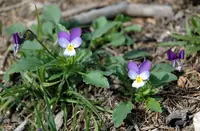
Viola × melissifolia is a hybrid violet, typically forming low, spreading clumps with delicate heart-shaped leaves and small, soft-colored flowers. It has a compact, groundcover habit that suits borders, rock gardens, and naturalistic plantings.
This plant is associated with European woodland and meadow habitats, favoring cool conditions and consistent moisture. It is generally considered moderately easy to grow if its need for humus-rich, well-drained soil and partial shade is respected. Gardeners who understand how to care for Viola × melissifolia often value it for subtle spring color and a refined, understated look.

Care Difficulty
Moderate Care

Light Preference
Partial Shade

Water Requirements
Regular Water

Temperature Preference
Cool Climate

Hardiness Zone
5–8

Soil Texture
Loamy, Silty, Organic-rich

Soil pH
Acidic (5.5–6.5), Slightly acidic (6.5–7.0)

Soil Drainage
Moist but well-drained

Fertilization
Minimal (feed rarely)
Scan your plant to receive care tips personalized for your specific plant
Available on iOS and Android
This hybrid violet prefers cool, bright conditions with gentle sun exposure for best flowering.
This plant prefers consistently moist, cool soil without staying waterlogged.
This violet grows best in cool to mild conditions and dislikes extreme heat or hard freezes.
This violet prefers moderate humidity but copes with typical indoor air if not extremely dry.
This plant grows best in consistently moist, airy soil that mimics a light woodland loam.
This species is well suited to container growing for patios and small outdoor spaces.
Light feeding supports flowering but this woodland-type violet dislikes heavy fertilization.
Light, periodic grooming keeps plants tidy and supports healthy flowering.
This violet is more often transplanted in garden beds than kept long term in containers.
Division and seed are the main methods used to increase plants.
This violet is generally hardy in temperate climates and needs only modest winter attention outdoors.

Plant Health Check
Not sure what's wrong with your plant? Check your plant's health inside the app.
This plant is a stable natural hybrid between two European violets, typically involving Viola arvensis and Viola tricolor, and it often occurs where the parent species grow together in the wild.
Its flowers usually show intermediate traits between the parents, with paler, less strongly marked petals and more modest coloration than the vivid wild pansy but larger blooms than the field pansy.
This species is a perennial, returning from its root system each year if conditions are suitable. Top growth may die back in heat or cold, but the crown and roots generally survive and resprout.
Keep your plants happy and healthy with plant identification, disease detection, and easy care guidance.