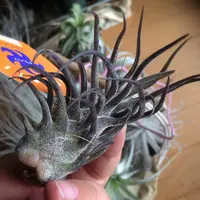
Bromeliad Care (Vriesea ensiformis)

Bromeliad

About Bromeliad

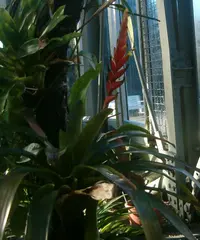
Vriesea ensiformis is a tropical epiphytic bromeliad, often grown as a compact indoor ornamental plant. It forms a rosette of sword-like leaves with a colorful, long-lasting central spike.

In nature it occurs in humid forests of Brazil, usually growing on trees rather than in soil. Indoors it stays relatively small and slow-growing, which suits shelves and tabletops.

Its main appeal is the bright bract and patterned foliage, combined with moderate care needs. Stable warmth, bright indirect light, and lightly moist but airy potting mix make it easier to care for Bromeliad plants like this species.


Main Plant Requirements

Care Difficulty

Moderate Care

Light Preference

Bright Indirect Light

Water Requirements

Moderate Water

Temperature Preference

Tropical / Frost Sensitive

Hardiness Zone

11–12

Soil Texture

Loamy, Peaty, Organic-rich

Soil pH

Acidic (5.5–6.5), Slightly acidic (6.5–7.0)

Soil Drainage

Moist but well-drained

Fertilization

Light (every 4–6 weeks)

Get Personalized Care Plan

Scan your plant to receive care tips personalized for your specific plant

Available on iOS and Android

How to Care for the Bromeliad

This species prefers bright, filtered light similar to dappled forest shade.

  • Provide 4–6 hours of bright, indirect light daily; early morning sun is acceptable, but shield from strong midday and afternoon sun.
  • Tolerates partial shade, yet very low light causes stretched, pale leaves and weak Bromeliad rosettes over time.
  • Outdoors, place under high, shifting shade (trees, shade cloth); in summer, protect from scorched leaf tips, and in winter maximize light near bright windows or bright spots.

Watering focuses on both the central cup and the potting mix, avoiding stagnation.

  • Keep the central tank 1/2–2/3 full with fresh water and flush it every 1–2 weeks to prevent salt and algae buildup.
  • Water the mix when the top 2–3 cm feels dry; let excess drain fully to avoid root rot, which shows as black, mushy roots and sour odor.
  • In cooler seasons or low light, reduce frequency; underwatering shows limp, curling leaves, while chronic overwatering causes yellowing and collapse at the base.

This tropical epiphyte prefers consistently warm, frost-free conditions.

  • Aim for 65–80°F (18–27°C) for active growth, with stable conditions and moderate humidity for best foliage color.
  • Short dips to 55°F (13°C) are tolerated, but growth slows; avoid exposure below 45°F (7°C) to prevent cold damage to leaves and tissues.
  • Heat up to 90°F (32°C) is manageable if shaded and humid; in hot spells, increase air movement, while in winter protect from drafts, cold windows, and sudden temperature swings.

This species prefers moderately humid air but adapts if kept above very dry levels.

  • Aim for 50–70% humidity to support healthy leaf color and stable rosette growth.
  • Tolerates short periods of 35–40% humidity, but tips may brown and leaves may curl inward under prolonged dry air.
  • Increase humidity with a nearby tray of water and pebbles or grouped plants; avoid misting into the central cup of the Bromeliad to prevent rot.

This epiphytic species prefers a loose, airy, fast-draining mix rather than dense potting soil.

  • Use a mix of roughly 50% fine orchid bark, 25% perlite or pumice, and 25% peat-free compost or coco coir for structure and moisture retention.
  • Ensure water drains through in seconds; the mix should feel springy and open, never compacted or sticky after watering.
  • Keep pH slightly acidic to neutral, around 5.5–7.0, by using bark-based components rather than heavy garden soil.
  • Avoid clay-heavy, peat-only, or moisture-control mixes, which hold water too long and reduce aeration around the roots of Vriesea ensiformis.

This species is well suited to container growing due to its compact root system and rosette form.

  • Choose a squat, heavier pot to counterbalance the tall rosette and prevent tipping as the central flower spike develops.
  • Use a container only 2–4 in wider than the root base, since oversized pots keep the mix wet for too long.
  • Select breathable materials like unglazed terracotta if the home is cool or humid, as they help excess moisture evaporate from the mix.

This Bromeliad benefits from light, controlled feeding rather than heavy fertilization.

  • Use a balanced liquid fertilizer (around 10-10-10 or 20-20-20) diluted to 1/4–1/2 strength for both soil and central cup.
  • Feed every 4–6 weeks during spring–summer when growth is most active.
  • Rinse and refill the central tank with plain water monthly to avoid salt buildup from fertilizer.
  • Stop or reduce feeding to 1 light application in late autumn–winter, as growth slows.

Vriesea ensiformis needs minimal pruning focused on cleanliness and appearance rather than shaping.

  • Any time of year, trim brown leaf tips or fully dead leaves with clean, sharp scissors close to the base.
  • After the flower spike fades, cut it off at the base to redirect energy into pup (offset) development.
  • Remove damaged or crowded leaves only, leaving a full, balanced rosette to support healthy growth.
  • Disinfect cutting tools before and after use to limit spread of fungal or bacterial issues.

This species prefers to stay slightly root-bound and only needs repotting when clearly outgrowing its container.

  • Check for roots circling the pot, pushing above the mix, or very slow growth as cues to repot.
  • Plan repotting in spring, typically every 2–3 years, when the plant is actively growing and pups appear.
  • Move into a pot just 2–3 cm wider using a very free-draining Bromeliad or orchid-style mix.
  • Handle roots gently, keep the crown above the mix, water lightly, and keep shaded for 1–2 weeks to reduce stress.

New Vriesea ensiformis plants are most reliably produced from offsets rather than seeds.

  • Wait until pups reach about 1/3–1/2 the size of the mother and have their own roots, usually in late spring–summer.
  • Remove the entire plant from the pot and gently separate pups using a clean, sharp knife if needed.
  • Plant each pup in a small pot with airy Bromeliad mix, keeping the base just above the surface.
  • Maintain bright, indirect light, high humidity, and slightly moist mix until roots establish and new leaves appear.

This tropical plant is frost-sensitive and needs mild, stable conditions in winter.

  • Keep indoor temperatures around 60–75°F in winter and avoid cold drafts from windows or doors.
  • If grown outside in warm climates, bring containers indoors before temperatures drop near 50°F.
  • Provide bright, indirect light and good air movement to reduce rot risk in cooler months.
  • Water less often but never let the central cup stay dry for long; avoid soaking cold potting mix.

Care Tips

Use Rainwater Flushes

Every 4–6 weeks, pour lukewarm rainwater or distilled water slowly through the central cup and potting mix to flush out accumulated salts and old nutrients, then immediately empty any remaining water from the cup so it does not stagnate.

Rotate For Even Rosettes

Rotate the pot by 90° every 2–3 weeks so the rosette develops symmetrically and leaves do not lean or twist permanently toward one direction of light.

Stabilize Top-Heavy Plants

If the flowering rosette becomes top-heavy, set the nursery pot inside a wider, heavier cachepot and backfill the gap with clean gravel or clay pebbles to prevent tipping and mechanical damage to the roots.

Pup Management Strategy

Once pups reach about 1/3–1/2 the size of the mother, choose either to remove only the largest ones for propagation or to leave several attached to create a multi-rosette clump that fills the pot for a fuller display.

Cup Hygiene Routine

Inspect the central cup weekly, remove fallen leaves or debris with long tweezers, and refresh the water to prevent mosquito breeding and bacterial growth, which supports healthier foliage when caring for Bromeliad species in indoor settings.

Common Pests and Diseases

Scale insects

These insects attach to leaf bases and sheaths, sucking sap and causing yellowing, stunted growth, and sticky honeydew around the rosette. Symptoms include gradual decline, distorted new leaves, and sooty mold growth on the honeydew.

Solution

Remove visible scale with a cotton swab dipped in 70% isopropyl alcohol, then rinse the foliage and tank thoroughly with lukewarm water. For ongoing control, repeat alcohol swabs and use an insecticidal soap or horticultural oil spray directed into leaf axils and around the central cup every 7–10 days until no new scale appears.

Mealybugs

This pest hides in leaf axils and the central tank, forming white, cottony clusters that weaken the plant and can deform new growth. Symptoms include sticky residue, yellowing, and poor flowering.

Solution

Flush the rosette and central cup with a strong but gentle stream of water, then dab remaining clusters with a cotton swab dipped in 70% isopropyl alcohol. Follow with insecticidal soap applications focused on leaf bases and hidden crevices, repeating weekly until all signs of mealybugs are gone and monitoring as part of routine Vriesea ensiformis plant care.

Bromeliad leaf spot

This disease, usually fungal, causes tan to dark brown spotting on leaves that may develop yellow halos and merge into larger patches under high humidity and poor air movement. Symptoms include cosmetic damage and, in severe cases, partial leaf dieback.

Solution

Trim off heavily spotted leaves with sterile scissors and avoid wetting the foliage late in the day so leaves dry quickly. Improve air circulation, keep water only in the tank or at the root zone, and if spots continue to spread, use a labeled copper-based or broad-spectrum fungicide according to instructions.

Bacterial leaf blight

This disease produces water-soaked, translucent lesions on leaves that quickly turn brown and may emit an unpleasant odor, often starting where water sits in leaf axils. Symptoms include rapid tissue collapse and spreading streaks along the leaf.

Solution

Remove and discard affected leaves promptly, sterilizing tools between cuts, and avoid overhead watering or splashing water from plant to plant. Keep water in the central cup clean and changed regularly, reduce crowding, and if spread continues, dispose of severely affected plants to protect nearby bromeliads.

Tank water rot

This problem arises when stagnant, dirty water in the central cup promotes bacterial and fungal growth, leading to soft, collapsing leaf bases and foul odor from the rosette. Symptoms include mushy tissue at the tank and rapid decline despite apparently moist conditions.

Solution

Empty and refill the central cup with fresh, non-chlorinated water every 5–7 days, flushing thoroughly to remove debris and dead insects. If rot is present, tip out all water, trim softened tissue, keep the cup mostly dry for a short period while improving air movement and light, then resume filling with smaller amounts of clean water once the plant stabilizes.

Interesting Facts

Tank-forming rosette

This species forms a tight leaf rosette that naturally collects rainwater and debris, creating a small water reservoir that supports microorganisms and small invertebrates in its native Atlantic Forest habitat in Brazil.

Sword-like bracts

The inflorescence carries flat, blade-shaped bracts in shades of red to orange that can last for several months, while the true flowers are short-lived and less showy, often yellow or whitish.

Epiphytic lifestyle

In the wild, this bromeliad commonly grows as an epiphyte on tree branches, using its roots mainly for anchoring rather than for water uptake, which primarily occurs through specialized leaf scales called trichomes.

Botan icon

Did you know?

Vriesea ensiformis has been widely used in hybridization within the genus Vriesea, contributing its colorful, long-lasting bracts and compact growth habit to many ornamental hybrids cultivated worldwide.

FAQs about Bromeliad

This species usually blooms once when mature, then slowly dies while producing pups. Lack of bloom often relates to immaturity, low light, or stress. Stable conditions, patience, and good overall Vriesea ensiformis care usually result in flowering.

Grow Healthy Plants with Botan Care

Keep your plants happy and healthy with plant identification, disease detection, and easy care guidance.

Botan plant care app — identify plants on mobile

Explore More Plants