Wajira grahamiana Care

About Wajira grahamiana

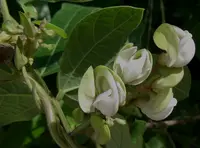
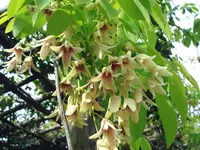
Wajira grahamiana is a leguminous shrub or small climber, related to peas and beans. It typically forms slender, branching stems with fine, divided foliage. Flowers are usually small but numerous, giving the plant a light, airy look when in bloom.

This species is native to parts of tropical Asia, where it grows in open, seasonally dry habitats. Its natural tolerance for heat and short dry periods can make it moderately forgiving in cultivation.

Gardeners who learn how to care for Wajira grahamiana usually focus on providing bright light, free-draining soil, and protection from prolonged cold or waterlogging.

Main Plant Requirements

Care Difficulty

Moderate Care

Light Preference

Partial Sun

Water Requirements

Moderate Water

Temperature Preference

Warm Climate

Hardiness Zone

Unknown

Soil Texture

Loamy

Soil pH

Slightly acidic (6.5–7.0)

Soil Drainage

Well-drained

Fertilization

Minimal (feed rarely)

Get Personalized Care Plan

Scan your plant to receive care tips personalized for your specific plant

Available on iOS and Android

How to Care for the Wajira grahamiana

This species prefers bright outdoor conditions with some protection from intense midday sun.

  • Provide 4–6 hours of direct morning sun with light afternoon shade, or bright filtered light all day, to support compact, healthy growth of Wajira grahamiana.
  • Allow light partial shade in hotter regions, but avoid sites that receive less than 3 hours of sun, which can cause weak stems and sparse flowering.
  • Monitor foliage for stress: bleaching, crispy leaf edges, or scorched patches indicate excessive sun, especially in summer, so add shade cloth or move to softer light.

Watering should balance consistent moisture with fast drainage to protect the root system.

  • Let the top 3–5 cm of soil dry before watering, then soak the root zone thoroughly so moisture reaches the deeper roots.
  • Use a sharply drained soil or raised bed; standing water or heavy clay greatly increases root rot risk for Wajira grahamiana.
  • In warm growing seasons, expect faster drying and more frequent watering; in cooler months, extend the interval and watch for yellowing, mushy stems as a sign of overwatering.

Stable warm conditions support strong growth and reliable flowering.

  • Aim for 70–85°F (21–29°C) during active growth, as this range supports good root activity and leaf development.
  • Protect the plant when temperatures drop near 40°F (4°C); light frost can damage foliage, and hard freezes below 32°F (0°C) may kill stems or roots.
  • In hot spells above 95°F (35°C), provide afternoon shade and extra soil moisture, as prolonged extreme heat can stress the plant and slow growth.

This species prefers moderately humid air but adapts to many home environments.

  • Aim for 40–60% humidity to reduce leaf edge browning and slow stress.
  • It tolerates short dry-air periods, but prolonged levels below 30% can cause leaf curl and tip scorch.
  • Increase humidity with a nearby humidifier, grouping plants, or a wide pebble tray, rather than misting leaves directly.

This plant grows best in loose, well-drained, moderately fertile soil.

  • Use a loamy, sandy mix with 30–40% coarse material such as perlite or fine gravel to prevent waterlogging around the roots.
  • Incorporate 20–30% mature compost or leaf mold to improve structure and provide slow-release nutrients without making the mix heavy.
  • Keep pH slightly acidic to neutral, around 6.0–7.0, as strongly alkaline substrates can reduce nutrient uptake and cause chlorosis, or yellowing leaves.
  • Avoid compacted clay, peat-only mixes, or constantly wet spots, since these reduce aeration, limit root growth, and increase root rot risk for Wajira grahamiana.

This species is suitable for container growing outdoors where conditions match its climate needs.

  • Choose a pot at least 30–40 cm deep so the taproot and lateral roots can anchor and resist wind movement.
  • Select a heavier material, such as terracotta or ceramic, to stabilize top growth and slow rapid moisture swings in hot weather.
  • Elevate the container slightly on feet or bricks so drainage holes stay clear and excess water exits quickly after heavy rain.

This species generally grows well in modest soils, but light feeding can support container-grown or intensively managed Wajira grahamiana.

  • Use a balanced liquid fertilizer (around 10-10-10 NPK) at 1/2 strength during active growth in spring–summer.
  • Apply every 4–6 weeks for potted plants; outdoor, in-ground plants usually need only a light compost top-dress once in spring.
  • Reduce feeding to 1 very light application or none at all in fall–winter when growth slows.
  • Water before and after fertilizing to limit root burn and improve nutrient uptake.

Pruning is mainly used to maintain structure and remove weak growth on Wajira grahamiana.

  • Carry out any shaping or thinning in late winter or early spring before vigorous new growth starts.
  • Remove dead, diseased, or crossing branches first, cutting back to healthy wood with clean, sharp bypass pruners.
  • Thin congested interior shoots to improve light and air movement, which supports healthier foliage and flowering.
  • Limit cuts to lighter trimming rather than heavy heading, to preserve the plant’s natural form and avoid stress.

This species is more often grown in the ground, so focus on careful transplanting rather than frequent repotting for Wajira grahamiana.

  • Transplant in early spring or early fall when temperatures are mild and soil is workable.
  • Look for signs such as roots circling the pot, water running off quickly, or slowed growth as cues for moving container plants up 1 pot size.
  • Dig a wide planting hole, keep the root ball intact, and set it at the same soil level to minimize shock.
  • Water thoroughly after planting, then keep soil evenly moist for several weeks while roots re-establish, avoiding both waterlogging and complete drying.

Propagation is usually done on a small scale, using either seed or semi-ripe cuttings when managing Wajira grahamiana.

  • Sow fresh seeds in spring in a free-draining mix, keeping the surface just moist and the tray in bright, indirect light.
  • Take semi-ripe stem cuttings in late spring–summer, 8–12 cm long, removing lower leaves and dipping the cut end in rooting hormone.
  • Insert cuttings into a sterile, well-aerated medium, maintain 70–75°F and high humidity, and avoid direct midday sun.
  • Label batches and discard any cuttings that blacken or soften to limit fungal spread.

In mild climates this species is fairly hardy, but young or container-grown Wajira grahamiana benefits from simple winter precautions.

  • Tolerates light frosts, but sustained temperatures below about 25°F can damage young growth.
  • Apply a 5–8 cm layer of organic mulch around the root zone in late fall, keeping it slightly away from the stem.
  • Move containers to a sheltered, frost-free spot or unheated garage, and water sparingly to keep the root ball just slightly moist.

Care Tips

Provide climbing support

Install a sturdy trellis, mesh, or wires early in the plant’s life and gently tie new vines with soft ties so stems lignify in the right position and do not kink or break later.

Encourage branching

Pinch or lightly tip-prune the growing ends of vigorous shoots in early growth to promote lateral branching and a denser canopy rather than a few long, bare stems.

Mulch root zone

Apply a 3–5 cm layer of inert mulch such as pine bark or coarse compost around the base, keeping it a few cm away from stems, to stabilize root temperature and reduce weed competition.

Monitor nodulation

Gently expose a small section of roots on an established plant every year or two to check for healthy pinkish nitrogen-fixing nodules, then re-cover with soil, adjusting fertilization if nodules are sparse or absent.

Plan seasonal cutback

After flowering finishes, remove spent flowering stems and any weak, congested growth to maintain airflow, reduce pest harborage, and keep the framework balanced when caring for Wajira grahamiana.

Common Pests and Diseases

Bean pod borer

This pest feeds on developing flower buds and seed pods, boring inside and destroying seeds before they mature. Symptoms include small entry holes on pods, premature yellowing, and poor seed set.

Solution

Handpick and destroy infested pods, and remove any dropped pods from the soil surface to break the life cycle. Use fine insect netting during peak moth activity, encourage natural predators by avoiding broad-spectrum insecticides, and if needed apply a targeted biological product containing Bacillus thuringiensis (Bt) to young pods in the evening.

Aphids

These insects cluster on young shoots, flower stalks, and undersides of leaves, sucking sap and excreting sticky honeydew. Symptoms include curling new growth, distorted flower spikes, and sooty mold growing on honeydew deposits.

Solution

Spray plants with a strong stream of water to dislodge colonies, then treat remaining clusters with insecticidal soap or a dilute neem oil solution, covering leaf undersides. Remove heavily infested shoot tips and avoid excessive nitrogen fertilization, which encourages soft, aphid-prone growth and complicates Wajira grahamiana care instructions.

Powdery mildew

This disease shows as white, powdery patches on leaves, stems, and sometimes flower stalks, often starting on older foliage. Affected leaves may yellow, dry at the edges, and drop prematurely, reducing flowering and seed production.

Solution

Improve air circulation by avoiding crowding and by pruning dense, shaded stems, and water at soil level rather than overhead. Remove and destroy the most affected leaves, then apply a sulfur-based or potassium bicarbonate fungicide according to label directions at the first signs of infection.

Anthracnose

This disease causes dark, sunken spots on leaves, stems, and seed pods, sometimes with tan centers and darker margins. Symptoms include premature leaf drop and shriveled pods that fail to produce viable seed.

Solution

Promptly remove and dispose of infected leaves and pods, and avoid working with wet plants to reduce spread. Improve drainage and spacing, then use clean seed or seed that has been hot-water treated, and if the problem is recurring consider applying a copper-based fungicide at early pod set in areas with a known history of anthracnose on legumes.

Pod sucking bugs

These insects pierce green pods and suck out developing seed contents, causing shriveled, misshapen, or discolored seeds. Symptoms include tiny puncture marks on pods and uneven seed development inside otherwise intact pods.

Solution

Handpick visible bugs in the early morning when they are sluggish, and remove nearby weedy vegetation that shelters them. Use light fabric row covers during flowering and early pod development if pollination is already complete, and in larger plantings consider trap crops such as other legumes at the margin to concentrate bugs for easier removal.

Interesting Facts

African liana legume

This species is a woody climbing vine native to East Africa, especially Somalia and neighboring regions, where it grows in dry bushland and scrub as part of arid and semi‑arid ecosystems.

Nitrogen‑fixing root nodules

As a member of the legume family (Fabaceae), it forms symbiotic nodules on its roots that host nitrogen‑fixing bacteria, which convert atmospheric nitrogen into forms usable by the plant and surrounding soil life.

Taxonomic reclassification history

The species was long treated under the genus Vigna, but molecular and morphological studies led to its placement in the genus Wajira, reflecting a refined understanding of relationships among Old World tropical legumes.

FAQs about Wajira grahamiana

This species is a legume with nectar-rich flowers that can attract bees and some small butterflies in suitable climates. Providing pesticide-free surroundings and mixed flowering companions increases pollinator visits and supports a more balanced garden ecosystem.

Grow Healthy Plants with Botan Care

Keep your plants happy and healthy with plant identification, disease detection, and easy care guidance.

Botan plant care app — identify plants on mobile

Explore More Plants