


Substrate preparation
Before attaching thalli, scrub masonry, bark, or roofing surfaces with a stiff brush and rinse to remove loose dust, algae, or moss so the lichen can anchor more securely and colonize faster.

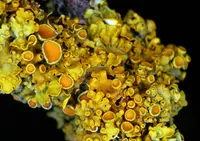
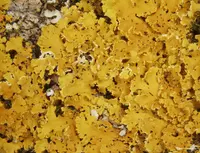
Orange wall lichen, Xanthoria parietina, is a foliose lichen, a partnership between a fungus and algae living together on the same surface. It forms flat to slightly leafy patches in bright yellow to orange tones that often cover rocks, fences, roofs, and tree bark.
This species is common in coastal areas, farmland, and cities, especially where air is slightly enriched with nutrients from birds or pollution. It is very hardy, tolerates drought and cold, and grows slowly, which influences how to care for orange wall lichen in man-made settings.
It usually prefers good light, periodic moisture from rain or mist, and a stable, rough surface rather than soil, making it more of a habitat specialist than a typical garden plant.

Care Difficulty
Easy Care

Light Preference
Full Sun

Water Requirements
Low Water

Temperature Preference
Cold Hardy

Hardiness Zone
3–9

Soil Texture
Rocky, Sandy, Loamy

Soil pH
Neutral (7.0), Slightly alkaline (7.0–7.5)

Soil Drainage
Well-drained

Fertilization
Minimal (feed rarely)
Scan your plant to receive care tips personalized for your specific plant
Available on iOS and Android
Xanthoria parietina thrives in bright, open positions with direct sun for most of the day.
This lichen relies mainly on natural rainfall and humidity rather than active watering.
This species tolerates a wide temperature range and is well adapted to outdoor conditions.
This species tolerates wide humidity levels and does not need special humidity control in cultivation.
This lichen does not root in soil but can be established on inert substrates that mimic rock or bark surfaces.
This species is only loosely suitable for container growing when treated as a crust on stones or bark rather than a potted plant.
This lichen grows on nutrient-poor bark, stone, or concrete and generally does not need fertilizer.
Xanthoria parietina does not require true pruning, but limited removal can manage appearance or spread.
This lichen is usually left in place, but small colonies can be relocated carefully when needed.
Human propagation of this lichen is slow and experimental, as it relies on a stable partnership between fungus and algae.
This species is very cold hardy and generally needs no dedicated winter care outdoors.

Plant Health Check
Not sure what's wrong with your plant? Check your plant's health inside the app.
This lichen often increases in abundance where air contains more nitrogen compounds, such as near farms, cities, and busy roads, so ecologists use its presence and vigor as a bioindicator of nitrogen air pollution.
It is a foliose lichen formed by a symbiosis between a fungus and green algae, allowing it to photosynthesize and survive on bare walls, roofs, and tree bark with almost no soil.
The bright yellow–orange color comes from parietin, a pigment that helps protect the lichen’s cells from strong sunlight and ultraviolet radiation, especially in exposed coastal and urban sites.

Historical records from Europe show that this lichen’s bright, stable pigments were once tested as natural dyes and color references in early lichenology, helping scientists distinguish closely related lichen species based on their chemistry and reactions to simple lab tests.
This species grows very slowly, often only 1–2 mm per year under normal outdoor conditions. Growth depends on clean air, stable moisture, and light exposure. Expect noticeable expansion only over several years, not months.
Keep your plants happy and healthy with plant identification, disease detection, and easy care guidance.

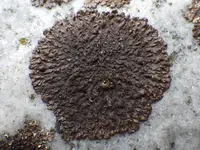
Warty Camouflage Lichen
Xanthoparmelia verruculifera
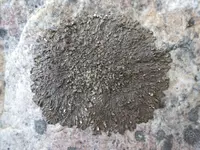
Blistered Camouflage Lichen
Xanthoparmelia loxodes
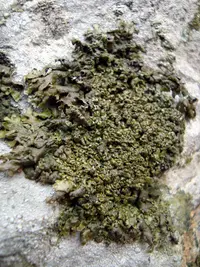
Xanthoparmelia pulla
Xanthoparmelia pulla
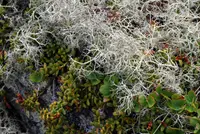
witch's hair lichen
Alectoria ochroleuca
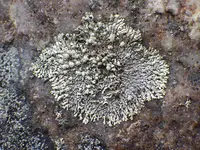
Mougeot's xanthoparmelia lichen
Xanthoparmelia mougeotii
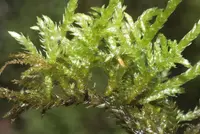
brachythecium moss
Brachythecium rivulare
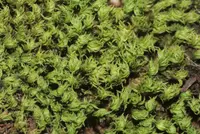
Park Yoke-moss
Zygodon rupestris
Xanthoria ulophyllodes
Xanthoria ulophyllodes