Zeller's bolete Care (Xerocomellus zelleri)

Zeller's bolete

About Zeller's bolete

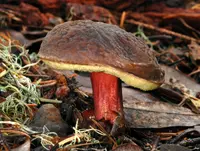
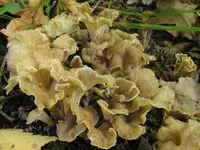
Zeller's bolete, Xerocomellus zelleri, is a fleshy mushroom-forming fungus rather than a leafy plant. It grows from the ground in forests, usually near conifers or mixed woods. Caps are often reddish to brown with a velvety surface, and the pores underneath bruise blue when handled.

This species occurs mainly in western North America, appearing during the rainy season in soil rich in organic matter. It is not a beginner-friendly organism to cultivate, as it forms mycorrhiza, a symbiotic partnership with tree roots. Those who want to care for Zeller's bolete must understand that it relies on suitable host trees, well-drained soil, and consistent natural moisture rather than typical indoor conditions.

Main Plant Requirements

Care Difficulty

Hard Care

Light Preference

Partial Shade

Water Requirements

Keep Soil Moist

Temperature Preference

Cool Climate

Hardiness Zone

Unknown

Soil Texture

Loamy, Silty, Organic-rich

Soil pH

Acidic (5.5–6.5), Slightly acidic (6.5–7.0)

Soil Drainage

Moist but well-drained

Fertilization

Minimal (feed rarely)

Get Personalized Care Plan

Scan your plant to receive care tips personalized for your specific plant

Available on iOS and Android

How to Care for the Zeller's bolete

This mycorrhizal fungus prefers dappled forest light rather than full exposure.

  • Provide 2–5 hours of filtered or light morning sun under trees; avoid harsh, direct afternoon sun in open sites.
  • Partial shade to full shade is suitable, as Zeller's bolete relies on host trees, not strong sunlight, for energy.
  • In hot summers, canopy shade prevents caps from drying and cracking, while too-open sites with all-day sun reduce fruiting and dry the soil surface.

Moist, well-drained forest soil supports stable fruiting of this mycorrhizal fungus.

  • Aim for consistently moist soil, allowing the top 2–4 cm to dry slightly between significant wetting events, similar to a natural forest floor.
  • Ensure excellent drainage with no standing water; prolonged saturation encourages rot of the underground mycelium and host tree roots.
  • In dry periods, focus on steady, moderate moisture near the host tree’s root zone; shrinking, cracking caps suggest drought stress, while soft, waterlogged caps indicate excess moisture.

This ectomycorrhizal species fruits best in cool to mild conditions typical of temperate forests.

  • Optimal fruiting generally occurs around 55–70°F (13–21°C), often in late summer to autumn when soils are cool but not cold.
  • The underground mycelium tolerates winter down to about 20–25°F (-7 to -4°C) under insulating leaf litter, but exposed fruiting bodies are damaged by hard frost.
  • Sustained heat above 80–85°F (27–29°C) with dry soil suppresses fruiting; shaded, mulched sites moderate temperature swings and help maintain a suitable range.

Humidity is not a significant cultivation factor for Xerocomellus zelleri, which grows outdoors in natural forest conditions rather than controlled environments.

Xerocomellus zelleri relies on specific forest soil conditions and a living host tree rather than a conventional potting substrate.

  • Fruiting bodies typically develop in loose, well-drained, organic-rich forest soils with abundant leaf litter and decaying wood fragments.
  • Soils are usually slightly acidic, around pH 5.0–6.5, often under conifers or mixed woodland where mycorrhizal roots are present.
  • Avoid compacted, waterlogged, or heavily amended garden beds, since these limit aeration and disrupt mycorrhizal associations needed for mushroom formation.
  • To mimic natural structure in a managed site, maintain a deep layer of leaf litter, fine bark, and coarse woody debris over the root zone of suitable host trees.

This species is not suitable for container growing because it depends on mycorrhizal association with tree roots in open soil rather than restricted pot environments.

This ectomycorrhizal fungus depends mainly on its tree partners for nutrients, so direct fertilization is generally unnecessary.

Xerocomellus zelleri does not need pruning, as it is a wild mycorrhizal fungus rather than a garden shrub or tree.

This species is not suited to normal repotting, since it lives in soil as a symbiotic fungus linked to tree roots rather than as a potted plant.

  • Avoid attempts to lift and transplant fruiting bodies; these are only the reproductive structures, not the full organism.
  • If moving host trees, accept that associated mycorrhizal fungi may not re-establish reliably after transplanting.
  • Maintain undisturbed, well-drained soil around host trees to support stable fungal networks.

Propagation of Xerocomellus zelleri is not practical in home or garden conditions because it relies on complex mycorrhizal relationships with suitable trees.

No specific winter care is needed, as this fungus persists in the soil and fruiting bodies are seasonal and naturally short-lived.

Care Tips

Maintain host trees

Retain or plant compatible conifer hosts such as pine, fir, or spruce, since this ectomycorrhizal fungus depends on living tree roots rather than isolated substrate or logs.

Limit soil disturbance

Avoid tilling, compacting, or repeatedly raking the top 5–10 cm of soil around known fruiting spots so the fine mycelial network and tree roots remain intact and productive.

Use light mulch

Apply a thin, loose layer (1–3 cm) of conifer needles or leaf litter instead of heavy bark mulch to conserve moisture while still allowing gas exchange and mushroom emergence.

Avoid broad pesticides

Do not use broad-spectrum fungicides or soil sterilants near the host trees, and use insecticides sparingly and locally to avoid disrupting the mycorrhizal partnership and fruiting cycles when growing Zeller's bolete.

Record fruiting patterns

Keep simple notes or photos of when and where fruiting bodies appear each year so you can time irrigation, foot traffic limits, and any maintenance work to support recurring flushes.

Common Pests and Diseases

Mycophagous springtails

These insects feed on fungal tissue and spores, often clustering on moist caps and around the base of fruiting bodies. Symptoms include pitted, scarred, or prematurely collapsing caps, especially in very wet conditions.

Solution

Reduce excess surface moisture by improving drainage and limiting standing water around the fruiting zone, then gently brush or rinse springtails off caps with clean water. For repeated issues in outdoor patches, lightly disturb and aerate the upper soil or litter layer and avoid over-irrigation, which discourages large springtail populations without harming the mycelium.

Fungus gnat larvae

This pest lives in very moist, organic-rich soil and can tunnel through young fruiting bodies and surrounding mycelium. Symptoms include distorted, hollow, or prematurely rotting boletes, often with small entry holes near the stem base.

Solution

Lower substrate moisture slightly and avoid constant saturation, then use fine mesh or netting over developing mushrooms to reduce adult gnat access. In managed or experimental cultivation, sticky traps for adults and a soil drench with a biological control such as Bacillus thuringiensis israelensis can reduce larval numbers while limiting impact on the fungal partner roots.

Parasitic Hypomyces infection

This disease is caused by a parasitic fungus that colonizes bolete fruiting bodies, often forming a whitish, yellowish, or pinkish crust that deforms and eventually destroys the cap and pores. Symptoms include firm, crusty patches, loss of normal pore structure, and discolored, unusable mushrooms.

Solution

Promptly remove and discard all infected fruiting bodies, including obviously colonized fragments around the base, to reduce spore load at the site. Avoid moving contaminated soil or litter to new areas, and allow the patch to rest without disturbance so unaffected mycelium and associated trees can continue normal growth, which helps the bolete population recover over time.

Slug and snail grazing

These pests feed directly on the caps and stems, especially during cool, wet weather. Symptoms include large ragged holes, slime trails, and rapid destruction of young fruiting bodies overnight.

Solution

Hand-pick slugs and snails during damp evenings, and use simple barriers such as copper tape or rough mulch rings to limit access to key fruiting spots. In garden or yard settings, keep litter slightly more open around fruiting areas to reduce hiding places while maintaining enough organic cover for the mycorrhizal partner roots, which supports healthier stands when growing Zeller's bolete.

Interesting Facts

Blue-staining pores

When the pore surface or flesh is bruised, this bolete quickly stains dark blue to nearly black due to oxidation of pigment compounds, a useful diagnostic feature for field identification.

Mycorrhizal with conifers

This species forms ectomycorrhizal partnerships with conifer roots, especially Douglas-fir and pine, exchanging mineral nutrients and water for sugars produced by the host tree.

Variable cap coloration

Mature fruiting bodies often show a patchwork cap with red, brown, and yellow tones, and the surface can crack into small scales, creating a distinctive mottled appearance in older specimens.

Botan icon

Did you know?

Zeller's bolete is native to western North America and is often considered an indicator of relatively undisturbed coniferous or mixed forests, since it depends on long-established mycorrhizal relationships that develop in stable woodland ecosystems.

FAQs about Zeller's bolete

This bolete is generally considered edible when well cooked, but quality is modest and identification must be absolutely certain. Some related species cause gastric upset. For non-experts, avoiding consumption is the safest option.

Grow Healthy Plants with Botan Care

Keep your plants happy and healthy with plant identification, disease detection, and easy care guidance.

Botan plant care app — identify plants on mobile

Explore More Plants